ADVERTISEMENT

He placed his hands on them

Published Aug 16, 2025 12:05 am  |  Updated Aug 15, 2025 05:54 pm
REFLECTIONS TODAY
Recent research has shown that women are attracted to men who are fond of children, and that they can tell who is and who is not fond of children just by looking at their faces.
This is what people, most probably mothers, see in Jesus, and so they bring children to him.
The disciples, however, see women and children as unimportant, and so rebuke them for taking the time and attention of their Teacher.
But children are important and the greatest of all in the eyes of Jesus. He is unique among ancient religious and philosophical teachers in recognizing children as significant.
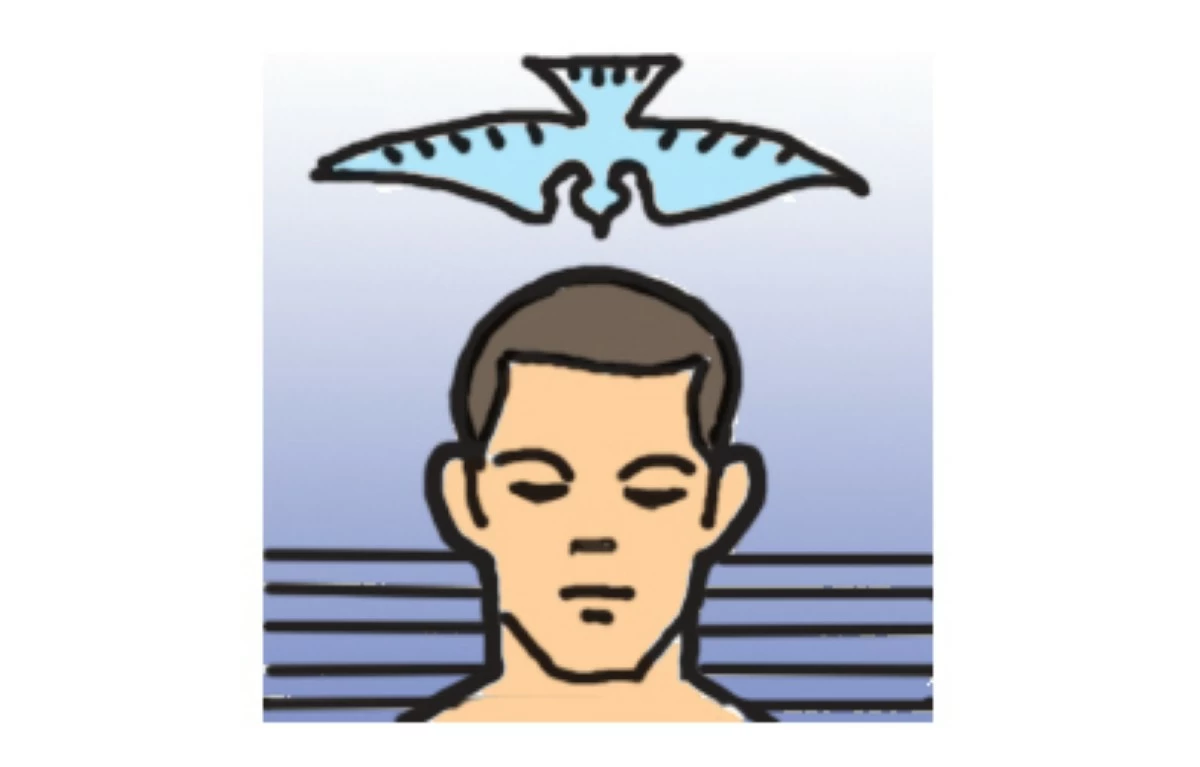
Moreover, children represent those whom the world considers as weak and unimportant. Jesus’ hands laid over them in blessing are like a roof that protects them from harm.
The laying on of hands is also a gesture of empowerment. By placing his hands on the children, Jesus confirms the dignity of the children and the “small people” they represent as children of the heavenly Father.
First Reading • Jos 24:14-29
Joshua gathered together all the tribes of Israel at Shechem, and addressed them, saying:
“Fear the Lord and serve him completely and sincerely. Cast out the gods your fathers served beyond the River and in Egypt, and serve the Lord.
If it does not please you to serve the Lord, decide today whom you will serve, the gods your fathers served beyond the River or the gods of the Amorites in whose country you are dwelling. As for me and my household, we will serve the Lord.”
But the people answered, “Far be it from us to forsake the Lord for the service of other gods.
For it was the Lord, our God, who brought us and our fathers up out of the land of Egypt, out of a state of slavery.
He performed those great miracles before our very eyes and protected us along our entire journey and among all the peoples through whom we passed. At our approach the Lord drove out all the peoples, including the Amorites who dwelt in the land.
Therefore we also will serve the Lord, for he is our God.” Joshua in turn said to the people, “You may not be able to serve the Lord, for he is a holy God; he is a jealous God who will not forgive your transgressions or your sins.
If, after the good he has done for you, you forsake the Lord and serve strange gods, he will do evil to you and destroy you.”
But the people answered Joshua, “We will still serve the Lord.” Joshua therefore said to the people, “You are your own witnesses that you have chosen to serve the Lord.” They replied, “We are, indeed!” Joshua continued:
“Now, therefore, put away the strange gods that are among you and turn your hearts to the Lord, the God of Israel.”
Then the people promised Joshua, “We will serve the Lord, our God, and obey his voice.”
So Joshua made a covenant with the people that day and made statutes and ordinances for them at Shechem, which he recorded in the book of the law of God. Then he took a large stone and set it up there under the oak that was in the sanctuary of the Lord.
And Joshua said to all the people, “This stone shall be our witness, for it has heard all the words which the Lord spoke to us.
It shall be a witness against you, should you wish to deny your God.” Then Joshua dismissed the people, each to his own heritage.
After these events, Joshua, son of Nun, servant of the Lord, died at the age of a hundred and ten.
Responsorial Psalm • Ps 16
“You are my inheritance, O Lord.”
Gospel • Matthew 19:13-15
Children were brought to Jesus that he might lay his hands on them and pray.
The disciples rebuked them, but Jesus said, “Let the children come to me, and do not prevent them; for the Kingdom of heaven belongs to such as these.”
After he placed his hands on them, he went away.
Source: “365 Days with the Lord 2025,” St. Paul’s, 7708 St. Paul Rd., SAV, Makati City (Phils.); Tel.: 632-895-9701; E-mail: [email protected]; Website: http://www.stpauls.ph.
ADVERTISEMENT
.most-popular .layout-ratio{ padding-bottom: 79.13%; } @media (min-width: 768px) and (max-width: 1024px) { .widget-title { font-size: 15px !important; } }

{{ articles_filter_1561_widget.title }}

.most-popular .layout-ratio{ padding-bottom: 79.13%; } @media (min-width: 768px) and (max-width: 1024px) { .widget-title { font-size: 15px !important; } }

{{ articles_filter_1562_widget.title }}

.most-popular .layout-ratio{ padding-bottom: 79.13%; } @media (min-width: 768px) and (max-width: 1024px) { .widget-title { font-size: 15px !important; } }

{{ articles_filter_1563_widget.title }}

{{ articles_filter_1564_widget.title }}

.mb-article-details { position: relative; } .mb-article-details .article-body-preview, .mb-article-details .article-body-summary{ font-size: 17px; line-height: 30px; font-family: "Libre Caslon Text", serif; color: #000; } .mb-article-details .article-body-preview iframe , .mb-article-details .article-body-summary iframe{ width: 100%; margin: auto; } .read-more-background { background: linear-gradient(180deg, color(display-p3 1.000 1.000 1.000 / 0) 13.75%, color(display-p3 1.000 1.000 1.000 / 0.8) 30.79%, color(display-p3 1.000 1.000 1.000) 72.5%); position: absolute; height: 200px; width: 100%; bottom: 0; display: flex; justify-content: center; align-items: center; padding: 0; } .read-more-background a{ color: #000; } .read-more-btn { padding: 17px 45px; font-family: Inter; font-weight: 700; font-size: 18px; line-height: 16px; text-align: center; vertical-align: middle; border: 1px solid black; background-color: white; } .hidden { display: none; }
function initializeAllSwipers() { // Get all hidden inputs with cms_article_id document.querySelectorAll('[id^="cms_article_id_"]').forEach(function (input) { const cmsArticleId = input.value; const articleSelector = '#article-' + cmsArticleId + ' .body_images'; const swiperElement = document.querySelector(articleSelector); if (swiperElement && !swiperElement.classList.contains('swiper-initialized')) { new Swiper(articleSelector, { loop: true, pagination: false, navigation: { nextEl: '#article-' + cmsArticleId + ' .swiper-button-next', prevEl: '#article-' + cmsArticleId + ' .swiper-button-prev', }, }); } }); } setTimeout(initializeAllSwipers, 3000); const intersectionObserver = new IntersectionObserver( (entries) => { entries.forEach((entry) => { if (entry.isIntersecting) { const newUrl = entry.target.getAttribute("data-url"); if (newUrl) { history.pushState(null, null, newUrl); let article = entry.target; // Extract metadata const author = article.querySelector('.author-section').textContent.replace('By', '').trim(); const section = article.querySelector('.section-info ').textContent.replace(' ', ' '); const title = article.querySelector('.article-title h1').textContent; // Parse URL for Chartbeat path format const parsedUrl = new URL(newUrl, window.location.origin); const cleanUrl = parsedUrl.host + parsedUrl.pathname; // Update Chartbeat configuration if (typeof window._sf_async_config !== 'undefined') { window._sf_async_config.path = cleanUrl; window._sf_async_config.sections = section; window._sf_async_config.authors = author; } // Track virtual page view with Chartbeat if (typeof pSUPERFLY !== 'undefined' && typeof pSUPERFLY.virtualPage === 'function') { try { pSUPERFLY.virtualPage({ path: cleanUrl, title: title, sections: section, authors: author }); } catch (error) { console.error('ping error', error); } } // Optional: Update document title if (title && title !== document.title) { document.title = title; } } } }); }, { threshold: 0.1 } ); function showArticleBody(button) { const article = button.closest("article"); const summary = article.querySelector(".article-body-summary"); const body = article.querySelector(".article-body-preview"); const readMoreSection = article.querySelector(".read-more-background"); // Hide summary and read-more section summary.style.display = "none"; readMoreSection.style.display = "none"; // Show the full article body body.classList.remove("hidden"); } document.addEventListener("DOMContentLoaded", () => { let loadCount = 0; // Track how many times articles are loaded const offset = [1, 2, 3, 4, 5, 6, 7, 8, 9, 10]; // Offset values const currentUrl = window.location.pathname.substring(1); let isLoading = false; // Prevent multiple calls if (!currentUrl) { console.log("Current URL is invalid."); return; } const sentinel = document.getElementById("load-more-sentinel"); if (!sentinel) { console.log("Sentinel element not found."); return; } function isSentinelVisible() { const rect = sentinel.getBoundingClientRect(); return ( rect.top < window.innerHeight && rect.bottom >= 0 ); } function onScroll() { if (isLoading) return; if (isSentinelVisible()) { if (loadCount >= offset.length) { console.log("Maximum load attempts reached."); window.removeEventListener("scroll", onScroll); return; } isLoading = true; const currentOffset = offset[loadCount]; window.loadMoreItems().then(() => { let article = document.querySelector('#widget_1690 > div:nth-last-of-type(2) article'); intersectionObserver.observe(article) loadCount++; }).catch(error => { console.error("Error loading more items:", error); }).finally(() => { isLoading = false; }); } } window.addEventListener("scroll", onScroll); });

Sign up by email to receive news.