

ADVERTISEMENT

DepEd boosts teacher training with major TEC education reforms

Published Aug 16, 2025 10:04 pm

At A Glance

  • DepEd, through the Teacher Education Council (TEC), is implementing major reforms to enhance teacher training, professional development, and education quality under the Marcos administration
  • Key measures include revising the pre-service curriculum, profiling 1,570 Teacher Education Institutions (TEIs), and launching specialization-based licensure exams by September 2025
  • A new career progression framework also sets clear stages for teachers and school leaders to support continuous growth and empowerment
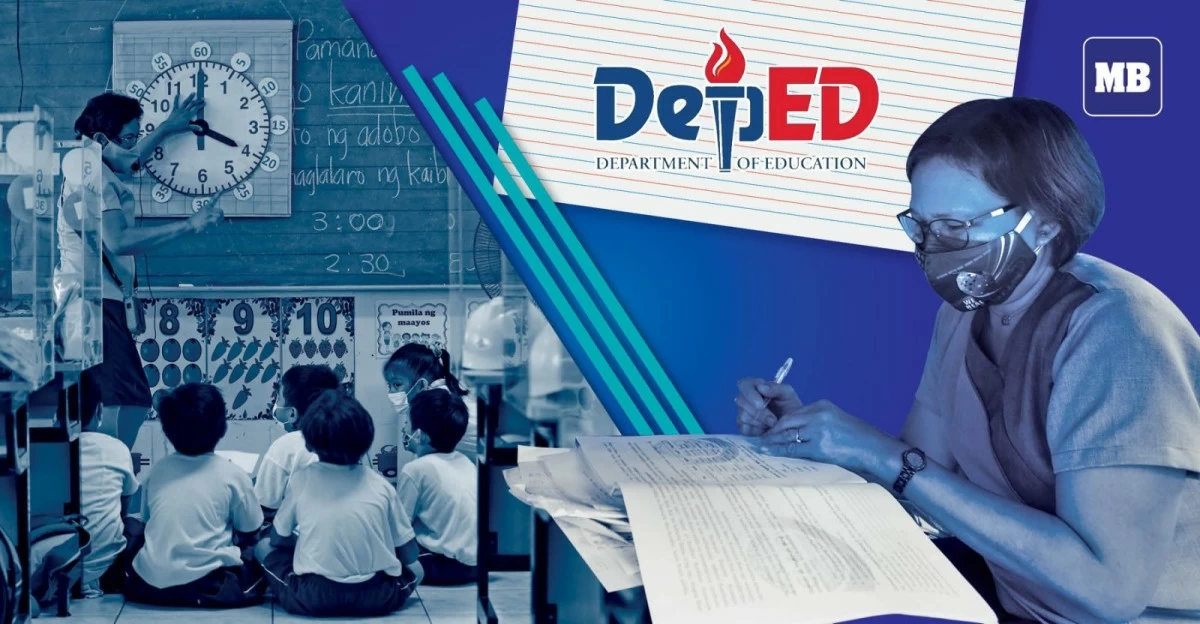
The Department of Education (DepEd) is implementing major reforms under the Teacher Education Council (TEC) to improve teacher training, strengthen professional development, and raise education quality in the Philippines. (MB Visual Content Group)
Emphasizing that better-prepared teachers are key to improving student learning outcomes, the Department of Education (DepEd) on Saturday, August 16, announced that it is pushing major reforms under the Teacher Education Council (TEC) to strengthen teacher training programs and enhance the quality of education in the country.
In a statement, DepEd said that under the administration of President Marcos, it is spearheading significant reforms in the country’s teacher education system through the TEC.
Why is improving the quality of teachers crucial
DepEd Secretary and TEC Chairperson Sonny Angara stressed that improving teacher quality is essential to raising education outcomes in the Philippines.
“Kung gusto nating makakita ng pagbabago sa bawat silid-aralan, kailangan nating tiyakin na ang bawat guro ay handa, may sapat na kaalaman, at may tuloy-tuloy na suporta (“If we want to see change in every classroom, we need to ensure that every teacher is prepared, well-informed, and continuously supported),” Angara said. “Dito nagsisimula ang tunay na reporma (This is where true reform begins),” he added.
DepEd noted that the TEC’s first annual report under Republic Act No. 11713, released on August 4, highlighted persistent challenges in teacher preparation, licensing, and professional development that continue to affect the quality of learning nationwide.
With its secretariat now fully operational, DepEd said the TEC—composed of DepEd, the Commission on Higher Education (CHED), the Technical Education and Skills Development Authority (TESDA), the Professional Regulation Commission (PRC), and the National Commission for Culture and the Arts (NCCA)—has introduced reforms designed to make teacher education more coherent, data-driven, and aligned with the evolving needs of basic education.
Key initiatives
DepEd said the TEC reforms mark a major step in addressing gaps in teacher training and support, aiming to ensure that every classroom in the Philippines is led by well-prepared and empowered educators.
“We are building a better education system from the ground up, and that starts with preparing our teachers,” Angara said.
Among the key initiatives are:
- reframing the pre-service teacher education curriculum to prepare future teachers for the revised K to 10 curriculum and the strengthened senior high school program;
- profiling 1,570 Teacher Education Institutions (TEIs) to assess teacher supply and demand; and
- collaborating with the PRC to implement specialization-based licensure exams for teachers by September 2025
DepEd also welcomed the introduction of a career progression framework for teachers and school leaders, which sets clear career stages based on professional standards.

Related Tags

DepEd Filipino teachers training reforms Teacher Education Council (TEC) Philippines Philippine teacher education system Teacher professional development DepEd DepEd Secretary Sonny Angara
ADVERTISEMENT
.most-popular .layout-ratio{ padding-bottom: 79.13%; } @media (min-width: 768px) and (max-width: 1024px) { .widget-title { font-size: 15px !important; } }

{{ articles_filter_1561_widget.title }}

.most-popular .layout-ratio{ padding-bottom: 79.13%; } @media (min-width: 768px) and (max-width: 1024px) { .widget-title { font-size: 15px !important; } }

{{ articles_filter_1562_widget.title }}

.most-popular .layout-ratio{ padding-bottom: 79.13%; } @media (min-width: 768px) and (max-width: 1024px) { .widget-title { font-size: 15px !important; } }

{{ articles_filter_1563_widget.title }}

{{ articles_filter_1564_widget.title }}

.mb-article-details { position: relative; } .mb-article-details .article-body-preview, .mb-article-details .article-body-summary{ font-size: 17px; line-height: 30px; font-family: "Libre Caslon Text", serif; color: #000; } .mb-article-details .article-body-preview iframe , .mb-article-details .article-body-summary iframe{ width: 100%; margin: auto; } .read-more-background { background: linear-gradient(180deg, color(display-p3 1.000 1.000 1.000 / 0) 13.75%, color(display-p3 1.000 1.000 1.000 / 0.8) 30.79%, color(display-p3 1.000 1.000 1.000) 72.5%); position: absolute; height: 200px; width: 100%; bottom: 0; display: flex; justify-content: center; align-items: center; padding: 0; } .read-more-background a{ color: #000; } .read-more-btn { padding: 17px 45px; font-family: Inter; font-weight: 700; font-size: 18px; line-height: 16px; text-align: center; vertical-align: middle; border: 1px solid black; background-color: white; } .hidden { display: none; }
function initializeAllSwipers() { // Get all hidden inputs with cms_article_id document.querySelectorAll('[id^="cms_article_id_"]').forEach(function (input) { const cmsArticleId = input.value; const articleSelector = '#article-' + cmsArticleId + ' .body_images'; const swiperElement = document.querySelector(articleSelector); if (swiperElement && !swiperElement.classList.contains('swiper-initialized')) { new Swiper(articleSelector, { loop: true, pagination: false, navigation: { nextEl: '#article-' + cmsArticleId + ' .swiper-button-next', prevEl: '#article-' + cmsArticleId + ' .swiper-button-prev', }, }); } }); } setTimeout(initializeAllSwipers, 3000); const intersectionObserver = new IntersectionObserver( (entries) => { entries.forEach((entry) => { if (entry.isIntersecting) { const newUrl = entry.target.getAttribute("data-url"); if (newUrl) { history.pushState(null, null, newUrl); let article = entry.target; // Extract metadata const author = article.querySelector('.author-section').textContent.replace('By', '').trim(); const section = article.querySelector('.section-info ').textContent.replace(' ', ' '); const title = article.querySelector('.article-title h1').textContent; // Parse URL for Chartbeat path format const parsedUrl = new URL(newUrl, window.location.origin); const cleanUrl = parsedUrl.host + parsedUrl.pathname; // Update Chartbeat configuration if (typeof window._sf_async_config !== 'undefined') { window._sf_async_config.path = cleanUrl; window._sf_async_config.sections = section; window._sf_async_config.authors = author; } // Track virtual page view with Chartbeat if (typeof pSUPERFLY !== 'undefined' && typeof pSUPERFLY.virtualPage === 'function') { try { pSUPERFLY.virtualPage({ path: cleanUrl, title: title, sections: section, authors: author }); } catch (error) { console.error('ping error', error); } } // Optional: Update document title if (title && title !== document.title) { document.title = title; } } } }); }, { threshold: 0.1 } ); function showArticleBody(button) { const article = button.closest("article"); const summary = article.querySelector(".article-body-summary"); const body = article.querySelector(".article-body-preview"); const readMoreSection = article.querySelector(".read-more-background"); // Hide summary and read-more section summary.style.display = "none"; readMoreSection.style.display = "none"; // Show the full article body body.classList.remove("hidden"); } document.addEventListener("DOMContentLoaded", () => { let loadCount = 0; // Track how many times articles are loaded const offset = [1, 2, 3, 4, 5, 6, 7, 8, 9, 10]; // Offset values const currentUrl = window.location.pathname.substring(1); let isLoading = false; // Prevent multiple calls if (!currentUrl) { console.log("Current URL is invalid."); return; } const sentinel = document.getElementById("load-more-sentinel"); if (!sentinel) { console.log("Sentinel element not found."); return; } function isSentinelVisible() { const rect = sentinel.getBoundingClientRect(); return ( rect.top < window.innerHeight && rect.bottom >= 0 ); } function onScroll() { if (isLoading) return; if (isSentinelVisible()) { if (loadCount >= offset.length) { console.log("Maximum load attempts reached."); window.removeEventListener("scroll", onScroll); return; } isLoading = true; const currentOffset = offset[loadCount]; window.loadMoreItems().then(() => { let article = document.querySelector('#widget_1690 > div:nth-last-of-type(2) article'); intersectionObserver.observe(article) loadCount++; }).catch(error => { console.error("Error loading more items:", error); }).finally(() => { isLoading = false; }); } } window.addEventListener("scroll", onScroll); });

Sign up by email to receive news.