







What the ICJ says on nations' climate duties
And its implications for the Philippines amid the global climate crisis


On July 23, 2025, the International Court of Justice (ICJ) issued a landmark Advisory Opinion (AO) on States' obligations in the context of climate change. The AO affirms that States must, “ensure the protection of the climate system and other parts of the environment from anthropogenic greenhouse gas emissions.”
The ICJ recognized that, in addition to binding obligations under climate treaties such as the UNFCCC, Paris Agreement (PA), Kyoto Protocol, States also bear responsibilities under customary norms of international law. These include the duty to prevent significant harm to the environment and the duty to cooperate, both of which apply in the context of climate change.
Of particular note at this time is the binding nature of Article 4 of the PA, which requires Parties to “prepare, communicate, and maintain” Nationally Determined Contributions (NDCs). These NDCs outline the domestic mitigation measures that States intend to undertake. This emphasis on State NDC obligations is particularly timely given the ongoing 3rd cycle of NDC submissions, which countries are expected to turn in by September 2025.
In its Advisory Opinion, the ICJ affirmed that State obligations related to NDCs are legally binding. States are required to prepare, communicate, maintain, account for, and register their NDCs. These contributions must become more demanding over time, reflecting the highest possible ambition. States are also required to implement these NDCs effectively.

Finally, States are expected to ensure the achievement of a specific outcome, namely the collective realization of the 1.5 C threshold through commitments set in country NDCs “when taken together.” Failure to exercise best efforts with stringent due diligence to this end is considered a breach of obligation, and may constitute an internationally wrongful act.
Some of the elements of due diligence discussed in the AO include the need to take urgent action to address climate change, informed by the best available science and technological knowledge, and identify appropriate measures with due consideration for national circumstances, specifically State capabilities, among others. Due diligence also entails that States deploy all appropriate means within their power or jurisdiction. This means that States must adopt relevant policies or procedures, and practice vigilance when enforcing their implementation.
Exploring ICJ AO for Philippine NDCs
The AO comes at an opportune time for the Philippines, which is currently finalizing its enhanced NDC. A recent scoping study published by Parabukas, examining government and civil society perspectives on the ongoing NDC enhancement process, assessed the country’s approach and offered recommendations on how ambition and the identification of policies and measures (PAMs) could be strengthened in the updated NDC. The ICJ AO aligns with several of the report’s findings and may provide clarity for decision makers as they finalize the updated NDC.
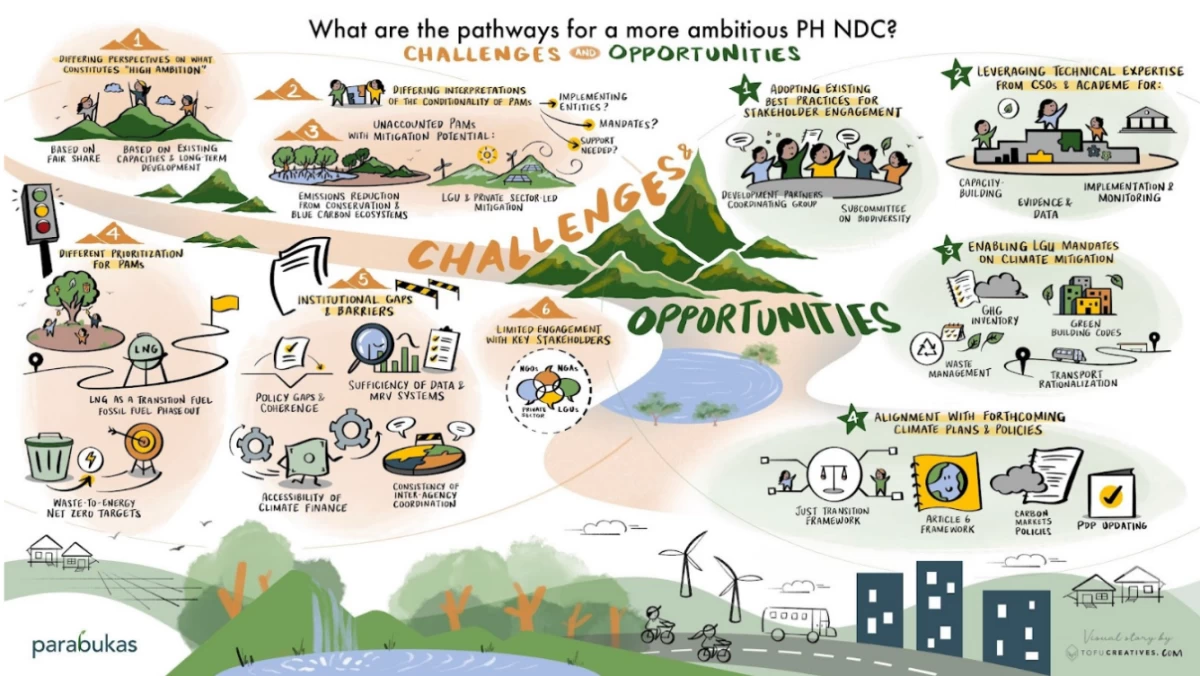
The prevailing perspective among government representatives regarding the level of ambition in the NDCs is anchored in State discretion and the principle of common but differentiated responsibilities and respective capabilities (CBDRRC), along with consideration of national circumstances. This approach is reflected in the arguably low unconditional target and the limited PAMs included in the NDC implementation plan, which are estimated to achieve only 39 percent of the current target.
Civil society advocates have questioned the level of ambition expressed in these submissions, urging for more ambitious commitments that integrate unaccounted PAMs and reflect existing national capabilities.
While the AO recognizes both perspectives, the ICJ determined that States’ discretion in determining the scope of their NDCs must reflect alignment with the long-term temperature goal, or else be at risk of breaching State obligations.
Securing effective implementation in the country
The Philippines will need to ensure that the identified PAMs are sufficient to achieve those commitments and ensure their effective implementation. The AO's points on stringent due diligence are crucial here, noting in particular that the ICJ found that enabling emissions from fossil fuels “may constitute an internationally wrongful act attributable to that State,” as well as emissions from private actors, should they fail to enact the necessary regulatory actions.
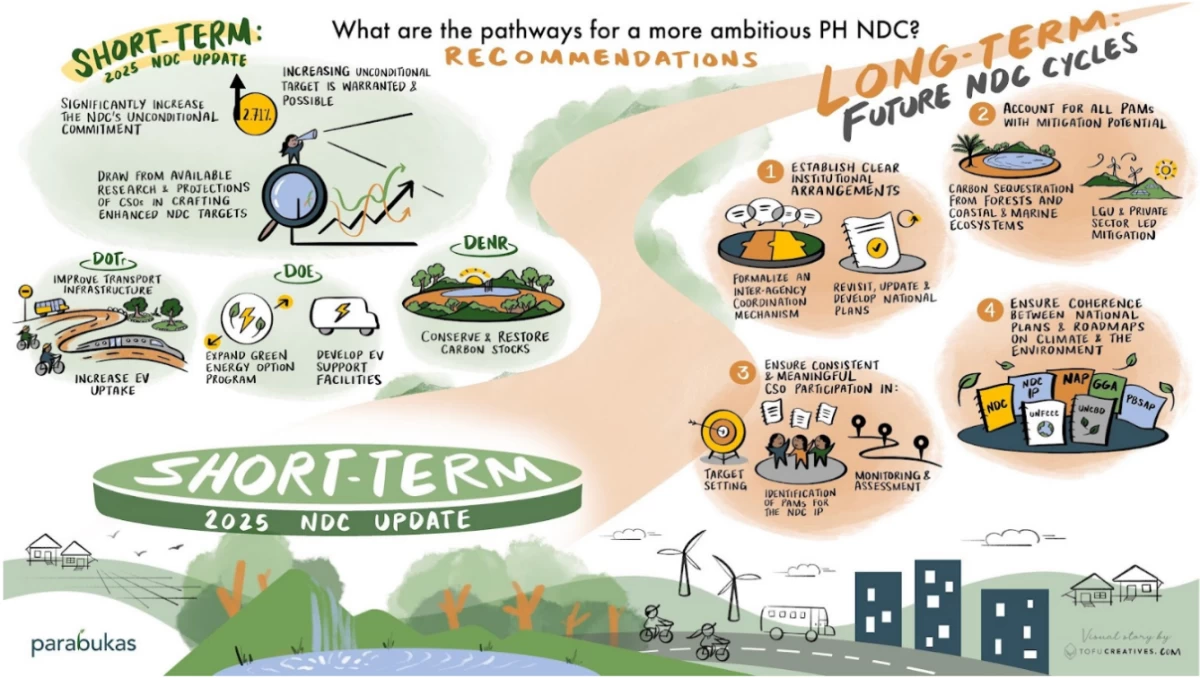
In case an NDC is found by stakeholders to be insufficient or inadequate to achieve the 1.5 threshold, the AO states that a court or tribunal could order the State to prepare and adopt a more consistent NDC.
Although the AO is not binding in itself, environmental lawyers have noted that it still holds significant moral authority to enable pathways for pursuing greater accountability and climate justice. NDC submissions for the third cycle will be interesting milestones to see how they will be taken up by stakeholders and State Parties. The power of the AO provisions will likely depend on how effectively stakeholders can utilize and enforce them.