ADVERTISEMENT

Livelihood, not lifelines

Published Aug 15, 2025 12:05 am  |  Updated Aug 14, 2025 05:59 pm
The Marcos administration’s proposed 2026 national budget signals a welcome and timely shift: prioritizing human capital development. Education, healthcare, training, social services—these are the cornerstones of a nation that wants to rise not just economically, but with dignity. But pure rhetoric doesn’t change anything; it must meet reality. The numbers may look promising, but it’s the execution that will ultimately spell the difference between hope and heartbreak.
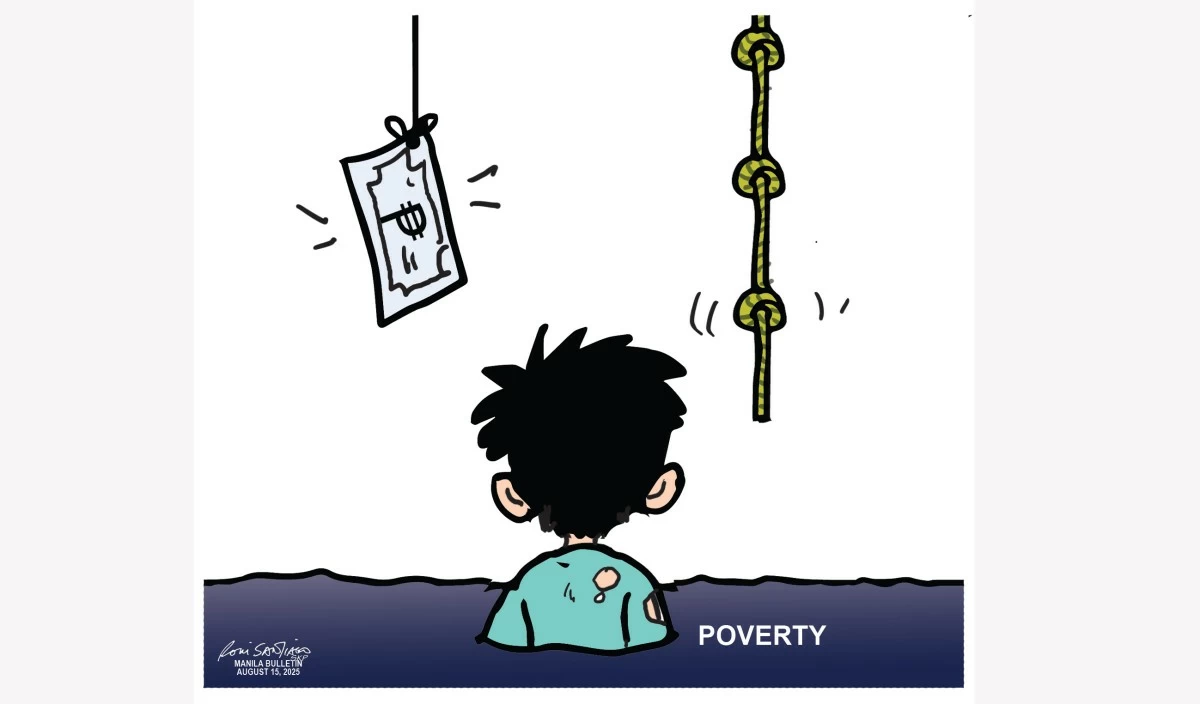
What the government must understand—urgently—is that cash assistance alone won’t rescue Filipinos from the clutches of poverty. It helps, yes. It soothes hunger. It tides people over during crises. But it does not heal the root cause of poverty. If this administration is serious about long-term development, it must invest more—much more—in sustainable livelihood programs. Not dole-outs. Not band-aid solutions. But skills-building, enterprise support, and market linkages that empower people to build lives, not just survive them.
The Marcos administration has set the tone under the proposed 2026 National Expenditure Program. Now, the ball is in the House of Representatives. It must reallocate larger slices of the pie toward programs that create income-generating opportunities. The government should turbocharge funding for small and micro-enterprises, agriculture modernization, vocational and tech training, and local industry support. This means not just giving fishermen boats or farmers seeds, but teaching them how to maximize their yields, connect with markets, and scale their efforts. Livelihood is not charity. It is investment—one that multiplies returns over time.
Equally important is policy coherence. The left hand must know what the right hand is doing. Livelihood programs must be aligned with education and skills development. Don’t just train people—train them for jobs that actually exist or could exist with the right government-industry synergy. Align TESDA’s courses with current and future labor demands. Make education responsive to regional development plans. Connect the dots. Otherwise, we train baristas where there are no cafés, welders where there is no steel industry, and farmers where land is barren.
But the government cannot—and should not—do it alone.
The private sector must step in. It must look beyond quarterly profits and invest in the country’s human capital. Business groups can partner with local governments to provide apprenticeships, fund technical education, and support start-ups in communities. They can open their doors to on-the-job training, offer mentorship, and support inclusive hiring practices. Corporate social responsibility must evolve from token charity to deep, transformative engagement in uplifting people’s economic capacity. After all, a better-skilled, better-paid workforce is also a better market.
Yet the biggest challenge may lie not in policy, but in mindset. Each Filipino must recognize that we all have a role to play in building this nation. We must shift from dependency to participation. From passive recipients of aid to active co-creators of our economic future. We need to demand more than “ayuda”—we need to demand access to tools, training, and opportunities that allow us to stand on our own feet.
President Marcos has a chance to etch a legacy not just of numbers and GDPs, but of lives changed and futures made possible. But it requires courage—the courage to invest where returns are enduring. It requires rejecting the easy optics of cash handouts in favor of the hard, often invisible work of building capability.
To paraphrase the popular Chinese proverb, let’s give our people not just fish, not even just fishing rods. Let’s teach them to build boats, map the seas, and claim the oceans. These will provide lasting effects.
It’s time we stop, if not minimize, handing out lifelines. Now is the time we start building lives, for their future and the future of this nation.
ADVERTISEMENT
.most-popular .layout-ratio{ padding-bottom: 79.13%; } @media (min-width: 768px) and (max-width: 1024px) { .widget-title { font-size: 15px !important; } }

{{ articles_filter_1561_widget.title }}

.most-popular .layout-ratio{ padding-bottom: 79.13%; } @media (min-width: 768px) and (max-width: 1024px) { .widget-title { font-size: 15px !important; } }

{{ articles_filter_1562_widget.title }}

.most-popular .layout-ratio{ padding-bottom: 79.13%; } @media (min-width: 768px) and (max-width: 1024px) { .widget-title { font-size: 15px !important; } }

{{ articles_filter_1563_widget.title }}

{{ articles_filter_1564_widget.title }}

.mb-article-details { position: relative; } .mb-article-details .article-body-preview, .mb-article-details .article-body-summary{ font-size: 17px; line-height: 30px; font-family: "Libre Caslon Text", serif; color: #000; } .mb-article-details .article-body-preview iframe , .mb-article-details .article-body-summary iframe{ width: 100%; margin: auto; } .read-more-background { background: linear-gradient(180deg, color(display-p3 1.000 1.000 1.000 / 0) 13.75%, color(display-p3 1.000 1.000 1.000 / 0.8) 30.79%, color(display-p3 1.000 1.000 1.000) 72.5%); position: absolute; height: 200px; width: 100%; bottom: 0; display: flex; justify-content: center; align-items: center; padding: 0; } .read-more-background a{ color: #000; } .read-more-btn { padding: 17px 45px; font-family: Inter; font-weight: 700; font-size: 18px; line-height: 16px; text-align: center; vertical-align: middle; border: 1px solid black; background-color: white; } .hidden { display: none; }
function initializeAllSwipers() { // Get all hidden inputs with cms_article_id document.querySelectorAll('[id^="cms_article_id_"]').forEach(function (input) { const cmsArticleId = input.value; const articleSelector = '#article-' + cmsArticleId + ' .body_images'; const swiperElement = document.querySelector(articleSelector); if (swiperElement && !swiperElement.classList.contains('swiper-initialized')) { new Swiper(articleSelector, { loop: true, pagination: false, navigation: { nextEl: '#article-' + cmsArticleId + ' .swiper-button-next', prevEl: '#article-' + cmsArticleId + ' .swiper-button-prev', }, }); } }); } setTimeout(initializeAllSwipers, 3000); const intersectionObserver = new IntersectionObserver( (entries) => { entries.forEach((entry) => { if (entry.isIntersecting) { const newUrl = entry.target.getAttribute("data-url"); if (newUrl) { history.pushState(null, null, newUrl); let article = entry.target; // Extract metadata const author = article.querySelector('.author-section').textContent.replace('By', '').trim(); const section = article.querySelector('.section-info ').textContent.replace(' ', ' '); const title = article.querySelector('.article-title h1').textContent; // Parse URL for Chartbeat path format const parsedUrl = new URL(newUrl, window.location.origin); const cleanUrl = parsedUrl.host + parsedUrl.pathname; // Update Chartbeat configuration if (typeof window._sf_async_config !== 'undefined') { window._sf_async_config.path = cleanUrl; window._sf_async_config.sections = section; window._sf_async_config.authors = author; } // Track virtual page view with Chartbeat if (typeof pSUPERFLY !== 'undefined' && typeof pSUPERFLY.virtualPage === 'function') { try { pSUPERFLY.virtualPage({ path: cleanUrl, title: title, sections: section, authors: author }); } catch (error) { console.error('ping error', error); } } // Optional: Update document title if (title && title !== document.title) { document.title = title; } } } }); }, { threshold: 0.1 } ); function showArticleBody(button) { const article = button.closest("article"); const summary = article.querySelector(".article-body-summary"); const body = article.querySelector(".article-body-preview"); const readMoreSection = article.querySelector(".read-more-background"); // Hide summary and read-more section summary.style.display = "none"; readMoreSection.style.display = "none"; // Show the full article body body.classList.remove("hidden"); } document.addEventListener("DOMContentLoaded", () => { let loadCount = 0; // Track how many times articles are loaded const offset = [1, 2, 3, 4, 5, 6, 7, 8, 9, 10]; // Offset values const currentUrl = window.location.pathname.substring(1); let isLoading = false; // Prevent multiple calls if (!currentUrl) { console.log("Current URL is invalid."); return; } const sentinel = document.getElementById("load-more-sentinel"); if (!sentinel) { console.log("Sentinel element not found."); return; } function isSentinelVisible() { const rect = sentinel.getBoundingClientRect(); return ( rect.top < window.innerHeight && rect.bottom >= 0 ); } function onScroll() { if (isLoading) return; if (isSentinelVisible()) { if (loadCount >= offset.length) { console.log("Maximum load attempts reached."); window.removeEventListener("scroll", onScroll); return; } isLoading = true; const currentOffset = offset[loadCount]; window.loadMoreItems().then(() => { let article = document.querySelector('#widget_1690 > div:nth-last-of-type(2) article'); intersectionObserver.observe(article) loadCount++; }).catch(error => { console.error("Error loading more items:", error); }).finally(() => { isLoading = false; }); } } window.addEventListener("scroll", onScroll); });

Sign up by email to receive news.