ADVERTISEMENT

Taglish ba, kamo? Google's AI says, sige ba!

Published Aug 14, 2025 09:16 am
Have you tried talking to your voice assistant in Taglish and getting a headscratching response? Yeah. We’ve all been through that. If it’s only Tagalog and English–especially in English–things might have been simpler.
But the Philippines is a home to many languages plus dialects. This means variety and complexity that can be challenging to train for AI. So voice assistants, while they have been improving, have felt like they had a long way to go.
That may change soon.
In their pursuit to put everything and anything into AI, Google revealed an ambitious project to train their AI to speak and understand more languages from around the world.
One of Google’s partners, AI Singapore and its own Project SEALD, is focused on creating a central library for languages across Southeast Asia. This partnership aims to bring over 1,200 languages to the region.
That may appear to be an astounding number. The Philippines alone has over 180 languages. Malaysia has over 130. Thailand is over 70. And Indonesia is home to over 700 languages. So it’s no surprise the 1,200 Google and AI Singapore aim to build is not that impossible. They aim to achieve this with Project SEALD’s open-source counterpart, Aquarium, a digital repository of language data across Southeast Asia.
What does this mean for the Philippines?
Smarter Apps: Developers will be able to build apps that can understand a myriad of Filipino languages, from Tagalog, Cebuano, Ilocano, and yes, even Taglish. The aim isn’t only developing the language, but also building it to understand local context and idioms. For instance, Waze would say “Kanto lang, boss.”
Inclusivity: It promises better access to information and digital services for Filipinos who are more comfortable in their mother tongue.
Local Innovation: Filipino developers will have the tools to create AI solutions tailor-made for the Filipino market.
Google has also partnered with Japan’s Yoshimoto Group. Now, when we think of Japanese shows, we almost always think of anime. Japan wants to share that they are more than that and most manga artists are inspired by the country’s comedy shows. With their AI translation tool, CHAD 2, powered by Google’s Gemini 2.0 Flash, provides translations that are 90% accurate and demonstrates perfect comedic timing and structure for other cultures to understand.
Google Storybook
Another feature that Google announced was Storybook. It generates 10-page storybooks for kids. Google says you can feed it your child’s drawings and Storybook will generate a narrative out of that.
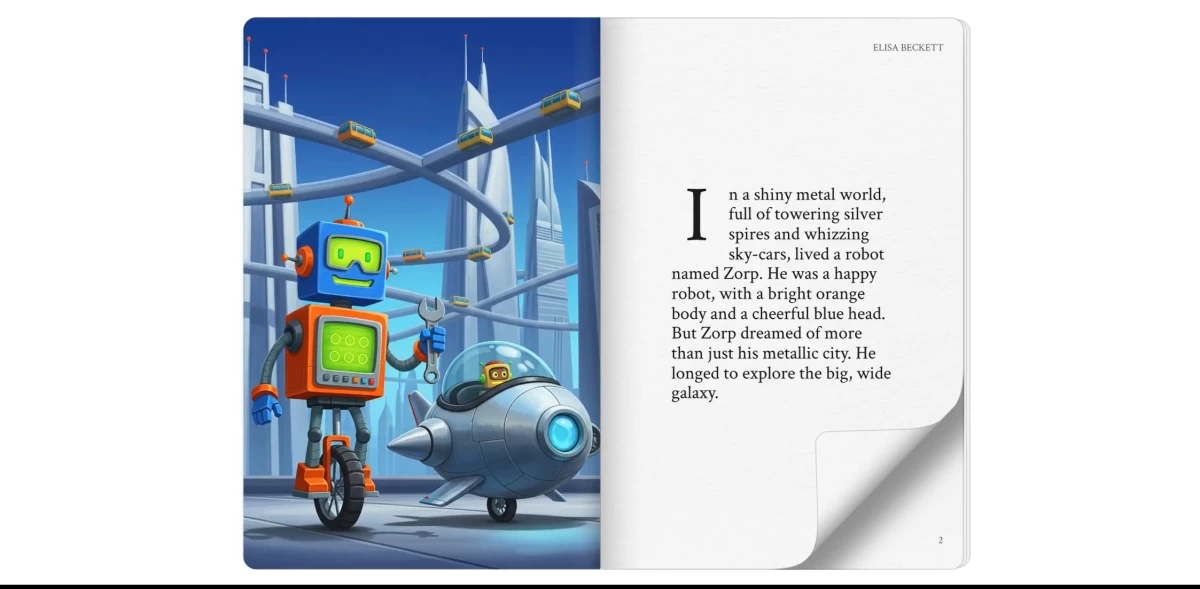
I may be speculating here, but this seems Google’s lowkey attempt to teach kids how to prompt better. Results in AI chatbots are dependent on the quality of a user's prompts. A bad prompt will lead to bad results and a good prompt will yield better results. And if AI constantly provides lackluster results, as a result of user prompts, users might still blame the AI and eventually stop using it. And so, by introducing Storybook, Google is putting prompting into kids' hands early. If a narrative they generated did not provide satisfying results, the child can tweak a page or two with additional prompts, improving the story and helping them learn how to prompt better.
Google says it supports over 45 languages. So this isn’t exclusive to English-only stories. You can try Storybook now by accessing Gemini.
ADVERTISEMENT
.most-popular .layout-ratio{ padding-bottom: 79.13%; } @media (min-width: 768px) and (max-width: 1024px) { .widget-title { font-size: 15px !important; } }

{{ articles_filter_1561_widget.title }}

.most-popular .layout-ratio{ padding-bottom: 79.13%; } @media (min-width: 768px) and (max-width: 1024px) { .widget-title { font-size: 15px !important; } }

{{ articles_filter_1562_widget.title }}

.most-popular .layout-ratio{ padding-bottom: 79.13%; } @media (min-width: 768px) and (max-width: 1024px) { .widget-title { font-size: 15px !important; } }

{{ articles_filter_1563_widget.title }}

{{ articles_filter_1564_widget.title }}

.mb-article-details { position: relative; } .mb-article-details .article-body-preview, .mb-article-details .article-body-summary{ font-size: 17px; line-height: 30px; font-family: "Libre Caslon Text", serif; color: #000; } .mb-article-details .article-body-preview iframe , .mb-article-details .article-body-summary iframe{ width: 100%; margin: auto; } .read-more-background { background: linear-gradient(180deg, color(display-p3 1.000 1.000 1.000 / 0) 13.75%, color(display-p3 1.000 1.000 1.000 / 0.8) 30.79%, color(display-p3 1.000 1.000 1.000) 72.5%); position: absolute; height: 200px; width: 100%; bottom: 0; display: flex; justify-content: center; align-items: center; padding: 0; } .read-more-background a{ color: #000; } .read-more-btn { padding: 17px 45px; font-family: Inter; font-weight: 700; font-size: 18px; line-height: 16px; text-align: center; vertical-align: middle; border: 1px solid black; background-color: white; } .hidden { display: none; }
function initializeAllSwipers() { // Get all hidden inputs with cms_article_id document.querySelectorAll('[id^="cms_article_id_"]').forEach(function (input) { const cmsArticleId = input.value; const articleSelector = '#article-' + cmsArticleId + ' .body_images'; const swiperElement = document.querySelector(articleSelector); if (swiperElement && !swiperElement.classList.contains('swiper-initialized')) { new Swiper(articleSelector, { loop: true, pagination: false, navigation: { nextEl: '#article-' + cmsArticleId + ' .swiper-button-next', prevEl: '#article-' + cmsArticleId + ' .swiper-button-prev', }, }); } }); } setTimeout(initializeAllSwipers, 3000); const intersectionObserver = new IntersectionObserver( (entries) => { entries.forEach((entry) => { if (entry.isIntersecting) { const newUrl = entry.target.getAttribute("data-url"); if (newUrl) { history.pushState(null, null, newUrl); let article = entry.target; // Extract metadata const author = article.querySelector('.author-section').textContent.replace('By', '').trim(); const section = article.querySelector('.section-info ').textContent.replace(' ', ' '); const title = article.querySelector('.article-title h1').textContent; // Parse URL for Chartbeat path format const parsedUrl = new URL(newUrl, window.location.origin); const cleanUrl = parsedUrl.host + parsedUrl.pathname; // Update Chartbeat configuration if (typeof window._sf_async_config !== 'undefined') { window._sf_async_config.path = cleanUrl; window._sf_async_config.sections = section; window._sf_async_config.authors = author; } // Track virtual page view with Chartbeat if (typeof pSUPERFLY !== 'undefined' && typeof pSUPERFLY.virtualPage === 'function') { try { pSUPERFLY.virtualPage({ path: cleanUrl, title: title, sections: section, authors: author }); } catch (error) { console.error('ping error', error); } } // Optional: Update document title if (title && title !== document.title) { document.title = title; } } } }); }, { threshold: 0.1 } ); function showArticleBody(button) { const article = button.closest("article"); const summary = article.querySelector(".article-body-summary"); const body = article.querySelector(".article-body-preview"); const readMoreSection = article.querySelector(".read-more-background"); // Hide summary and read-more section summary.style.display = "none"; readMoreSection.style.display = "none"; // Show the full article body body.classList.remove("hidden"); } document.addEventListener("DOMContentLoaded", () => { let loadCount = 0; // Track how many times articles are loaded const offset = [1, 2, 3, 4, 5, 6, 7, 8, 9, 10]; // Offset values const currentUrl = window.location.pathname.substring(1); let isLoading = false; // Prevent multiple calls if (!currentUrl) { console.log("Current URL is invalid."); return; } const sentinel = document.getElementById("load-more-sentinel"); if (!sentinel) { console.log("Sentinel element not found."); return; } function isSentinelVisible() { const rect = sentinel.getBoundingClientRect(); return ( rect.top < window.innerHeight && rect.bottom >= 0 ); } function onScroll() { if (isLoading) return; if (isSentinelVisible()) { if (loadCount >= offset.length) { console.log("Maximum load attempts reached."); window.removeEventListener("scroll", onScroll); return; } isLoading = true; const currentOffset = offset[loadCount]; window.loadMoreItems().then(() => { let article = document.querySelector('#widget_1690 > div:nth-last-of-type(2) article'); intersectionObserver.observe(article) loadCount++; }).catch(error => { console.error("Error loading more items:", error); }).finally(() => { isLoading = false; }); } } window.addEventListener("scroll", onScroll); });

Sign up by email to receive news.