

ADVERTISEMENT

South Africa dismisses US human rights report as 'deeply flawed'

Published Aug 14, 2025 09:04 am
JOHANNESBURG — The South African government on Wednesday dismissed the U.S. State Department’s latest assessment of the country’s human rights conditions as “inaccurate and deeply flawed.”
The Trump administration this week released human rights reports for countries worldwide, including South Africa, asserting that the state of human rights in South Africa had “significantly worsened” in 2024. It cited the unjust treatment of white Afrikaners after the signing of significant land reforms, which the Trump administration has claimed discriminate against the group that ruled the nation during the apartheid era.
South Africa’s Foreign Ministry expressed “profound disappointment” with the report, saying its reliance on out of context information and discredited accounts was highly concerning.
The ministry highlighted that the United Nations had hailed the country’s Land Expropriation Act as an important step in resolving racially unequal land ownership, underscoring the integrity of constitutional and human rights-based legislative processes.
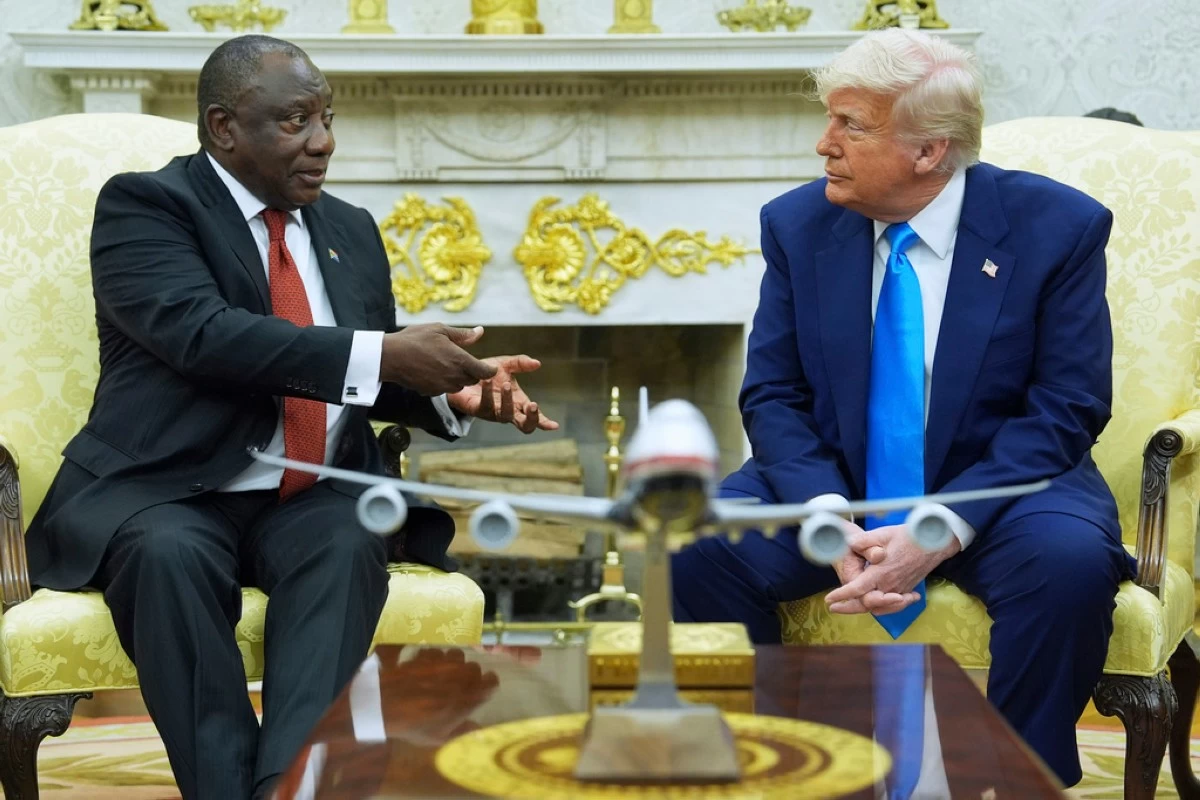
FILE - President Donald Trump meets South African President Cyril Ramaphosa in the Oval Office of the White House, Wednesday, May 21, 2025, in Washington. (AP Photo/Evan Vucci, file)
It added that the report was ‘ironic’ given the U.S exit from the U.N. Human Rights Council.
“This is particularly striking given the significant and documented concerns about human rights within the United States, including the treatment of refugees and breaches in due process by its own agencies, such as ICE,” the ministry said.
South Africa's government also dismissed as inaccurate the report's claims that it “did not take credible steps to investigate, prosecute and punish officials who committed human rights abuses, including inflammatory racial rhetoric against Afrikaners and other racial minorities, or violence against racial minorities.”
The U.S. criticism of South Africa’s domestic affairs is the latest in a series of tense diplomatic exchanges between the two countries since President Donald Trump was elected to a second term.
During a state visit to the White House in May, Trump confronted President Cyril Ramaphosa with false claims that South Africa had been illegally occupying the farms of white Afrikaner farmers. The administration even speeded up the visa application processes for Afrikaners who wanted to relocate to the U.S as refugees.
Along with suspending financial aid and imposing 30% tariffs on South Africa’s exports to the U.S., Trump has denounced the country’s stance on the Israel-Hamas conflict.
South African Ambassador Ebrahim Rasool was expelled by the U.S. for his criticism of Trump, who has hinted that he may not attend the G20 summit of world leaders scheduled to take place in Johannesburg in November.
The Afrikaans trade union Solidarieit, which was criticized by Ramaphosa over a recent visit to Washington, has announced new plans to visit the U.S. in September to meet with the Department of State and other parties to discuss abolishing racial-redress laws, reestablishing diplomatic ties, and creating a fair trade agreement between the two countries.

Related Tags

World news
ADVERTISEMENT
.most-popular .layout-ratio{ padding-bottom: 79.13%; } @media (min-width: 768px) and (max-width: 1024px) { .widget-title { font-size: 15px !important; } }

{{ articles_filter_1561_widget.title }}

.most-popular .layout-ratio{ padding-bottom: 79.13%; } @media (min-width: 768px) and (max-width: 1024px) { .widget-title { font-size: 15px !important; } }

{{ articles_filter_1562_widget.title }}

.most-popular .layout-ratio{ padding-bottom: 79.13%; } @media (min-width: 768px) and (max-width: 1024px) { .widget-title { font-size: 15px !important; } }

{{ articles_filter_1563_widget.title }}

{{ articles_filter_1564_widget.title }}

.mb-article-details { position: relative; } .mb-article-details .article-body-preview, .mb-article-details .article-body-summary{ font-size: 17px; line-height: 30px; font-family: "Libre Caslon Text", serif; color: #000; } .mb-article-details .article-body-preview iframe , .mb-article-details .article-body-summary iframe{ width: 100%; margin: auto; } .read-more-background { background: linear-gradient(180deg, color(display-p3 1.000 1.000 1.000 / 0) 13.75%, color(display-p3 1.000 1.000 1.000 / 0.8) 30.79%, color(display-p3 1.000 1.000 1.000) 72.5%); position: absolute; height: 200px; width: 100%; bottom: 0; display: flex; justify-content: center; align-items: center; padding: 0; } .read-more-background a{ color: #000; } .read-more-btn { padding: 17px 45px; font-family: Inter; font-weight: 700; font-size: 18px; line-height: 16px; text-align: center; vertical-align: middle; border: 1px solid black; background-color: white; } .hidden { display: none; }
function initializeAllSwipers() { // Get all hidden inputs with cms_article_id document.querySelectorAll('[id^="cms_article_id_"]').forEach(function (input) { const cmsArticleId = input.value; const articleSelector = '#article-' + cmsArticleId + ' .body_images'; const swiperElement = document.querySelector(articleSelector); if (swiperElement && !swiperElement.classList.contains('swiper-initialized')) { new Swiper(articleSelector, { loop: true, pagination: false, navigation: { nextEl: '#article-' + cmsArticleId + ' .swiper-button-next', prevEl: '#article-' + cmsArticleId + ' .swiper-button-prev', }, }); } }); } setTimeout(initializeAllSwipers, 3000); const intersectionObserver = new IntersectionObserver( (entries) => { entries.forEach((entry) => { if (entry.isIntersecting) { const newUrl = entry.target.getAttribute("data-url"); if (newUrl) { history.pushState(null, null, newUrl); let article = entry.target; // Extract metadata const author = article.querySelector('.author-section').textContent.replace('By', '').trim(); const section = article.querySelector('.section-info ').textContent.replace(' ', ' '); const title = article.querySelector('.article-title h1').textContent; // Parse URL for Chartbeat path format const parsedUrl = new URL(newUrl, window.location.origin); const cleanUrl = parsedUrl.host + parsedUrl.pathname; // Update Chartbeat configuration if (typeof window._sf_async_config !== 'undefined') { window._sf_async_config.path = cleanUrl; window._sf_async_config.sections = section; window._sf_async_config.authors = author; } // Track virtual page view with Chartbeat if (typeof pSUPERFLY !== 'undefined' && typeof pSUPERFLY.virtualPage === 'function') { try { pSUPERFLY.virtualPage({ path: cleanUrl, title: title, sections: section, authors: author }); } catch (error) { console.error('ping error', error); } } // Optional: Update document title if (title && title !== document.title) { document.title = title; } } } }); }, { threshold: 0.1 } ); function showArticleBody(button) { const article = button.closest("article"); const summary = article.querySelector(".article-body-summary"); const body = article.querySelector(".article-body-preview"); const readMoreSection = article.querySelector(".read-more-background"); // Hide summary and read-more section summary.style.display = "none"; readMoreSection.style.display = "none"; // Show the full article body body.classList.remove("hidden"); } document.addEventListener("DOMContentLoaded", () => { let loadCount = 0; // Track how many times articles are loaded const offset = [1, 2, 3, 4, 5, 6, 7, 8, 9, 10]; // Offset values const currentUrl = window.location.pathname.substring(1); let isLoading = false; // Prevent multiple calls if (!currentUrl) { console.log("Current URL is invalid."); return; } const sentinel = document.getElementById("load-more-sentinel"); if (!sentinel) { console.log("Sentinel element not found."); return; } function isSentinelVisible() { const rect = sentinel.getBoundingClientRect(); return ( rect.top < window.innerHeight && rect.bottom >= 0 ); } function onScroll() { if (isLoading) return; if (isSentinelVisible()) { if (loadCount >= offset.length) { console.log("Maximum load attempts reached."); window.removeEventListener("scroll", onScroll); return; } isLoading = true; const currentOffset = offset[loadCount]; window.loadMoreItems().then(() => { let article = document.querySelector('#widget_1690 > div:nth-last-of-type(2) article'); intersectionObserver.observe(article) loadCount++; }).catch(error => { console.error("Error loading more items:", error); }).finally(() => { isLoading = false; }); } } window.addEventListener("scroll", onScroll); });

Sign up by email to receive news.