

ADVERTISEMENT

Pork barrel in disguise? Group calls for scrapping 'all confidential funds' in 2026 budget

ACT urges abolition of confidential and intelligence funds; urged redirection to education, social services

Published Aug 14, 2025 08:49 pm

At A Glance

  • While public school teachers are "made to beg" for educational resources and decent salaries, ACT Philippines laments that billions go to shadow budgets
  • ACT is demanding the abolition of Marcos' proposed P10.77 billion confidential and intelligence funds for 2026, which it alleges would allocate nearly half to the Office of the President
  • Instead of funding "pork barrel politics" under a new name, ACT said the money could be used to build over 4,300 classrooms and support other basic education essentials
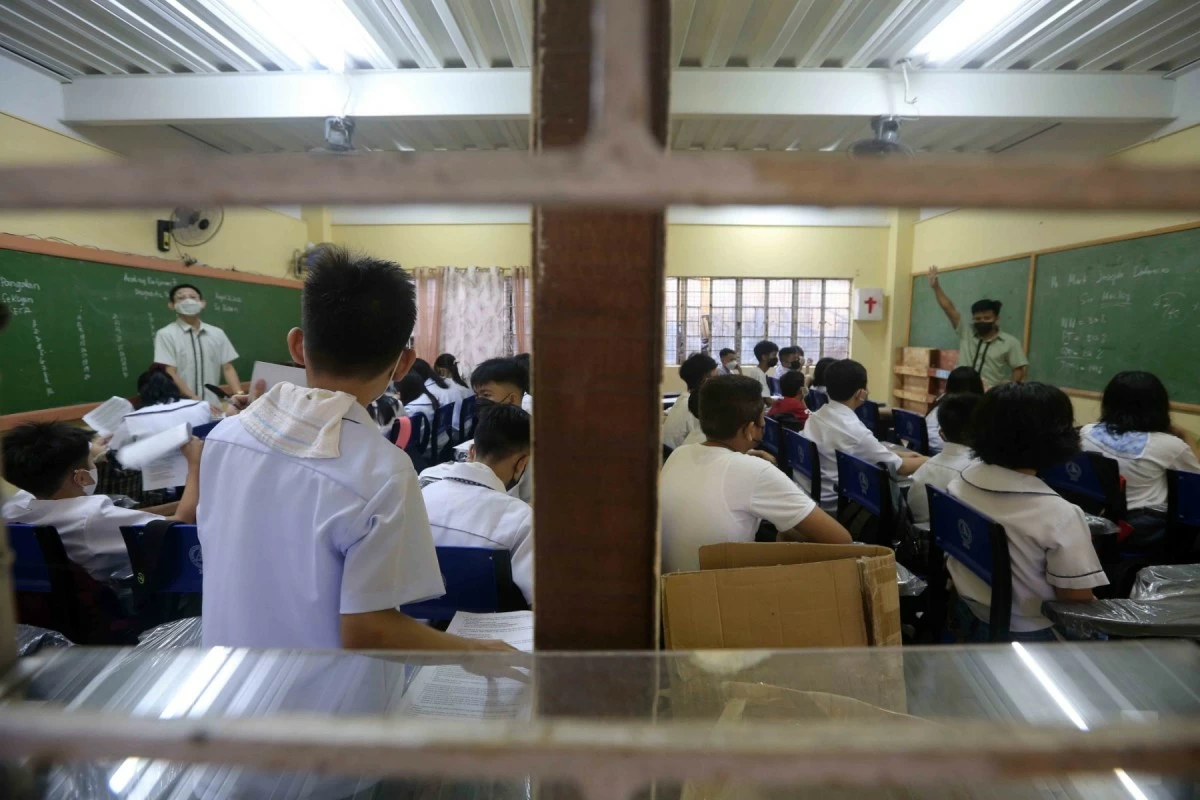
ACT urges scrapping of all confidential and intelligence funds in the 2026 budget, calling them “pork barrel in disguise” and pushing funds to education and social services. (MANILA BULLETIN / file photo)
A group of education workers on Thursday, August 14, denounced the Marcos administration’s proposed P10.77 billion in confidential and intelligence funds (CIF) for 2026, branding them “pork barrel in disguise” and demanding their reallocation to education and social services.
The Alliance of Concerned Teachers (ACT), in a statement, demanded the abolition of the proposed CIF for 2026, nearly half of which would go to the Office of the President. The group said the amount could build over 4,300 classrooms instead of funding “pork barrel politics” under a new name.
ACT alleged that the proposed CIF is “no different” from the controversial allocations once wielded by Vice President Sara Duterte.
“Marcos may have denied Sara her confidential funds, but he has secured billions for himself under the same corrupt, unaccountable scheme,” ACT Chairperson Vladimer Quetua said. “Whether in Duterte’s hands or Marcos’, CIFs serve as personal war chests for political patronage and repression, leaving public services to survive on crumbs,” he added.
'Betrayal' of the people’s trust
Citing the proposed 2026 National Expenditure Program (NEP), ACT noted that P4.5 billion—nearly half of the CIF allocation—would go to the Office of the President, which, the group pointed out, has no direct mandate for intelligence operations.
The group warned that such funds are prone to abuse, potentially financing political patronage, surveillance, and repression instead of addressing urgent public needs.
Quetua stressed that the billions allocated for CIFs could instead be used to address chronic shortages in public education.
“Teachers are made to beg for classrooms, textbooks, and decent salaries, while billions are handed out as shadow budgets beyond the reach of auditors,” he said. “The amount could already construct more than 4,300 classrooms. Is this not a deliberate betrayal of the people’s trust?” he added.
ACT further raised transparency concerns, noting that CIFs are almost impossible to audit.
Under current rules, the Commission on Audit (COA) only receives certifications from agency heads rather than detailed expenditure reports—a lack of accountability that the group said mirrors the controversial CIF allocations once held by Duterte.
The group also urged Congress to abolish all CIFs across government agencies and redirect the funds to priority public services.
“Teachers, students, and ordinary Filipinos are told there’s no budget for our needs, yet billions are reserved for confidential funds that enrich and empower those in power while evading public accountability,” Quetua said. “This is the same old pork barrel politics, with only the name and the holder having changed,” he added.

Related Tags

confidential and intelligence funds 2026 Marcos 2026 budget pork barrel in disguise public education funding Philippines abolish confidential funds ACT Philippines classroom shortage
ADVERTISEMENT
.most-popular .layout-ratio{ padding-bottom: 79.13%; } @media (min-width: 768px) and (max-width: 1024px) { .widget-title { font-size: 15px !important; } }

{{ articles_filter_1561_widget.title }}

.most-popular .layout-ratio{ padding-bottom: 79.13%; } @media (min-width: 768px) and (max-width: 1024px) { .widget-title { font-size: 15px !important; } }

{{ articles_filter_1562_widget.title }}

.most-popular .layout-ratio{ padding-bottom: 79.13%; } @media (min-width: 768px) and (max-width: 1024px) { .widget-title { font-size: 15px !important; } }

{{ articles_filter_1563_widget.title }}

{{ articles_filter_1564_widget.title }}

.mb-article-details { position: relative; } .mb-article-details .article-body-preview, .mb-article-details .article-body-summary{ font-size: 17px; line-height: 30px; font-family: "Libre Caslon Text", serif; color: #000; } .mb-article-details .article-body-preview iframe , .mb-article-details .article-body-summary iframe{ width: 100%; margin: auto; } .read-more-background { background: linear-gradient(180deg, color(display-p3 1.000 1.000 1.000 / 0) 13.75%, color(display-p3 1.000 1.000 1.000 / 0.8) 30.79%, color(display-p3 1.000 1.000 1.000) 72.5%); position: absolute; height: 200px; width: 100%; bottom: 0; display: flex; justify-content: center; align-items: center; padding: 0; } .read-more-background a{ color: #000; } .read-more-btn { padding: 17px 45px; font-family: Inter; font-weight: 700; font-size: 18px; line-height: 16px; text-align: center; vertical-align: middle; border: 1px solid black; background-color: white; } .hidden { display: none; }
function initializeAllSwipers() { // Get all hidden inputs with cms_article_id document.querySelectorAll('[id^="cms_article_id_"]').forEach(function (input) { const cmsArticleId = input.value; const articleSelector = '#article-' + cmsArticleId + ' .body_images'; const swiperElement = document.querySelector(articleSelector); if (swiperElement && !swiperElement.classList.contains('swiper-initialized')) { new Swiper(articleSelector, { loop: true, pagination: false, navigation: { nextEl: '#article-' + cmsArticleId + ' .swiper-button-next', prevEl: '#article-' + cmsArticleId + ' .swiper-button-prev', }, }); } }); } setTimeout(initializeAllSwipers, 3000); const intersectionObserver = new IntersectionObserver( (entries) => { entries.forEach((entry) => { if (entry.isIntersecting) { const newUrl = entry.target.getAttribute("data-url"); if (newUrl) { history.pushState(null, null, newUrl); let article = entry.target; // Extract metadata const author = article.querySelector('.author-section').textContent.replace('By', '').trim(); const section = article.querySelector('.section-info ').textContent.replace(' ', ' '); const title = article.querySelector('.article-title h1').textContent; // Parse URL for Chartbeat path format const parsedUrl = new URL(newUrl, window.location.origin); const cleanUrl = parsedUrl.host + parsedUrl.pathname; // Update Chartbeat configuration if (typeof window._sf_async_config !== 'undefined') { window._sf_async_config.path = cleanUrl; window._sf_async_config.sections = section; window._sf_async_config.authors = author; } // Track virtual page view with Chartbeat if (typeof pSUPERFLY !== 'undefined' && typeof pSUPERFLY.virtualPage === 'function') { try { pSUPERFLY.virtualPage({ path: cleanUrl, title: title, sections: section, authors: author }); } catch (error) { console.error('ping error', error); } } // Optional: Update document title if (title && title !== document.title) { document.title = title; } } } }); }, { threshold: 0.1 } ); function showArticleBody(button) { const article = button.closest("article"); const summary = article.querySelector(".article-body-summary"); const body = article.querySelector(".article-body-preview"); const readMoreSection = article.querySelector(".read-more-background"); // Hide summary and read-more section summary.style.display = "none"; readMoreSection.style.display = "none"; // Show the full article body body.classList.remove("hidden"); } document.addEventListener("DOMContentLoaded", () => { let loadCount = 0; // Track how many times articles are loaded const offset = [1, 2, 3, 4, 5, 6, 7, 8, 9, 10]; // Offset values const currentUrl = window.location.pathname.substring(1); let isLoading = false; // Prevent multiple calls if (!currentUrl) { console.log("Current URL is invalid."); return; } const sentinel = document.getElementById("load-more-sentinel"); if (!sentinel) { console.log("Sentinel element not found."); return; } function isSentinelVisible() { const rect = sentinel.getBoundingClientRect(); return ( rect.top < window.innerHeight && rect.bottom >= 0 ); } function onScroll() { if (isLoading) return; if (isSentinelVisible()) { if (loadCount >= offset.length) { console.log("Maximum load attempts reached."); window.removeEventListener("scroll", onScroll); return; } isLoading = true; const currentOffset = offset[loadCount]; window.loadMoreItems().then(() => { let article = document.querySelector('#widget_1690 > div:nth-last-of-type(2) article'); intersectionObserver.observe(article) loadCount++; }).catch(error => { console.error("Error loading more items:", error); }).finally(() => { isLoading = false; }); } } window.addEventListener("scroll", onScroll); });

Sign up by email to receive news.