






 Environment and Sustainability
Philippines' ancient balete guardians: Witnesses of time and resilience
Environment and Sustainability
Philippines' ancient balete guardians: Witnesses of time and resilience
Philippines' ancient balete guardians: Witnesses of time and resilience


I was just wandering around the vast greenery here in Tagaytay, where I live, when I found myself scrolling through Facebook and landing on a group called Pinoy History. One post in particular caught my attention, it was about some of the oldest trees in the country.
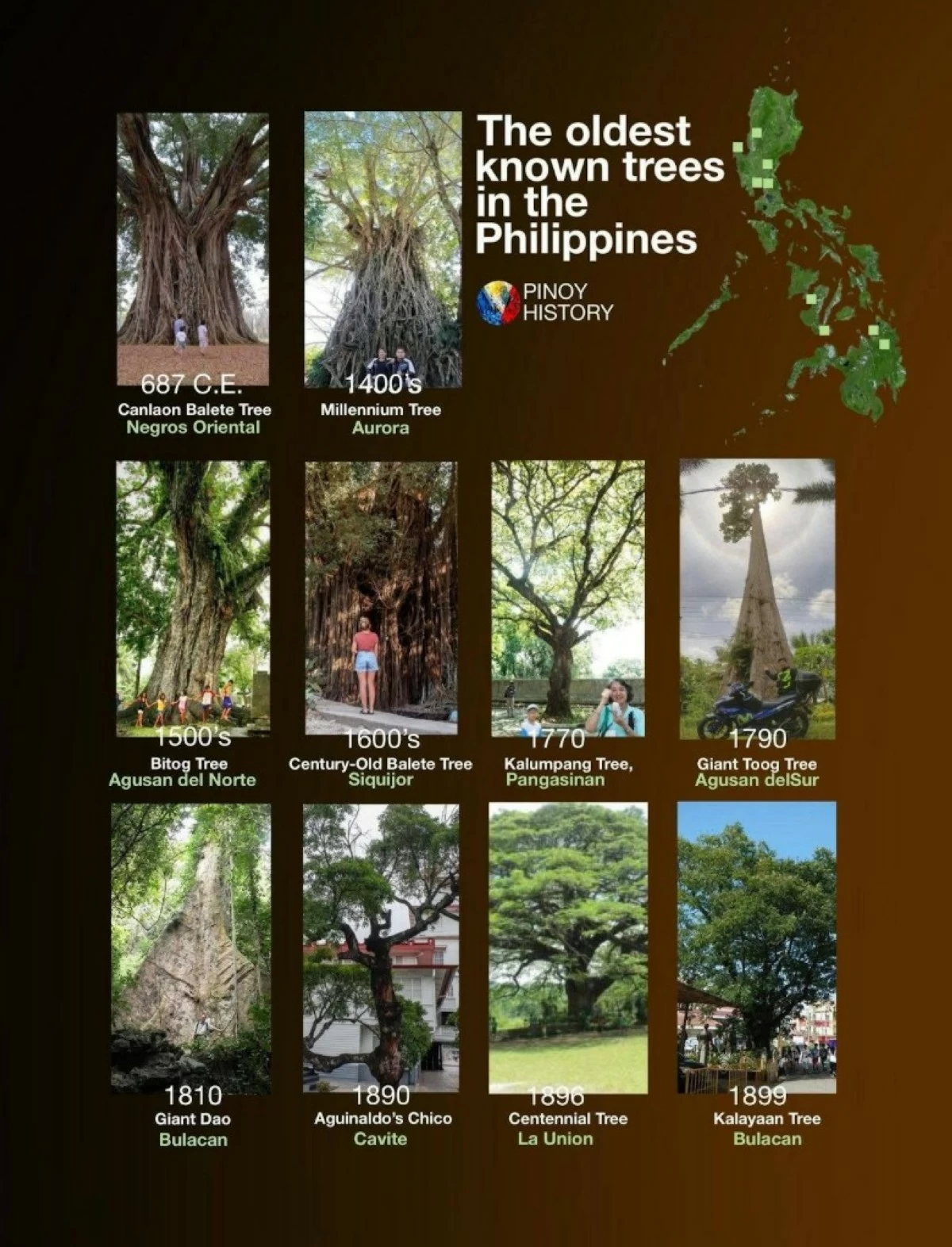
It got me thinking. These trees have stood for hundreds of years, through storms and changes we can only imagine. And yet, here we are, facing floods and heavy rains more often than before. Maybe it’s a sign that we need to take better care of what’s left—and plant more—so future generations can enjoy the same shade and shelter we have today.
So, upon researching, in the lush landscapes of the Philippines, a few ancient balete trees—quiet sentinels of centuries—stand not only as natural marvels but also as living archives, telling tales of survival, folklore, and ecological wisdom. Among them, the balete in OISCA Farm, Canlaon City and the “Millennium Tree” of Aurora star as cultural icons, beckoning us to marvel—and to reflect.
Tucked deep within the quiet grounds of OISCA Farm in Lumapao, Canlaon City, stands a living monument the locals call the Century Tree Dalakit, though many simply know it as the "Wonder Balete".
According to MonumentalTrees.com, this gentle giant has been rooted here for some 1,328 years, give or take a few centuries. To wrap your arms around its colossal trunk, you’d need 42 people, hand in hand, forming a human chain just to meet end to end.
Imagine a living being older than most nations, older than the Spanish and American eras, older even than the Philippines itself. It has witnessed kingdoms rise and fall, felt the tremors of earthquakes and the roar of typhoons, and stood steadfast through the quiet in-between. At night, fireflies gather to dance around its hollow, like Christmas lights strung by nature’s hand. Inside its massive trunk, lizards scurry, bats roost, and countless insects hum in the dark. It is a world within a world, alive with its own pulse, a hidden city that has thrived for over a millennium beneath the shelter of its gnarled, time-worn bark.
The Millennium Tree of Aurora: Where Myths Take Root
Travel north to Barangay Quirino in Maria Aurora, and you’ll meet another titan: the Millennium Tree. Here, in Balete Park, a balete so vast and revered is believed to be more than 600 years old, possibly the largest of its kind in Asia.
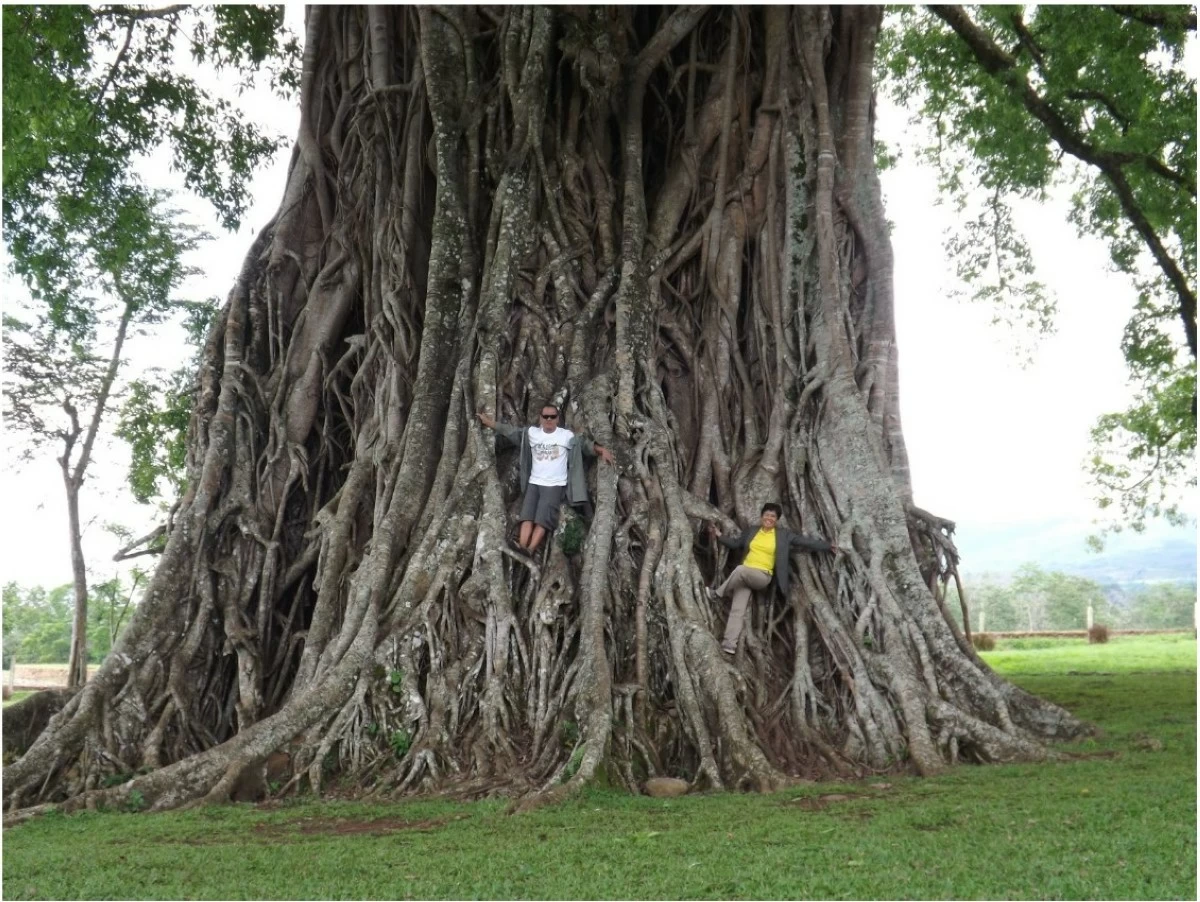
Some say it towers at 60 meters tall, its girth wide enough for 50 to 60 people to encircle the base, and its canopy stretches far beyond, like arms reaching to the sky.
Step inside its root labyrinth, and you’re enveloped by a cathedral of wood, shadows, and soft light, a secret world centuries in the making.
Siquijor’s Enchanted Sentinel
On the magical island of Siquijor, in Lazi’s Campalanas, stands an ancient balete tree that is approximately 400 years old. What sets it apart? A fresh spring bubbling from its base flows into a man-made pool, where “doctor fish” nibble in a natural foot spa. Locals say the tree is the gathering place of fairies, dwende, and spirits. Mystical? Yes, but also undeniably real.
The Tales These Trees Would Tell
These arboreal elders bear silent witness to history: volcanic eruptions, colonial incursions, World Wars, and the turn of nations. One Reddit comment sums it up with befitting awe: “This tree actually managed to outlive the Mongol Empire… multiple wars… even the Republic itself.”
No wonder our folklore clings to them: in their crevices, spirits—engkantos, diwata, kapre—reside, weaving myth into their mighty forms. But these legends protect as much as they enchant, nurturing respect where laws may lack.
Why These Trees Matter to Our Earth
Beyond their storied past, these trees are environmental champions:
- Their deep roots hold soil firm, anchoring slopes prone to erosion.
- They drink and store rain, helping communities during floods.
- Their vast canopies cool the air; their trunks and hollows house bats, insects, and birds—boosting biodiversity.
In regions vulnerable to typhoons, landslides, and climate shocks, these ancient giants are natural defenders. Their loss would be more than cultural; it would be ecological.
How We Can Protect These Living Legacies
If these trees are history in bark and leaf, here's how we ensure they continue:
Before The Last Leaf Falls
Close your eyes and imagine a balete tree breathing under moonlight, roots whispering in the wind, centuries of Philippine stories etched into every vein. These are not just trees, they are timekeepers, teachers, and guardians of our land.
And yet, in the advent of technology and rapid change, we must ask: how can these trees continue to stand the test of time? How can we weave sustainability into our future without losing the wisdom of the past?
We’ll save that for our next story. For now, share with us what you know about these giants, your memories, your encounters, your awe. Together, let’s keep their roots strong by keeping their stories alive.