






Manila Bulletin
 Business
The Economy
No more delays: DBM chief Pangandaman assures counterpart gov't budget for foreign-assisted projects
Business
The Economy
No more delays: DBM chief Pangandaman assures counterpart gov't budget for foreign-assisted projects
Business
The Economy
No more delays: DBM chief Pangandaman assures counterpart gov't budget for foreign-assisted projects
No more delays: DBM chief Pangandaman assures counterpart gov't budget for foreign-assisted projects
JICA Philippines chief says all Japan-funded projects affected by Philippine budget constraints
By Ben Arnold de Vera and Derco Rosal
Published Aug 14, 2025 03:33 pm


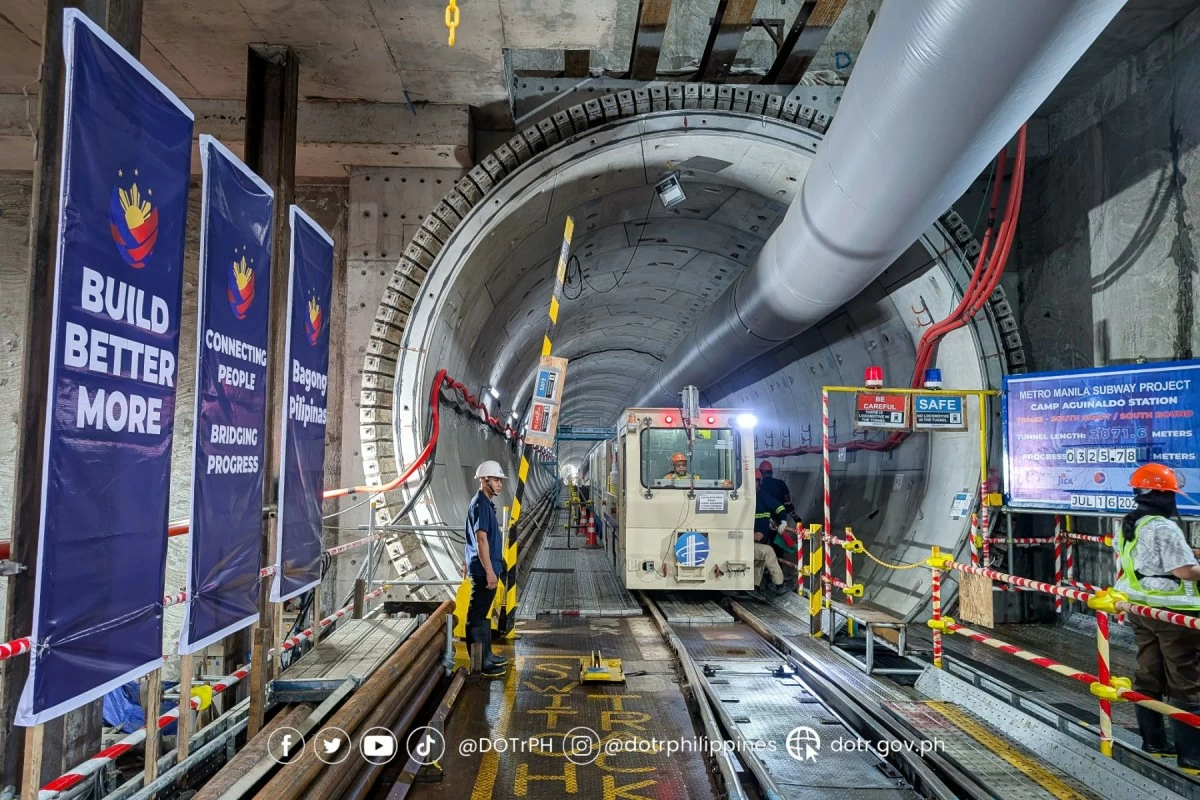
(DOTr photo)
Budget Secretary Amenah F. Pangandaman has assured that big-ticket foreign-assisted programs and projects will no longer suffer from delays, given the budget cover included in the proposed 2026 spending plan of the national government.
For its part, aid agency Japan International Cooperation Agency (JICA) is hopeful that President Ferdinand Marcos Jr.’s commitment to fast-track initiatives funded by official development assistance (ODA) will come to fruition, as its chief representative in the Philippines told Manila Bulletin that “all” JICA-supported projects and programs have been hampered by budget constraints, such that Japanese contractors are shelling out their own money in order to keep projects moving.
“Loan proceeds and the Philippine government’s counterpart financing are already incorporated in the respective budgets of the implementing agencies,” Pangandaman told Manila Bulletin on Thursday, Aug. 14.
Based on 2026 budget documents, a total of ₱283.3 billion in foreign-assisted projects will be covered by funding under the proposed ₱6.793-trillion 2026 national budget.
Of this amount, over ₱82 billion in counterpart government financing will support ₱201.3 billion in loan proceeds.
Next year’s funding for foreign-assisted projects is more than four times larger than the only over ₱66-billion program for this year, composed of ₱30.7 billion in counterpart public funds and ₱35.3 billion in loan proceeds.
It also helps that unprogrammed appropriations (UA) in the 2026 budget proposal slid to ₱249.9 billion from ₱363.4 billion this year and ₱531.4 billion last year.
Since unprogrammed appropriations are not covered by regular budget financing, these can only be funded by excess or new tax and non-tax revenues, as well as foreign loans for specific projects and programs.
A number of foreign-funded projects had been delayed by their inclusion in the national budget’s unprogrammed appropriations.
Pangandaman told reporters on Wednesday, Aug. 13, that the allocation for foreign-assisted projects that are yet to be approved stands at a little over ₱100 billion, covering mostly infrastructure, social programs, and the Armed Forces of the Philippines (AFP) modernization program.
These, she said, are projects that still have no agreements with bilateral or multilateral financing partners and have not yet been submitted to the Economic Development (ED) Council, chaired by the President, for approval.
After the send-off ceremony for the 23rd batch of scholars under the Project for Human Resource Development Scholarship by Japanese Grant Aid (JDS Project) on Tuesday night, Aug. 12, JICA Philippines Chief Representative Takashi Baba told Manila Bulletin that they welcome the President and his administration now paying closer attention to the smooth progress of ODA-funded projects and programs, including those financed by the Japanese government.
Baba disclosed that all JICA-assisted projects in the Philippines are delayed due to budgetary constraints emanating from the government side.
He noted that even when line agencies request full funding from the Department of Budget and Management (DBM), the approved amounts are often significantly reduced, leading to insufficient funds for project implementation.
Baba further disclosed that the bigger problem for JICA’s ongoing initiatives in the country is the plight of Japanese contractors, who could not collect dues from implementing government agencies due to lack of budget cover but need to pay their local subcontractors.
As such, Japanese contractors and their subcontractors both face payment delays due to the slow release of funds from Philippine agencies.
He said they have not computed how much in total the Philippine government owes Japanese contractors for JICA projects here, but he nodded when asked if it’s likely a huge amount.
Despite these challenges, Baba said Japanese companies remain committed to fulfilling their contractual obligations, sometimes borrowing from banks to keep projects moving.
However, he said that these challenges could affect contractors’ willingness to participate in future projects.
Baba nonetheless described these delays as a “legacy issue” that has persisted across multiple administrations, not just the current one.
Under the Philippines’ loan agreements with JICA, Japanese firms or joint ventures involving them have priority in being hired as contractors, suppliers, or consultants for the projects funded by the loan.