ADVERTISEMENT

Japanese AI tech Spectee Pro leverages social media to speed up Philippines' disaster response

Published Aug 14, 2025 11:06 pm
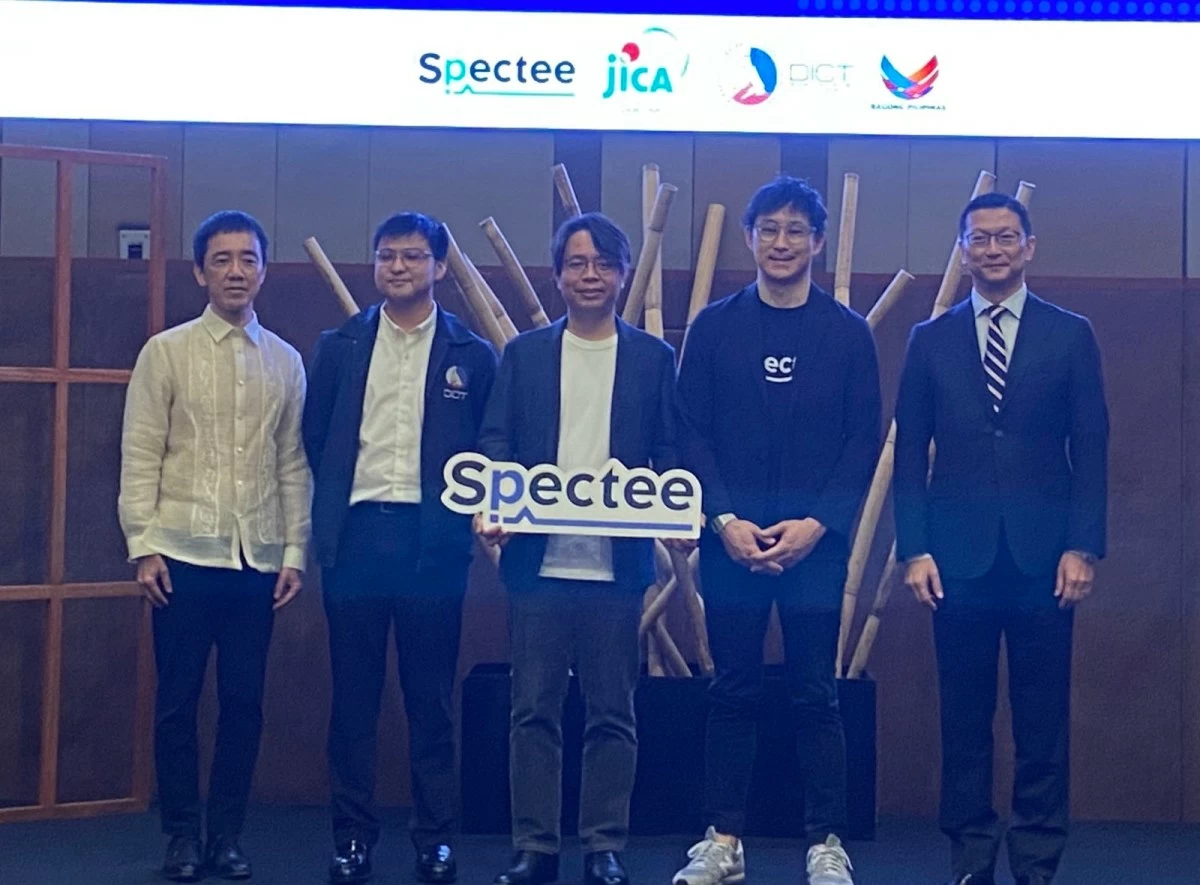
(Dexter Barro II/MANILA BULLETIN)
Tokyo-based tech firm Spectee Inc. is expanding its cutting-edge, artificial intelligence (AI)-driven disaster management system to the Philippines, with a localized version expected to expedite responses to flooding, fires, earthquakes, and even crime.
In collaboration with the Japan International Cooperation Agency (JICA) and the Department of Information and Communications Technology (DICT), Spectee launched on Thursday, Aug. 14, the Philippine version of its Spectee Pro system.
Spectee Pro is a cloud-based AI crisis management system that aggregates real-time information about an ongoing incident from open sources.
The system uses AI to analyze data from social media posts, meteorological measurements, and CCTV footage to provide an immediate report about an incident as it is happening and the response needed.
With the Philippines being one of the world’s most disaster-prone countries, combined with its high smartphone penetration and social media usage, it is the ideal environment for quick disaster analysis.
Asked about privacy concerns, Spectee Chief Operating Officer (COO) Satoshi Negoro said the system only analyzes information from publicly available posts, which he said had already been cleared by the DICT.
While the Japanese version of Spectee Pro primarily leverages posts on X (formerly Twitter), the Philippine version is tailored for Facebook, the country’s most popular social media platform.
In terms of stopping misinformation, the information processing of Spectee Pro will include a human verification phase, where employees will verify the veracity of information as it comes. This stage will cover sentence analysis, credibility check, and image analysis.
Following verification, Spectee Pro will swiftly deliver the real-time development of an incident or disaster to its clients through an active dashboard, notification, and email alert.
“In a country like ours, where social media plays such a significant role in the daily life of Filipinos, this innovation is both timely and essential,” said DICT Assistant Secretary Luis Miguel Planas.
“We commend Spectee for choosing the Philippines as a key market, recognizing our strong online presence, our culture of sharing, and our quick responsiveness in times of crisis,” he added.
Spectee Pro is already in free trial use by 120 local government units (LGUs) and government agencies since October last year. It has been well-received for fast-tracking disaster response.
The local version of Spectee Pro will cover natural disasters such as flooding and earthquakes, as well as fires, road accidents, robbery, theft, and other crimes.
From February 2025 to May 2026, the system will be under free trial, during which user feedback is highly requested. Starting June next year, the system will switch to the paid version.
Negoro said the company is targeting to reach at least 100 new clients by the end of next year, tapping government agencies, business firms, and media organizations.
He said profits from clients’ monthly subscriptions will be reinvested to further refine Spectee Pro.
One important feature Spectee plans to add to the system is a prediction function to help prepare its clients for potential crises.
Additionally, the company is in talks with the Metropolitan Manila Development Authority (MMDA) to include its CCTVs for disaster analysis.
“Through this project, we came to the Philippines so many times, and we found that the people in the Philippines are very kind. So we have very strong intentions to improve the capability to fight disasters in the Philippines,” said Negoro.
The launch of Spectee Pro’s Philippine version marks the company’s first foray into an overseas market.
With an eye on global expansion, Spectee is planning to launch local versions of Spectee Pro in Vietnam and Thailand.
ADVERTISEMENT
.most-popular .layout-ratio{ padding-bottom: 79.13%; } @media (min-width: 768px) and (max-width: 1024px) { .widget-title { font-size: 15px !important; } }

{{ articles_filter_1561_widget.title }}

.most-popular .layout-ratio{ padding-bottom: 79.13%; } @media (min-width: 768px) and (max-width: 1024px) { .widget-title { font-size: 15px !important; } }

{{ articles_filter_1562_widget.title }}

.most-popular .layout-ratio{ padding-bottom: 79.13%; } @media (min-width: 768px) and (max-width: 1024px) { .widget-title { font-size: 15px !important; } }

{{ articles_filter_1563_widget.title }}

{{ articles_filter_1564_widget.title }}

.mb-article-details { position: relative; } .mb-article-details .article-body-preview, .mb-article-details .article-body-summary{ font-size: 17px; line-height: 30px; font-family: "Libre Caslon Text", serif; color: #000; } .mb-article-details .article-body-preview iframe , .mb-article-details .article-body-summary iframe{ width: 100%; margin: auto; } .read-more-background { background: linear-gradient(180deg, color(display-p3 1.000 1.000 1.000 / 0) 13.75%, color(display-p3 1.000 1.000 1.000 / 0.8) 30.79%, color(display-p3 1.000 1.000 1.000) 72.5%); position: absolute; height: 200px; width: 100%; bottom: 0; display: flex; justify-content: center; align-items: center; padding: 0; } .read-more-background a{ color: #000; } .read-more-btn { padding: 17px 45px; font-family: Inter; font-weight: 700; font-size: 18px; line-height: 16px; text-align: center; vertical-align: middle; border: 1px solid black; background-color: white; } .hidden { display: none; }
function initializeAllSwipers() { // Get all hidden inputs with cms_article_id document.querySelectorAll('[id^="cms_article_id_"]').forEach(function (input) { const cmsArticleId = input.value; const articleSelector = '#article-' + cmsArticleId + ' .body_images'; const swiperElement = document.querySelector(articleSelector); if (swiperElement && !swiperElement.classList.contains('swiper-initialized')) { new Swiper(articleSelector, { loop: true, pagination: false, navigation: { nextEl: '#article-' + cmsArticleId + ' .swiper-button-next', prevEl: '#article-' + cmsArticleId + ' .swiper-button-prev', }, }); } }); } setTimeout(initializeAllSwipers, 3000); const intersectionObserver = new IntersectionObserver( (entries) => { entries.forEach((entry) => { if (entry.isIntersecting) { const newUrl = entry.target.getAttribute("data-url"); if (newUrl) { history.pushState(null, null, newUrl); let article = entry.target; // Extract metadata const author = article.querySelector('.author-section').textContent.replace('By', '').trim(); const section = article.querySelector('.section-info ').textContent.replace(' ', ' '); const title = article.querySelector('.article-title h1').textContent; // Parse URL for Chartbeat path format const parsedUrl = new URL(newUrl, window.location.origin); const cleanUrl = parsedUrl.host + parsedUrl.pathname; // Update Chartbeat configuration if (typeof window._sf_async_config !== 'undefined') { window._sf_async_config.path = cleanUrl; window._sf_async_config.sections = section; window._sf_async_config.authors = author; } // Track virtual page view with Chartbeat if (typeof pSUPERFLY !== 'undefined' && typeof pSUPERFLY.virtualPage === 'function') { try { pSUPERFLY.virtualPage({ path: cleanUrl, title: title, sections: section, authors: author }); } catch (error) { console.error('ping error', error); } } // Optional: Update document title if (title && title !== document.title) { document.title = title; } } } }); }, { threshold: 0.1 } ); function showArticleBody(button) { const article = button.closest("article"); const summary = article.querySelector(".article-body-summary"); const body = article.querySelector(".article-body-preview"); const readMoreSection = article.querySelector(".read-more-background"); // Hide summary and read-more section summary.style.display = "none"; readMoreSection.style.display = "none"; // Show the full article body body.classList.remove("hidden"); } document.addEventListener("DOMContentLoaded", () => { let loadCount = 0; // Track how many times articles are loaded const offset = [1, 2, 3, 4, 5, 6, 7, 8, 9, 10]; // Offset values const currentUrl = window.location.pathname.substring(1); let isLoading = false; // Prevent multiple calls if (!currentUrl) { console.log("Current URL is invalid."); return; } const sentinel = document.getElementById("load-more-sentinel"); if (!sentinel) { console.log("Sentinel element not found."); return; } function isSentinelVisible() { const rect = sentinel.getBoundingClientRect(); return ( rect.top < window.innerHeight && rect.bottom >= 0 ); } function onScroll() { if (isLoading) return; if (isSentinelVisible()) { if (loadCount >= offset.length) { console.log("Maximum load attempts reached."); window.removeEventListener("scroll", onScroll); return; } isLoading = true; const currentOffset = offset[loadCount]; window.loadMoreItems().then(() => { let article = document.querySelector('#widget_1690 > div:nth-last-of-type(2) article'); intersectionObserver.observe(article) loadCount++; }).catch(error => { console.error("Error loading more items:", error); }).finally(() => { isLoading = false; }); } } window.addEventListener("scroll", onScroll); });

Sign up by email to receive news.