






Manila Bulletin
 Business
Trade & Industry
DA chief: 60-day import ban could be shortened or extended
Business
Trade & Industry
DA chief: 60-day import ban could be shortened or extended
Business
Trade & Industry
DA chief: 60-day import ban could be shortened or extended
DA chief: 60-day import ban could be shortened or extended
Published Aug 14, 2025 02:30 pm


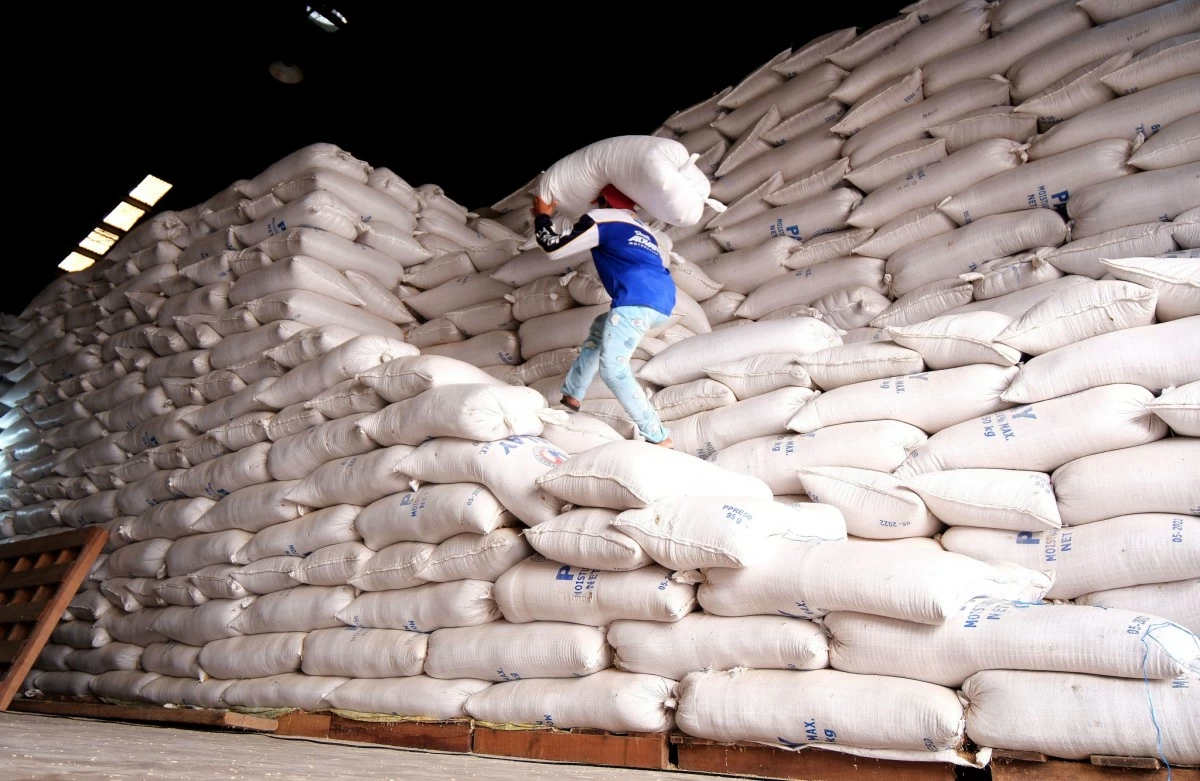
Department of Agriculture (DA) photo
Department of Agriculture (DA) Secretary Francisco Tiu Laurel said the upcoming 60-day suspension on rice imports could be shortened or extended, depending on potential market shifts.
In a statement, Tiu Laurel said the government will closely monitor price movements and the outcome of the harvest in the coming months to decide the next step for the import ban.
“Throughout the suspension, we will closely monitor supply and market dynamics—especially among retailers, wholesalers, and importers—and take appropriate action to uphold market discipline,” he said.
President Marcos earlier announced that the country will temporarily suspend foreign rice purchases in order to stabilize local prices, beginning Sept. 1.
Prices of palay (unmilled rice) have reportedly fallen to as low as ₱8 per kilo, which is well below the production cost of ₱12 to ₱14 per kilo.
Aside from adjusting rice prices, the two-month suspension is seen to capitalize on the expected record output for the staple food.
The DA is expecting palay production this year to surpass its earlier forecast of 20.46 million metric tons (MT). Government data showed that 9.08 million MT have already been produced in the first half.
Earlier this week, Finance Secretary Ralph Recto told reporters that the government will likely not extend the suspension given this strong output.
Tiu Laurel, however, said his agency will be prepared to adjust the suspension, especially if supply tightens.
Based on the latest data from the Bureau of Plant Industry (BPI), foreign rice arrivals have reached 2.58 million MT.
Based on pending sanitary and phytosanitary import clearances (SPSICs), an estimated 300,000 MT is awaiting arrival.
The United States Department of Agriculture (USDA) is estimating that the Philippines’ rice imports will reach 4.9 million MT this year.
The foreign agency adjusted this estimate downward by nine percent from an initial projection of 5.4 million MT due to the two-month import pause.
During the temporary suspension, Tiu Laurel said the maximum suggested retail price (MSRP) for imported rice will still be enforced.
The MSRP for five percent broken imported rice—the most commonly consumed variety of imported rice—stands at ₱43 per kilo.
Last month, the DA adjusted the price cap from ₱45 per kilo due to the softening of global rice prices.
Under the 60-day import ban, specialty rice varieties, including Japanese, black, and basmati rice, are exempted.
Tiu Laurel’s latest pronouncement comes on the heels of the Vietnam Food Association’s plea to Vietnam’s trade minister to challenge the Philippines’ upcoming ban on imports.
Based on a Reuters report, the industry group has expressed concern that the suspension would impact rice production in Vietnam, with fears that it would pull down its rice export prices.
The Philippines is Vietnam’s largest export market for the staple, accounting for 46.7 percent of total exports last year, with higher shipments seen in September and October.