ADVERTISEMENT

Philippine rice import projection cut by 500K MT amid 60-day ban

Published Aug 13, 2025 01:09 pm
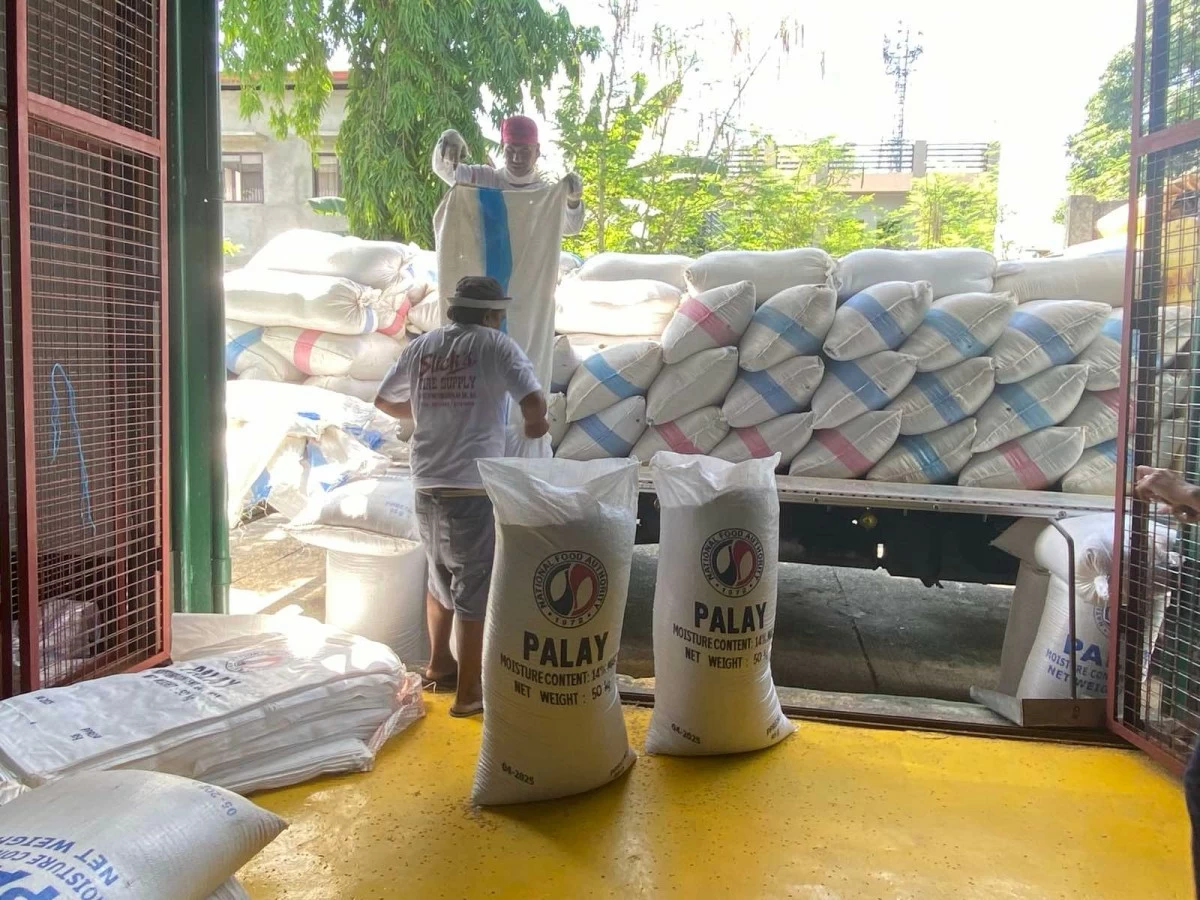
(Dexter Barro II/MANILA BULLETIN)
The United States Department of Agriculture (USDA) has downgraded its projection of the Philippines’ rice imports this year by 500,000 metric tons (MT) due to the 60-day import ban that will come into effect beginning next month.
In its report on the global grains trade, the USDA’s Foreign Agricultural Service (FAS) estimated that the country’s rice imports will fall by nine percent to 4.9 million MT from an initial projection of 5.4 million MT.
The USDA attributed the decline to President Marcos’ announcement of a two-month suspension on the staple’s imports, which will begin on Sept. 1.
Marcos invoked his authority, enshrined under the Rice Tariffication Law, to temporarily suspend foreign rice purchases in order to stabilize local prices.
Farmers have been urging the government to intervene following a recent decline in farmgate prices of rice, driven by the influx of cheaper imported rice.
Based on reports, some private traders are buying palay for as low as ₱8 per kilo, well below the production cost of ₱12 to ₱14 per kilo.
While rice imports are expected to decrease this year, the Philippines is still expected to hold on to its spot as the world’s largest importer of rice.
The country is expected to retain the top spot for the fourth consecutive year, following the USDA's maintenance of its forecast for the marketing year 2025 to 2026 at 5.5 million MT.
The marketing year for rice starts in July this year and ends in June next year.
The projection for the year was earlier revised upward from 5.4 million MT as the country’s growing population was touted to drive strong consumption, hence the need to purchase more of the staple food.
The Philippines earlier dislodged China from the top position during the marketing year 2022 to 2023, when it purchased 3.9 million MT of rice abroad.
The Marcos administration is unlikely to extend the temporary ban on rice imports beyond the 60-day period, which ends in October.
According to Finance Secretary Ralph Recto, the suspension will be enforced solely to safeguard farmers during the anticipated bountiful harvest season for the staple.
Based on USDA data, the country’s rice production will reach 12.4 million MT in the marketing year 2024 to 2025, while it now anticipates an output of 12.3 million MT for the following year.
In terms of unmilled rice or palay, the Department of Agriculture (DA) is estimating that the country will likely surpass its earlier forecast of 20.46 million MT.
Data from the Philippine Statistics Authority (PSA) showed that palay production during the first six months of the year reached 9.08 million MT, up six percent from 8.53 million MT in the same period last year.
Meanwhile, the USDA also trimmed its projection of the country’s wheat imports by 300,000 MT.
Based on its report, the foreign agency said the Philippines will import 6.9 million MT of wheat in marketing year 2025 to 2026, down four percent from the previous estimate of 7.2 million MT.
The USDA cited the country’s reduced feed consumption as the reason behind the decline.
The revision marks the second straight adjustment of the Philippines’ wheat imports. In its June report, the USDA said imports will reach 7.2 million MT, down from an estimate of 7.4 million MT.
The USDA-FAS in Manila earlier projected that demand for feed wheat will likely soften as local feed manufacturers maintain preference for feed corn due to its physical attributes and fattening qualities.
Feed wheat, which is used as a multi-purpose feed ingredient, serves as a substitute for feed corn when wheat prices are more favorable than those of feed corn, or in instances where there are supply gaps.

Related Tags

United States Department of Agriculture (USDA) rice imports inflation rate Consumer prices
ADVERTISEMENT
.most-popular .layout-ratio{ padding-bottom: 79.13%; } @media (min-width: 768px) and (max-width: 1024px) { .widget-title { font-size: 15px !important; } }

{{ articles_filter_1561_widget.title }}

.most-popular .layout-ratio{ padding-bottom: 79.13%; } @media (min-width: 768px) and (max-width: 1024px) { .widget-title { font-size: 15px !important; } }

{{ articles_filter_1562_widget.title }}

.most-popular .layout-ratio{ padding-bottom: 79.13%; } @media (min-width: 768px) and (max-width: 1024px) { .widget-title { font-size: 15px !important; } }

{{ articles_filter_1563_widget.title }}

{{ articles_filter_1564_widget.title }}

.mb-article-details { position: relative; } .mb-article-details .article-body-preview, .mb-article-details .article-body-summary{ font-size: 17px; line-height: 30px; font-family: "Libre Caslon Text", serif; color: #000; } .mb-article-details .article-body-preview iframe , .mb-article-details .article-body-summary iframe{ width: 100%; margin: auto; } .read-more-background { background: linear-gradient(180deg, color(display-p3 1.000 1.000 1.000 / 0) 13.75%, color(display-p3 1.000 1.000 1.000 / 0.8) 30.79%, color(display-p3 1.000 1.000 1.000) 72.5%); position: absolute; height: 200px; width: 100%; bottom: 0; display: flex; justify-content: center; align-items: center; padding: 0; } .read-more-background a{ color: #000; } .read-more-btn { padding: 17px 45px; font-family: Inter; font-weight: 700; font-size: 18px; line-height: 16px; text-align: center; vertical-align: middle; border: 1px solid black; background-color: white; } .hidden { display: none; }
function initializeAllSwipers() { // Get all hidden inputs with cms_article_id document.querySelectorAll('[id^="cms_article_id_"]').forEach(function (input) { const cmsArticleId = input.value; const articleSelector = '#article-' + cmsArticleId + ' .body_images'; const swiperElement = document.querySelector(articleSelector); if (swiperElement && !swiperElement.classList.contains('swiper-initialized')) { new Swiper(articleSelector, { loop: true, pagination: false, navigation: { nextEl: '#article-' + cmsArticleId + ' .swiper-button-next', prevEl: '#article-' + cmsArticleId + ' .swiper-button-prev', }, }); } }); } setTimeout(initializeAllSwipers, 3000); const intersectionObserver = new IntersectionObserver( (entries) => { entries.forEach((entry) => { if (entry.isIntersecting) { const newUrl = entry.target.getAttribute("data-url"); if (newUrl) { history.pushState(null, null, newUrl); let article = entry.target; // Extract metadata const author = article.querySelector('.author-section').textContent.replace('By', '').trim(); const section = article.querySelector('.section-info ').textContent.replace(' ', ' '); const title = article.querySelector('.article-title h1').textContent; // Parse URL for Chartbeat path format const parsedUrl = new URL(newUrl, window.location.origin); const cleanUrl = parsedUrl.host + parsedUrl.pathname; // Update Chartbeat configuration if (typeof window._sf_async_config !== 'undefined') { window._sf_async_config.path = cleanUrl; window._sf_async_config.sections = section; window._sf_async_config.authors = author; } // Track virtual page view with Chartbeat if (typeof pSUPERFLY !== 'undefined' && typeof pSUPERFLY.virtualPage === 'function') { try { pSUPERFLY.virtualPage({ path: cleanUrl, title: title, sections: section, authors: author }); } catch (error) { console.error('ping error', error); } } // Optional: Update document title if (title && title !== document.title) { document.title = title; } } } }); }, { threshold: 0.1 } ); function showArticleBody(button) { const article = button.closest("article"); const summary = article.querySelector(".article-body-summary"); const body = article.querySelector(".article-body-preview"); const readMoreSection = article.querySelector(".read-more-background"); // Hide summary and read-more section summary.style.display = "none"; readMoreSection.style.display = "none"; // Show the full article body body.classList.remove("hidden"); } document.addEventListener("DOMContentLoaded", () => { let loadCount = 0; // Track how many times articles are loaded const offset = [1, 2, 3, 4, 5, 6, 7, 8, 9, 10]; // Offset values const currentUrl = window.location.pathname.substring(1); let isLoading = false; // Prevent multiple calls if (!currentUrl) { console.log("Current URL is invalid."); return; } const sentinel = document.getElementById("load-more-sentinel"); if (!sentinel) { console.log("Sentinel element not found."); return; } function isSentinelVisible() { const rect = sentinel.getBoundingClientRect(); return ( rect.top < window.innerHeight && rect.bottom >= 0 ); } function onScroll() { if (isLoading) return; if (isSentinelVisible()) { if (loadCount >= offset.length) { console.log("Maximum load attempts reached."); window.removeEventListener("scroll", onScroll); return; } isLoading = true; const currentOffset = offset[loadCount]; window.loadMoreItems().then(() => { let article = document.querySelector('#widget_1690 > div:nth-last-of-type(2) article'); intersectionObserver.observe(article) loadCount++; }).catch(error => { console.error("Error loading more items:", error); }).finally(() => { isLoading = false; }); } } window.addEventListener("scroll", onScroll); });

Sign up by email to receive news.