ADVERTISEMENT

Marcos Jr. admin to spend record-high ₱1.556 trillion on 'Build Better More' infra program in 2026

Published Aug 13, 2025 12:47 pm  |  Updated Aug 13, 2025 06:45 pm
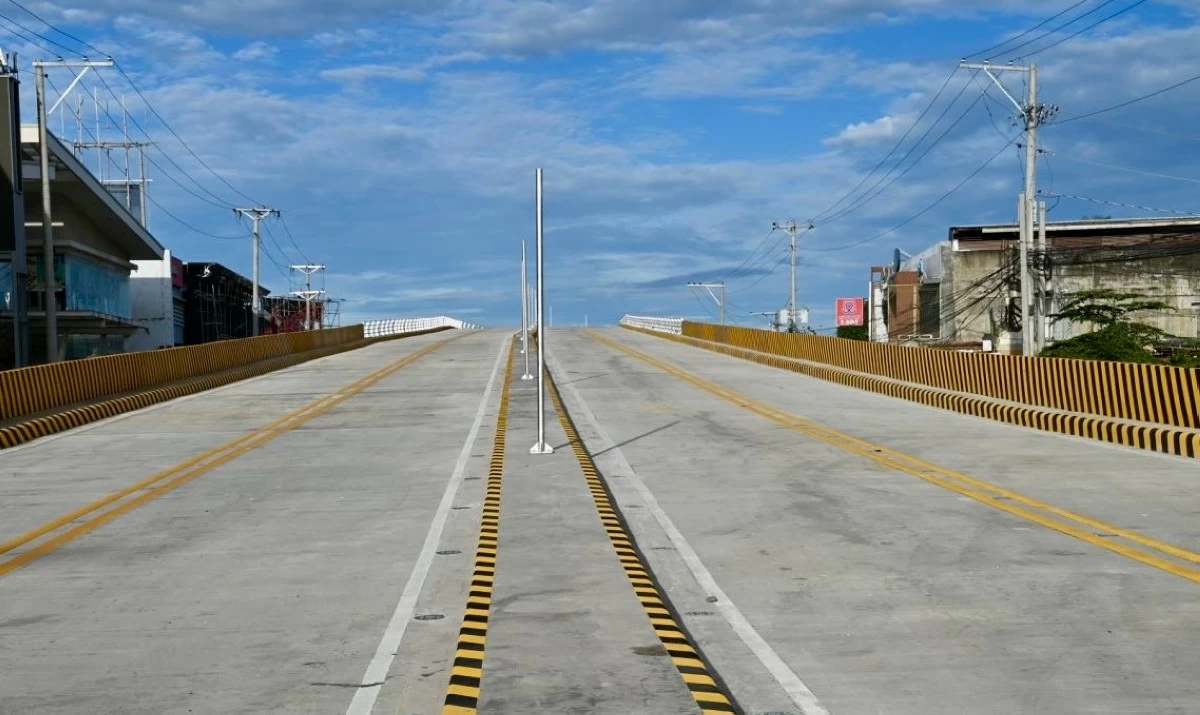
The Governor Camins/MCLL Highway and Veterans Avenue Flyover, the first in the Zamboanga Peninsula Region, opens in Zamboanga City as a key infrastructure milestone to ease traffic and boost regional connectivity. (Photo: DPWH)
The Marcos Jr. administration will ramp up infrastructure spending in 2026, with a record ₱1.556 trillion set aside for its centerpiece “Build Better More” (BBM) program under the proposed ₱6.793-trillion 2026 national budget.
Budget documents showed that the infrastructure disbursements program for next year totaling ₱1.558 trillion—including subsidy, equity, and transfers to local government units (LGUs)is higher than this year’s total allocation of ₱1.513 trillion and 2024’s actual ₱1.545 trillion spent on infra projects.
In a text message to Manila Bulletin on Wednesday, Aug. 13, Budget Secretary Amenah F. Pangandaman confirmed that the 2026 infrastructure program is the highest so far.
The annual budget on public infrastructure development is projected to increase to new highs of ₱1.692 trillion in 2027 and ₱1.904 trillion in 2028.
But as a share to gross domestic product (GDP), the 2026 infrastructure program is equivalent to 5.1 percent of GDP, lower than the programmed 5.3 percent for 2025 and the 5.8 percent recorded in 2024.
According to the President’s budget message, the administration targets infrastructure spending equivalent to five to six percent of GDP.
“For 2026, we are prioritizing 54 infrastructure flagship projects (IFPs), including the Bataan-Cavite Interlink Bridge Project (₱27.9 billion); Laguna Lakeshore Road Network Project (₱22.9 billion); Phase 4 of the Pasig-Marikina River Channel Improvement Project (₱7.4 billion); Samal Island-Davao City Connector Project (₱4.8 billion); and Cebu-Mactan Bridge and Coastal Road Construction Project (₱3.7 billion),” the President’s budget message read.
In line with this, the two major infrastructure-implementing agencies, the departments of Public Works and Highways (DPWH) and of Transportation (DOTr), are expected to receive ₱881.3 billion and ₱197.3 billion, respectively in budget allocations next year.
The 2026 budget proposal has allocated ₱167.8 billion for the Convergence and Special Support Program, with ₱69.7 billion directed to Sustainable Infrastructure Projects Alleviating Gaps (SIPAG) for infrastructure projects such as roads, bridges, and flood control to boost local development.
The proposed spending plan for next year also includes major investments in public transportation, of which ₱124.1 billion would be for key rail projects like the North-South Commuter Railway and Metro Manila Subway, along with funding for bus modernization programs in the cities of Cebu and Davao.
Also, ₱6.2 billion has been set aside for aviation infrastructure to develop 12 airports across the country.
With right-of-way (ROW) acquisition a perennial roadblock in rolling out hard infrastructure, the President said that “a total of ₱4 billion will go to the Public-Private Partnership (PPP) Strategic Support Fund for the payment of fees, charges, or any expenses that will be incurred for ROW acquisitions and transfer of land titles during the implementation of key infrastructure projects with private-sector partners.”
On top of road expansion, maintenance, and safety projects, the President said: “To make roads accessible to cyclists and other sustainable modes of transportation, ₱69 million will go to the Active Transport Bike Share System and Safe Pathways Program. This program will fund the expansion of bicycle lanes and improvement of road safety to promote active mobility among our commuters.”
“To improve traffic on EDSA, the EDSA Busway Project, which served more than 5.5 million passengers in January 2025 alone, has an allocation of ₱89 million,” his budget message added.
The proposed 2026 budget has also allocated ₱18.9 billion to the Department of Information and Communications Technology (DICT) to expand digital infrastructure and enhance connectivity, including ₱1.5 billion for the National Broadband Program (NBP) and ₱4.8 billion for the Philippine Digital Infrastructure Project jointly funded with the Washington-based multilateral lender World Bank.
An additional ₱5 billion will support the Free Public Internet Access Program, aiming to provide nationwide free Wi-Fi through new access sites, fiber optic cables, and LTE units, the President’s budget message said.
ADVERTISEMENT
.most-popular .layout-ratio{ padding-bottom: 79.13%; } @media (min-width: 768px) and (max-width: 1024px) { .widget-title { font-size: 15px !important; } }

{{ articles_filter_1561_widget.title }}

.most-popular .layout-ratio{ padding-bottom: 79.13%; } @media (min-width: 768px) and (max-width: 1024px) { .widget-title { font-size: 15px !important; } }

{{ articles_filter_1562_widget.title }}

.most-popular .layout-ratio{ padding-bottom: 79.13%; } @media (min-width: 768px) and (max-width: 1024px) { .widget-title { font-size: 15px !important; } }

{{ articles_filter_1563_widget.title }}

{{ articles_filter_1564_widget.title }}

.mb-article-details { position: relative; } .mb-article-details .article-body-preview, .mb-article-details .article-body-summary{ font-size: 17px; line-height: 30px; font-family: "Libre Caslon Text", serif; color: #000; } .mb-article-details .article-body-preview iframe , .mb-article-details .article-body-summary iframe{ width: 100%; margin: auto; } .read-more-background { background: linear-gradient(180deg, color(display-p3 1.000 1.000 1.000 / 0) 13.75%, color(display-p3 1.000 1.000 1.000 / 0.8) 30.79%, color(display-p3 1.000 1.000 1.000) 72.5%); position: absolute; height: 200px; width: 100%; bottom: 0; display: flex; justify-content: center; align-items: center; padding: 0; } .read-more-background a{ color: #000; } .read-more-btn { padding: 17px 45px; font-family: Inter; font-weight: 700; font-size: 18px; line-height: 16px; text-align: center; vertical-align: middle; border: 1px solid black; background-color: white; } .hidden { display: none; }
function initializeAllSwipers() { // Get all hidden inputs with cms_article_id document.querySelectorAll('[id^="cms_article_id_"]').forEach(function (input) { const cmsArticleId = input.value; const articleSelector = '#article-' + cmsArticleId + ' .body_images'; const swiperElement = document.querySelector(articleSelector); if (swiperElement && !swiperElement.classList.contains('swiper-initialized')) { new Swiper(articleSelector, { loop: true, pagination: false, navigation: { nextEl: '#article-' + cmsArticleId + ' .swiper-button-next', prevEl: '#article-' + cmsArticleId + ' .swiper-button-prev', }, }); } }); } setTimeout(initializeAllSwipers, 3000); const intersectionObserver = new IntersectionObserver( (entries) => { entries.forEach((entry) => { if (entry.isIntersecting) { const newUrl = entry.target.getAttribute("data-url"); if (newUrl) { history.pushState(null, null, newUrl); let article = entry.target; // Extract metadata const author = article.querySelector('.author-section').textContent.replace('By', '').trim(); const section = article.querySelector('.section-info ').textContent.replace(' ', ' '); const title = article.querySelector('.article-title h1').textContent; // Parse URL for Chartbeat path format const parsedUrl = new URL(newUrl, window.location.origin); const cleanUrl = parsedUrl.host + parsedUrl.pathname; // Update Chartbeat configuration if (typeof window._sf_async_config !== 'undefined') { window._sf_async_config.path = cleanUrl; window._sf_async_config.sections = section; window._sf_async_config.authors = author; } // Track virtual page view with Chartbeat if (typeof pSUPERFLY !== 'undefined' && typeof pSUPERFLY.virtualPage === 'function') { try { pSUPERFLY.virtualPage({ path: cleanUrl, title: title, sections: section, authors: author }); } catch (error) { console.error('ping error', error); } } // Optional: Update document title if (title && title !== document.title) { document.title = title; } } } }); }, { threshold: 0.1 } ); function showArticleBody(button) { const article = button.closest("article"); const summary = article.querySelector(".article-body-summary"); const body = article.querySelector(".article-body-preview"); const readMoreSection = article.querySelector(".read-more-background"); // Hide summary and read-more section summary.style.display = "none"; readMoreSection.style.display = "none"; // Show the full article body body.classList.remove("hidden"); } document.addEventListener("DOMContentLoaded", () => { let loadCount = 0; // Track how many times articles are loaded const offset = [1, 2, 3, 4, 5, 6, 7, 8, 9, 10]; // Offset values const currentUrl = window.location.pathname.substring(1); let isLoading = false; // Prevent multiple calls if (!currentUrl) { console.log("Current URL is invalid."); return; } const sentinel = document.getElementById("load-more-sentinel"); if (!sentinel) { console.log("Sentinel element not found."); return; } function isSentinelVisible() { const rect = sentinel.getBoundingClientRect(); return ( rect.top < window.innerHeight && rect.bottom >= 0 ); } function onScroll() { if (isLoading) return; if (isSentinelVisible()) { if (loadCount >= offset.length) { console.log("Maximum load attempts reached."); window.removeEventListener("scroll", onScroll); return; } isLoading = true; const currentOffset = offset[loadCount]; window.loadMoreItems().then(() => { let article = document.querySelector('#widget_1690 > div:nth-last-of-type(2) article'); intersectionObserver.observe(article) loadCount++; }).catch(error => { console.error("Error loading more items:", error); }).finally(() => { isLoading = false; }); } } window.addEventListener("scroll", onScroll); });

Sign up by email to receive news.