







BYD Sealion 5 DM‑i: Living up to the Ocean-inspired name
Bay to bay, coast to concrete: the cleaner planet mission
Published Aug 13, 2025 10:37 pm


At A Glance
- At ₱1.248 million, the Sealion 5 undercuts rivals such as Honda's BR‑V, GAC's GS3 Emzoom, and Hyundai's Creta; none of which offer a plug, a 101-km EV range, or V2L capability.
- This Manila to Subic run may not decide an outright champion, but it drove home the point: BYD's DM‑i used a measly amount of fuel to cross Luzon and still had charge for an evening loop in the Freeport Zone.
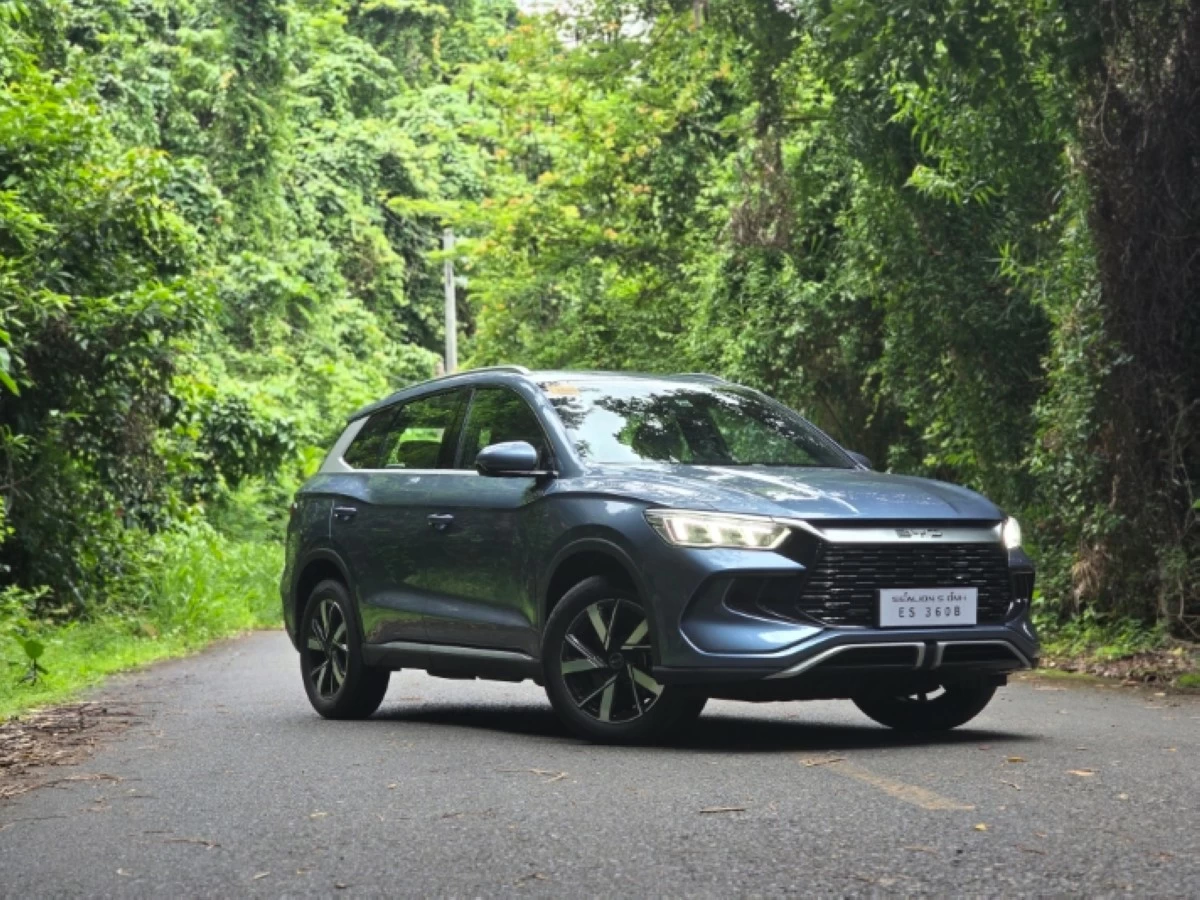
BYD’s Ocean Series (the Dolphin, Seal, and now Sealion) leans on marine names to link new energy vehicles with the image of a cleaner planet. We were made to ponder that connection over a multi-province drive that would stitch the dream of a cleaner environment to the realities of the country’s eco-challenged transport sector. We took the Sealion 5 DM‑i on a bay-to-bay, coast to concrete drive to experience how even our travels can be cleaned up quite a bit.

A media drive seldom starts on water, yet that is exactly how BYD Cars Philippines organized its first Manila to Subic run for the freshly launched Sealion 5 DM‑i. Before we were even briefed on the day’s route, we were all herded into the cars and drove from BYD Manila Bay to a corner of the CCP Complex by the breakwater. Moored by the bay was the Circular Explorer, a solar-powered catamaran run by German NGO One Earth One Ocean (OEOO). Executive Manager Daniel Scheler gave us a quick rundown of the Circular Explorer’s objectives: skim plastic from Manila Bay, educate the communities that live on its shores, and feed hard data to marine scientists.

Circular Explorer’s spec sheet reads like a floating EV: two 50 kW Torqeedo electric outboards draw juice from twin 40 kWh battery packs housed below deck. A 360-degree tiltable solar roof feeds an intelligent charger that juggles panel output, battery state, and motor load, stretching component life while keeping diesel off the manifest. Top speed sits at roughly 9 knots (≈18 km/h); the comfortable cruise is 3.5 knots, perfect for trawling Manila Bay’s hot spots without stirring up the silt.

One Earth One Ocean Executive Manager Daniel Scheler shows off the compartment for one of the electric motors that pushes the Circular Explorer along.
A conveyor belt sweeps a swath of about 21,000 m² every hour and can lift up to 4,300 kg of waste per day. Once the haul is aboard, crews sort recyclables from biomass for onshore processing. While docked, the deck doubles as an outdoor classroom and cycles through schoolchildren, fishers, and LGU officers for quick primers on circular economy practice. Below, a compact lab filters water samples, logging microplastic counts and other quality markers so scientists can track the bay’s health in real time.

By Scheler’s estimates, it would take more than 2,000 Circular Explorers working for 8 hours to clean Manila Bay daily. This lone unit however, serves primarily to educate, and does what it can day in and day out to clean small portions of the bay.

It was 8:30 in the morning, and already this floating eco barge pretty much framed the rest of the day’s activities for us. Now it was time to head ashore and onto some wheels.
Launched in June at an introductory ₱1,248,000, the Sealion 5 DM‑i stands out in the subcompact segment: 4,738 mm long, 1,860 mm wide, 156 mm ground clearance. Its DM‑i drivetrain pairs a 1.5-liter Atkinson petrol generator with a 12.9 kWh Blade Battery, delivering 197-PS and 300-Nm and a claimed 0–100 km/h in 8.3-seconds. Range is rated at 1,071 -km on a full tank (52-liters) and charge. Charging options include a Type 2 AC socket, juicing up from 15 to 100-percent in about 4.5-hours. There is no PHEV at this price point that comes close.

Leaving the showroom, we all reset our trip computers and joined the early morning NLEX flow. The vehicle's cluster shows Average Energy Consumption (AEC), expressed as L/100km, over the past 50 kilometers. It is a computation of petrol use with battery draw, converting each kilowatt hour to a petrol equivalent before adding the two. This is a better way to explain the vehicle's efficiency in the language we gas-guzzlers are more familiar with. By the time we reached the Dinalupihan lay-by, our car's AEC reading was 5.2 L/100 km or about 19-km per liter over the last 50-kilometers of normal driving.

On the road to Subic, the Sealion 5 DM‑i handled bends with the composure of a performance hatchback. Its low-mounted Blade Battery kept the center of gravity in check, with MacPherson struts up front and a multi-link rear smoothing out vertical motions. Good NVH values kept road noise at bay and gave us a comfortable trip. The e-CVT delivered power with a punch and made good use of the car's available power, which made overtakes a breeze.


At ₱1.248 million, the Sealion 5 undercuts rivals such as Honda’s BR‑V, GAC’s GS3 Emzoom, and Hyundai’s Creta; none of which offer a plug, a 101 km EV range, or V2L capability. It skips adaptive cruise at this price, but delivers plug-in hybrid efficiency, a rotating 10.1-inch touchscreen, and a package aligned with the day’s environmental theme. This Manila to Subic run may not decide an outright champion, but it drove home the point: BYD's DM‑i used a measly amount of fuel to cross Luzon and still had charge for an evening loop in the Freeport Zone. That concept resonates more when framed against the daily activities of the Circular Explorer.

OEOO still has square kilometers of coastline to clean, and BYD must still prove hybrid durability to a cautious market. But for one bay-to-bay run, road and sea told the same story: modern tech, whether afloat or on wheels, is at its best when it cleans more than it consumes.