







Buwan ng wikang pambansa
Published Aug 13, 2025 12:05 am
|
Updated Aug 12, 2025 03:55 pm


THE VIEW FROM RIZAL
This month, we join the Nation in celebrating the “Buwan ng Wikang Pambansa.” The Manila Bulletin remains committed to promoting the National Language; therefore, we are dedicating our column today to this vital topic. Amid the many issues and controversies hounding the political arena, it has been pushed into the background. We must not let the noise make us forget this one thing that defines us, our identity.
The dedication of August to honoring the “Wikang Pambansa” started during the term of President Fidel Ramos. The celebration used to be just a week long, which is why it was called “Linggo ng Wika.” President Ramos issued a presidential proclamation extending the celebration to a full month to honor the legacy of the revered late President Manuel Luis Quezon, the man we consider the Father of the National Language. He was born on the 19th of this month some 147 years ago.
This year’s theme, as set by the Komisyon ng Wikang Filipino (KWF) is “Paglinang sa Filipino at Katutubong Wika: Makasaysayan sa Pagkakaisa ng Bansa.”
The KWF’s chosen theme acknowledges that national unity remains an aspiration. It also affirms that we are a nation of many tongues, where hundreds of native dialects across the country continue to thrive.
We hope that this month, we will continue to witness organized events designed to reawaken our consciousness of and love for the Mother Tongue.
As we have done in the past, we will honor and salute the great MLQ. He had the wisdom and foresight to advocate for the adoption of a national language, hoping that this would unite our fragmented people. For this effort, he deserves the eternal gratitude of our countrymen.
There is one more Filipino who must share that honor.
We refer to the great nationalist, a former governor of the province of Rizal, the revered Lope K. Santos.
Ka Lope is one of the few true Filipino “Renaissance Men.” His intellectual abilities were similar to those of the national hero, Dr. Jose Rizal. Ka Lope was a writer, editor, poet, educator, linguist, orator, legislator, public servant, and a model of true nationalism.
He was also a pure Rizaleño – his father hailed from Pasig, originally a part of the province of Rizal. His mother was a native of San Mateo. He would later serve his province as its fourth Governor – from 1910 to 1913.
In 1939, Ka Lope published his book “Balarila ng Wikang Pambansa,” a work commissioned by the “Surian ng Wikang Pambansa,” the forerunner of the KWF. This would be the first (and perhaps, only) complete book on the Filipino Language and Grammar. All schools in the country use this as the basis for teaching “Filipino.”
This made Rizaleño Ka Lope the “Father of Filipino Grammar.”
There have been many accounts regarding Ka Lope’s love affair with the Filipino language and grammar. Here is one story we have shared before and will share again to inspire today’s young Filipinos.
Accounts have it that the young Lope used to help his father at a printing press in Sampaloc, Manila. One day, while doing his chores in the shop, young Lope reportedly noticed that his father’s name was spelled “Ladislao.” The young Lope pointed out to an elderly printer that this was a misspelling and that the correct spelling was “Ladislaw” – which was how his father’s name was pronounced, anyway. At a very young age, Ka Lope questioned the use of “AO” in the local dialect and insisted that it should be “AW.”
The elderly printer shared that moment with the young Lope’s father. They both agreed that he had an “eye for detail” and had the mind of a philosopher. He would soon display the brilliance of that philosopher's mind and eye for detail as he edited publications and wrote books that influenced the nation’s soul for several generations.
For decades, Filipinos have debated the value and necessity of having a national language. Critics argue that Filipino is not the language of commerce, where English or Fukien prevails, nor is it the medium of instruction for teaching science, mathematics, and other vital disciplines — a role still dominated by English.
We share the view that a national language is a valuable tool for creating a “national identity” and for forging “national unity.” Let us be reminded that Dr. Rizal had harsh words for those who belittle their Mother Tongue. He compared them to an “animal” and a “slimy fish.”
Amid the debate, we continue to honor the great Filipinos who advocated for the adoption of a National Language: President Quezon, Ka Lope, President Sergio Osmeña who was the first to issue an order for the celebration of a “Linggo ng Wika,” and President Ramos who extended the celebration from just one week to an entire “Buwan ng Wika.”
Our view is that our National Language is a powerful vessel for passing on to our children the history and culture of our country, as well as the values, beliefs, and character of our people. It enables them to understand who they are — and that is what we call "identity."
That was the gift of Lope K. Santos and the champions of the National Language to us all.
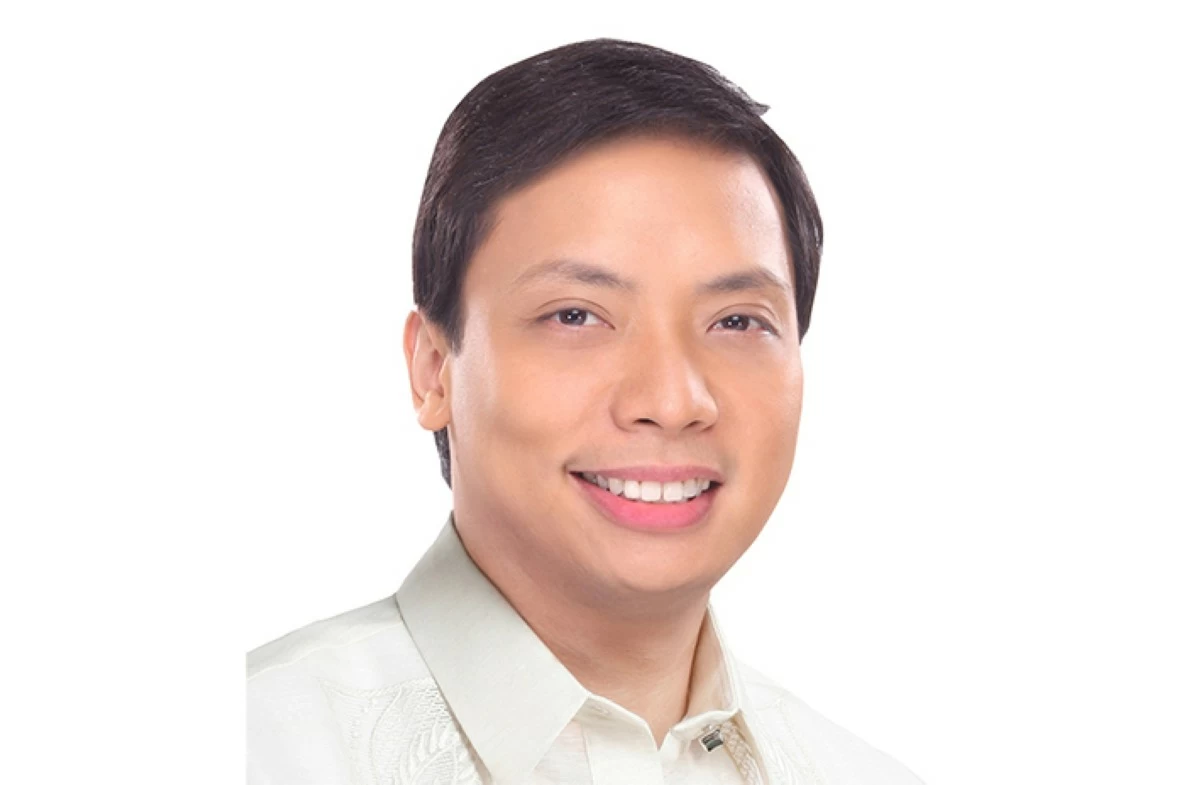
(The author is the mayor of Antipolo City, former Rizal governor, DENR assistant secretary for the environment, and LLDA general manager. Email: [email protected])