






Manila Bulletin
 Business
Banking & Finance
Ambitious privatization goal to lift Marcos admin's 2026 revenues to almost ₱5 trillion
Business
Banking & Finance
Ambitious privatization goal to lift Marcos admin's 2026 revenues to almost ₱5 trillion
Business
Banking & Finance
Ambitious privatization goal to lift Marcos admin's 2026 revenues to almost ₱5 trillion
Ambitious privatization goal to lift Marcos admin's 2026 revenues to almost ₱5 trillion
By Derco Rosal
Published Aug 13, 2025 03:18 pm


At A Glance
- To fund the ₱6.79 trillion national budget next year, government revenues are projected to reach nearly ₱5 trillion next year, boosted in part by a ₱101-billion target from privatization proceeds—massively higher than this year's ₱5-billion goal.
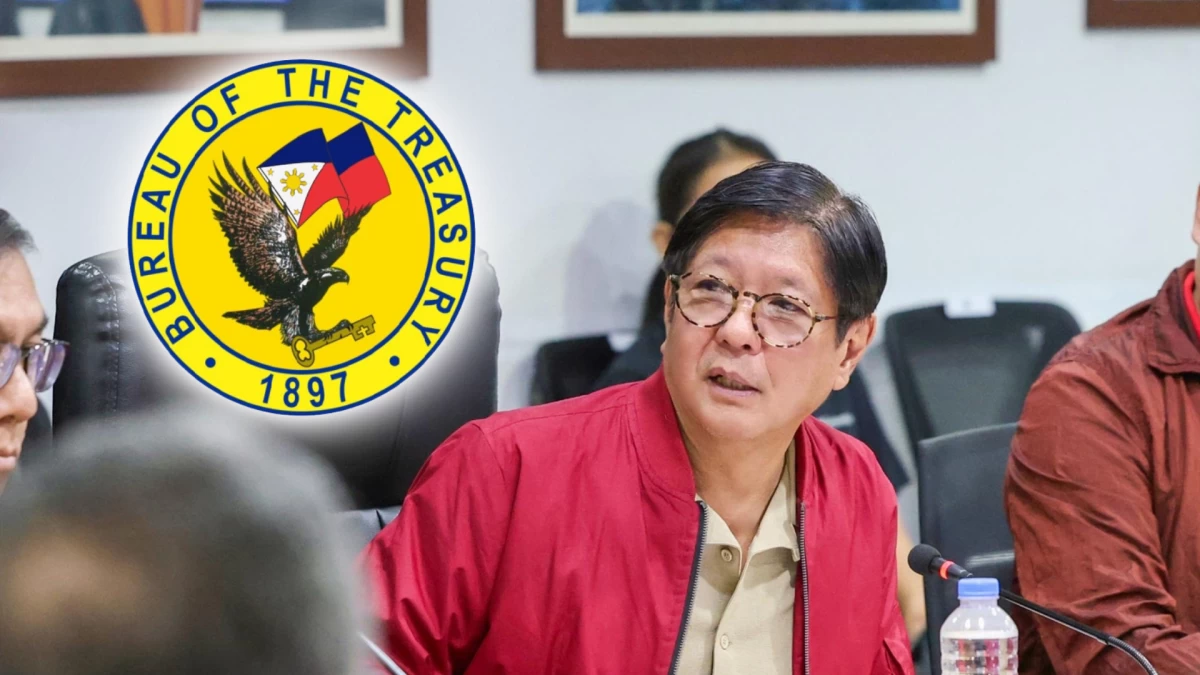
To help fund the ₱6.793-trillion 2026 national budget, government revenues are projected to reach nearly ₱5 trillion next year, boosted in part by a ₱101-billion target from privatization proceeds—massively higher than this year’s ₱5-billion goal.
According to the Marcos Jr. administration’s 2024-2028 fiscal program, this year’s revenue target of ₱4.52 trillion is expected to jump by 10.2 percent to ₱4.98 trillion in 2026. This would be equivalent to 16.2 percent of gross domestic product (GDP), up from 15.9 percent this year.
Target collections from taxes are set at ₱4.63 trillion for next year, higher by 10 percent from ₱4.21 trillion this year. This covers revenues to be raised by the country’s main tax agencies—the bureaus of Internal Revenue (BIR) and of Customs (BOC).
Based on the President’s budget message, “this will be achieved through intensified digitalization initiatives in our tax-collection system as well as recent tax reforms, particularly the value-added tax (VAT) on non-resident digital service providers (DSPs).”
“This will also be supported by the collections from the BIR and the BOC, as well as increased receipts from non-tax revenues, such as dividends from government corporations and proceeds from privatization,” the message read.
In particular, the BIR, the country’s top tax-collection agency, is aiming to collect ₱3.58 trillion next year, up from ₱3.22 trillion this year. Meanwhile, the BOC, the country’s second-largest revenue agency, is targeting ₱1.01 trillion, higher than this year’s ₱958.7 billion.
Additionally, the Marcos Jr. administration is aiming to collect ₱249.1 billion in non-tax revenues in 2026, plunging by 17.4 percent from this year’s ₱301.5 billion.
As of this year’s first half, collected revenues totaled ₱2.26 trillion, 5.2-percent higher than last year’s level, but slightly lower than the targeted ₱2.28 trillion. Tax revenues accounted for 89.9 percent or ₱2.03 trillion of total collections. It increased by 10.7 percent from a year ago.
The BIR’s collections jumped 14.1 percent year-on-year to ₱1.55 trillion in the first half. Meanwhile, the BOC collected ₱458.8 billion from January to June, slightly higher than last year’s ₱455.5 billion for the same period.
Besides tax and non-tax revenues, borrowings will partly finance a budget deficit of ₱1.65 trillion next year, higher in value than this year’s ₱1.56-trillion program, but smaller in share to GDP at 5.3 percent next year versus 5.5 percent this year.
Fitch Solutions’ unit BMI earlier maintained its forecast that the government will exceed its widened fiscal deficit target of 5.5 percent of economic output, projecting it to reach six percent. Last year’s fiscal deficit stood at 5.7 percent.
BMI said this “signals a clear slowdown in fiscal consolidation efforts and reinforces our view that the government faces growing constraints in reducing its budget shortfall over the medium term.”
Earlier this week, Department of Finance (DOF) Secretary Ralph G. Recto said that new taxes remain off the table, but revenue-raising general tax amnesty and stricter online gambling tax measures are now being studied for enactment this year.
“While no new tax proposals are on the table, refined measures—such as the rationalization of the mining fiscal regime—are awaiting enactment. We are also studying the possibility of enacting general tax amnesty and online gambling tax laws,” Recto said.
Notably, the national government’s debt stock is projected to reach ₱19.06 trillion by the end of fiscal year 2026, higher by ₱1.71 trillion or 9.8 percent from the projected ₱17.36-trillion level this year.
Measured against the country’s economic output, the national government’s debt next year is expected to reach 61.8 percent of GDP, slightly higher than this year’s 61.3 percent debt-to-GDP ratio.
In nominal terms, the government projects GDP to be valued at ₱28.36 trillion this year, ₱30.85 trillion in 2026, ₱33.46 trillion in 2027, and ₱36.3 trillion in 2028.
Despite the uptick in 2026, the debt ratio is forecast to ease to 61.3 percent in 2027 and further to 60.3 percent in 2028—putting it within the Marcos Jr. administration’s target of around 60 percent.