ADVERTISEMENT

Postponing the BSKE: Sensible call for peace and continuity

Published Aug 12, 2025 12:05 am  |  Updated Aug 11, 2025 04:39 pm
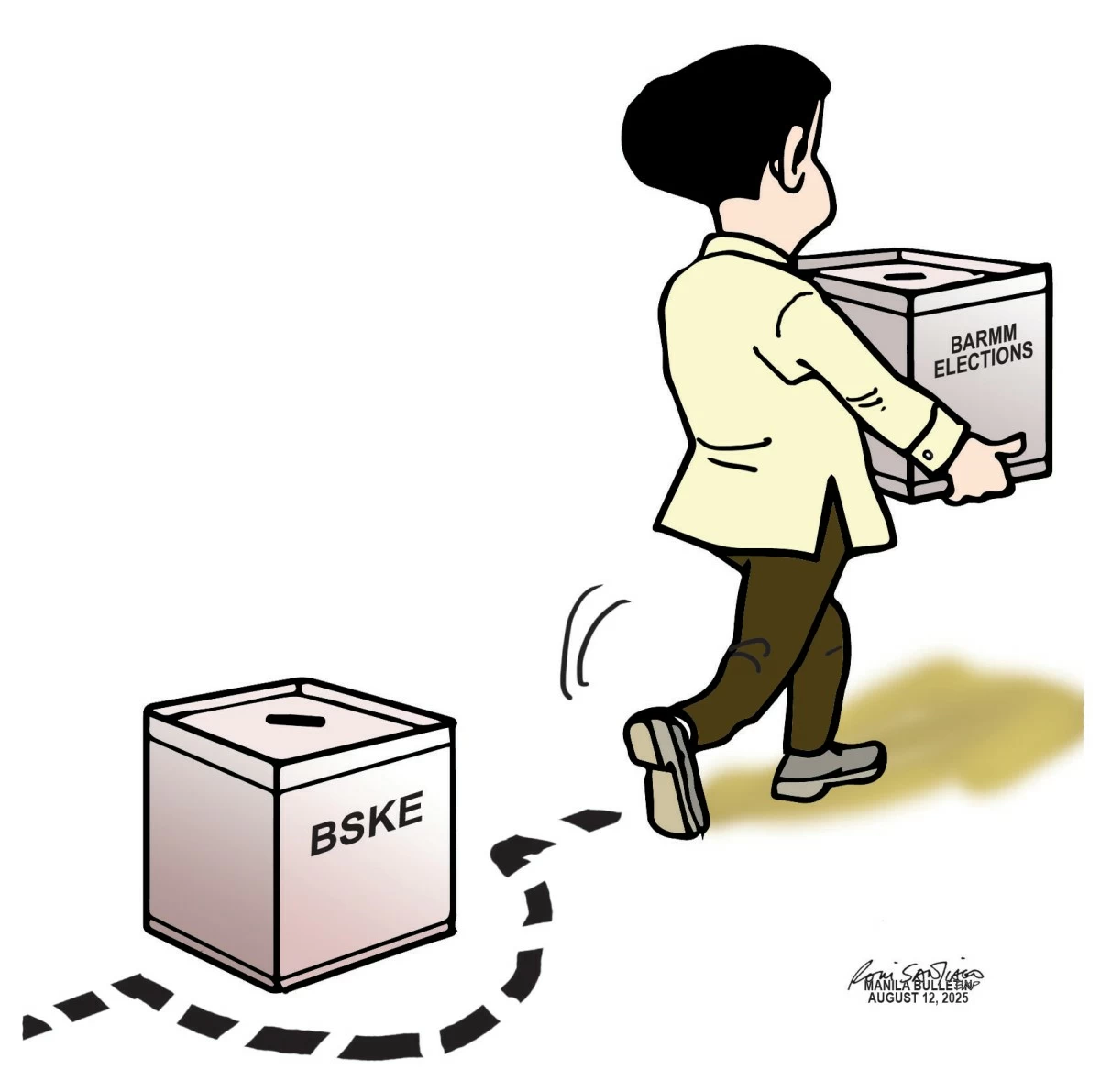
In a move balancing adherence to the Constitution with pragmatic governance, President Ferdinand R. Marcos Jr. recently affirmed his intent to sign into law the postponement of the Dec. 1, 2025 Barangay and Sangguniang Kabataan Elections (BSKE) to November 2026. This shift is not only legally sound. It is also strategically prudent, allowing the Comelec to wholly focus on the landmark Bangsamoro Autonomous Region in Muslim Mindanao (BARMM) parliamentary elections scheduled for Oct. 13, 2025.
The BARMM elections represent a historical watershed, as this will be the first time the people of the region will directly elect their parliament. In President Marcos’s own words: “In the history of the Philippines, no BARMM parliament has ever been elected by the people,” and a failure in this democratic milestone would be “a big failure in the peace process”.
Ensuring the success of this election is paramount not only for local governance but for sustaining fragile peace across Mindanao.
Comelec Chairperson George Garcia underscored the logistical impossibility of conducting back-to-back major elections. With the nation just emerging from midterm elections, Comelec cautioned that holding BSKE so soon would overstretch its capacity, compromising preparation and fair administration. Deferring BSKE to 2026 ensures that the conduct of barangay and youth elections will be accorded sufficient attention, thus enhancing its integrity.
Some critics have raised constitutional concerns, invoking the Supreme Court’s ruling against shortening barangay officials’ terms. President Marcos has precisely addressed this, pointing out that postponement in fact lengthens the barangay officials’ tenure.
Yet, beyond concerns over legalities and logistics lies the deeper rationale for postponing the barangay elections. The BARMM elections are not merely a procedural exercise. They serve as a linchpin in the Bangsamoro peace process, and a test of the nation’s dedication to reconciliation. The transition from appointed interim governance to elected representation must now go forward. A consolidated, orderly BARMM vote could pave the way for stronger regional leadership, more responsive governance, and, most importantly, sustained peace.
Delaying BSKE is not about “postponing democracy.” It enhances the quality of the electoral process, allows Comelec to recalibrate, and ensures that the elections are neither rushed nor compromised.
Moreover, extending barangay officials’ terms will have a stabilizing effect, granting them time to implement community-level initiatives without the disruption of impending elections. It underscores the principle that governance transcends politics in terms of delivering services that help improve quality of life.
Clearly, the deferment of barangay elections is more beneficial than detrimental in terms of enabling the involved agencies to harness their administrative machinery more effectively, thereby reinforcing our democratic processes.
In sum, President Marcos’s decision reflects political maturity and strategic foresight. It preserves constitutional integrity, enhances the people’s capacity, and prioritizes peace. Ultimately, it fortifies the foundations of democratic governance. Let the BARMM parliamentary elections serve as a harbinger of the nation’s march toward a more stable democracy.
ADVERTISEMENT
.most-popular .layout-ratio{ padding-bottom: 79.13%; } @media (min-width: 768px) and (max-width: 1024px) { .widget-title { font-size: 15px !important; } }

{{ articles_filter_1561_widget.title }}

.most-popular .layout-ratio{ padding-bottom: 79.13%; } @media (min-width: 768px) and (max-width: 1024px) { .widget-title { font-size: 15px !important; } }

{{ articles_filter_1562_widget.title }}

.most-popular .layout-ratio{ padding-bottom: 79.13%; } @media (min-width: 768px) and (max-width: 1024px) { .widget-title { font-size: 15px !important; } }

{{ articles_filter_1563_widget.title }}

{{ articles_filter_1564_widget.title }}

.mb-article-details { position: relative; } .mb-article-details .article-body-preview, .mb-article-details .article-body-summary{ font-size: 17px; line-height: 30px; font-family: "Libre Caslon Text", serif; color: #000; } .mb-article-details .article-body-preview iframe , .mb-article-details .article-body-summary iframe{ width: 100%; margin: auto; } .read-more-background { background: linear-gradient(180deg, color(display-p3 1.000 1.000 1.000 / 0) 13.75%, color(display-p3 1.000 1.000 1.000 / 0.8) 30.79%, color(display-p3 1.000 1.000 1.000) 72.5%); position: absolute; height: 200px; width: 100%; bottom: 0; display: flex; justify-content: center; align-items: center; padding: 0; } .read-more-background a{ color: #000; } .read-more-btn { padding: 17px 45px; font-family: Inter; font-weight: 700; font-size: 18px; line-height: 16px; text-align: center; vertical-align: middle; border: 1px solid black; background-color: white; } .hidden { display: none; }
function initializeAllSwipers() { // Get all hidden inputs with cms_article_id document.querySelectorAll('[id^="cms_article_id_"]').forEach(function (input) { const cmsArticleId = input.value; const articleSelector = '#article-' + cmsArticleId + ' .body_images'; const swiperElement = document.querySelector(articleSelector); if (swiperElement && !swiperElement.classList.contains('swiper-initialized')) { new Swiper(articleSelector, { loop: true, pagination: false, navigation: { nextEl: '#article-' + cmsArticleId + ' .swiper-button-next', prevEl: '#article-' + cmsArticleId + ' .swiper-button-prev', }, }); } }); } setTimeout(initializeAllSwipers, 3000); const intersectionObserver = new IntersectionObserver( (entries) => { entries.forEach((entry) => { if (entry.isIntersecting) { const newUrl = entry.target.getAttribute("data-url"); if (newUrl) { history.pushState(null, null, newUrl); let article = entry.target; // Extract metadata const author = article.querySelector('.author-section').textContent.replace('By', '').trim(); const section = article.querySelector('.section-info ').textContent.replace(' ', ' '); const title = article.querySelector('.article-title h1').textContent; // Parse URL for Chartbeat path format const parsedUrl = new URL(newUrl, window.location.origin); const cleanUrl = parsedUrl.host + parsedUrl.pathname; // Update Chartbeat configuration if (typeof window._sf_async_config !== 'undefined') { window._sf_async_config.path = cleanUrl; window._sf_async_config.sections = section; window._sf_async_config.authors = author; } // Track virtual page view with Chartbeat if (typeof pSUPERFLY !== 'undefined' && typeof pSUPERFLY.virtualPage === 'function') { try { pSUPERFLY.virtualPage({ path: cleanUrl, title: title, sections: section, authors: author }); } catch (error) { console.error('ping error', error); } } // Optional: Update document title if (title && title !== document.title) { document.title = title; } } } }); }, { threshold: 0.1 } ); function showArticleBody(button) { const article = button.closest("article"); const summary = article.querySelector(".article-body-summary"); const body = article.querySelector(".article-body-preview"); const readMoreSection = article.querySelector(".read-more-background"); // Hide summary and read-more section summary.style.display = "none"; readMoreSection.style.display = "none"; // Show the full article body body.classList.remove("hidden"); } document.addEventListener("DOMContentLoaded", () => { let loadCount = 0; // Track how many times articles are loaded const offset = [1, 2, 3, 4, 5, 6, 7, 8, 9, 10]; // Offset values const currentUrl = window.location.pathname.substring(1); let isLoading = false; // Prevent multiple calls if (!currentUrl) { console.log("Current URL is invalid."); return; } const sentinel = document.getElementById("load-more-sentinel"); if (!sentinel) { console.log("Sentinel element not found."); return; } function isSentinelVisible() { const rect = sentinel.getBoundingClientRect(); return ( rect.top < window.innerHeight && rect.bottom >= 0 ); } function onScroll() { if (isLoading) return; if (isSentinelVisible()) { if (loadCount >= offset.length) { console.log("Maximum load attempts reached."); window.removeEventListener("scroll", onScroll); return; } isLoading = true; const currentOffset = offset[loadCount]; window.loadMoreItems().then(() => { let article = document.querySelector('#widget_1690 > div:nth-last-of-type(2) article'); intersectionObserver.observe(article) loadCount++; }).catch(error => { console.error("Error loading more items:", error); }).finally(() => { isLoading = false; }); } } window.addEventListener("scroll", onScroll); });

Sign up by email to receive news.