






Manila Bulletin
 Business
The Economy
Philippines eyes inclusive, productivity-led growth—DEPDev chief Balisacan
Business
The Economy
Philippines eyes inclusive, productivity-led growth—DEPDev chief Balisacan
Business
The Economy
Philippines eyes inclusive, productivity-led growth—DEPDev chief Balisacan
Philippines eyes inclusive, productivity-led growth—DEPDev chief Balisacan
Published Aug 12, 2025 02:32 pm


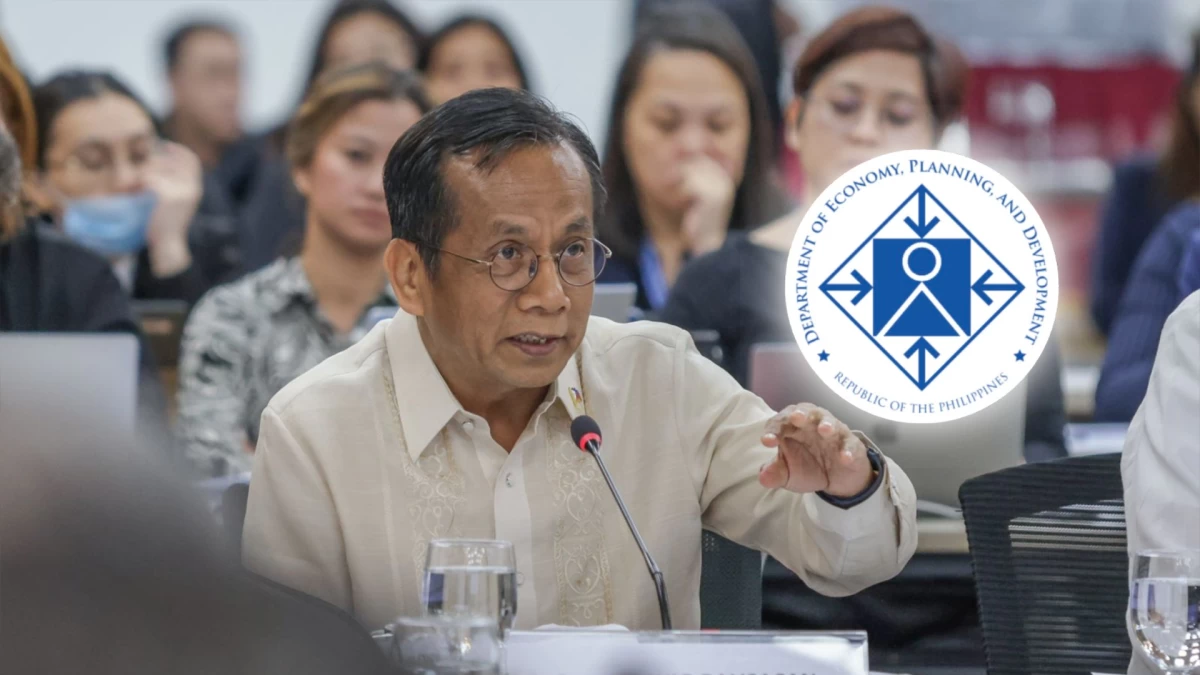
Despite global challenges, the Philippines is projected to sustain relatively strong economic growth and emerge as one of the region’s standout performers, according to the government’s chief economist.
“The Philippines would remain among Asia’s fastest-growing economies, outpacing several of our neighbors,” Department of Economy, Planning, and Development (DEPDev) Secretary Arsenio M. Balisacan said during the Economic Journalists Association of the Philippines (EJAP) Economic Forum on Monday, Aug. 11.
Balisacan emphasized that although the country continues to gain momentum—marked by robust growth, an improving labor market, easing inflation, and reduced poverty—a clear strategic direction is essential to guide the Philippines toward its envisioned future amid changing global dynamics. “We are not just keeping pace; we are helping set it apart,” he added.
The DEPDev chief underscored that a diversified, productivity-driven, and inclusive growth model is crucial for resilience.
Sectoral diversification means expanding growth beyond domestic household consumption, particularly by boosting manufacturing and higher value-added services to generate quality jobs and better wages. Spatial diversification, meanwhile, involves extending economic opportunities beyond Mega Manila to strengthen resilience against local shocks and spur development in lagging regions.
On the demand side, household consumption has consistently served as the cornerstone of economic growth. On the supply side, the services sector remains dominant, even as agriculture and industry continue to face deep-rooted challenges, Balisacan said.
“We aim to spur stronger growth in areas such as manufacturing and higher value-added services—sectors that can generate quality jobs, offer better wages, and provide stable employment for both skilled and semi-skilled workers,” he said.
The DEPDev chief also pointed to the country’s expanding working-age population as a valuable asset, saying the government must invest in quality education, improve healthcare, and create jobs that leverage both human skills and artificial intelligence (AI).
He noted that the poorest segments are seeing quicker income growth than the wealthiest, with the sustained decline in the Gini index suggesting narrowing income disparities.
For him, boosting productivity through better infrastructure, advanced technologies, and continuous innovation—alongside inclusive growth—remains critical to achieving lasting improvements in the daily lives of Filipinos.
Balisacan concluded his speech with the government’s ultimate goal: “A stable, comfortable, and secure life for all Filipinos,” he said in Filipino.
This year’s EJAP economic forum, themed “Midterm Momentum: Balancing Stability and Action,” gathered the country’s top economic managers to discuss the Philippines’ macroeconomic performance and strategies for sustaining growth in the remaining three years of the Marcos Jr. administration.
Aside from Balisacan, the members of the economic team at Monday’s EJAP forum included Department of Finance (DOF) Secretary Ralph G. Recto, Bangko Sentral ng Pilipinas (BSP) Governor Eli M. Remolona Jr., Special Assistant to the President for Investment and Economic Affairs (SAPIEA) Secretary Frederick D. Go, and Department of Budget and Management (DBM) Assistant Secretary Romeo T. Balanquit.
(Ricardo M. Austria)