

ADVERTISEMENT

Artist drowns sculpture in plastic waste in front of the UN during plastic pollution treaty talks

Published Aug 12, 2025 12:07 pm

By JENNIFER McDERMOTT Associated Press
GENEVA (AP) — As nations began a second week of negotiations Monday for a global accord to end plastic pollution, an artist heaped piles of plastic waste onto a large sculpture in front of the United Nations office.
Delegates to the treaty talks pass by the sculpture daily in a reminder of their responsibility to solve the plastic pollution crisis. The talks are scheduled to conclude Thursday.
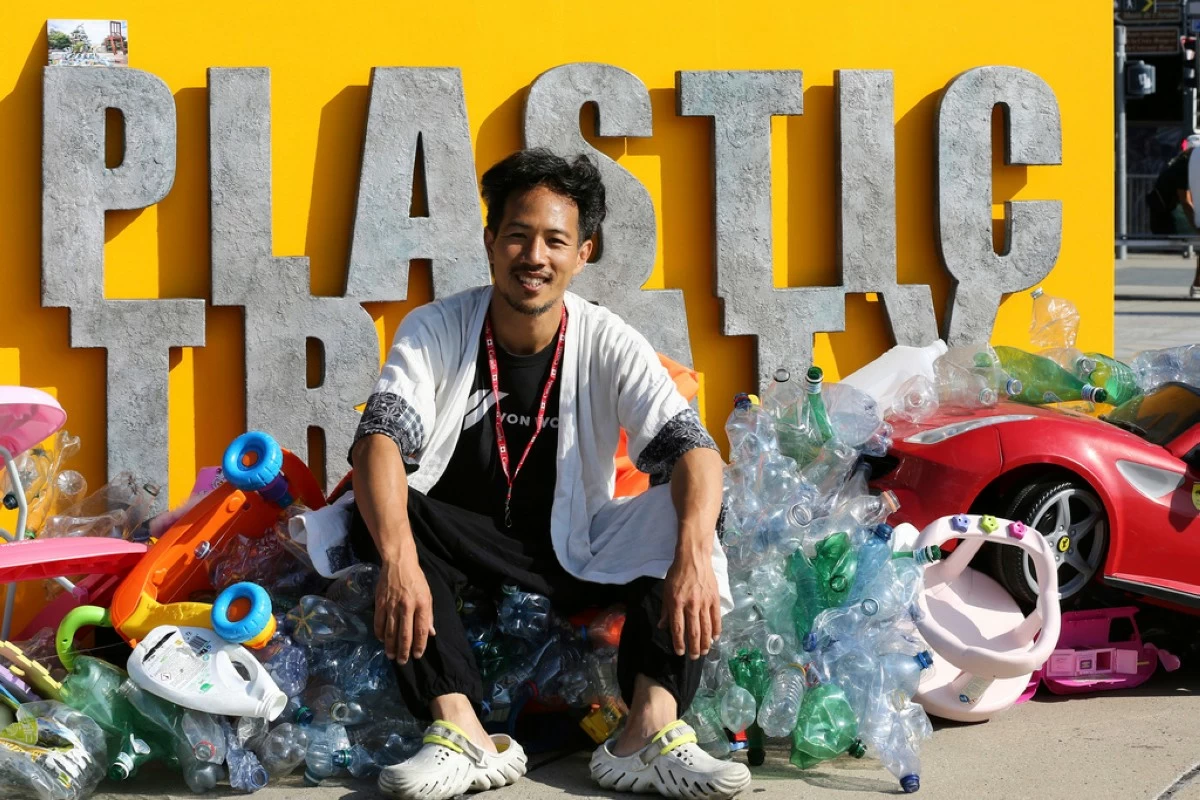
Benjamin Von Wong, a Canadian artist and activist, poses in front of a sculpture that he designed in front of the United Nations office in Geneva, Switzerland, Monday, Aug. 11, 2025. (AP Photo/ Jennifer McDermott)
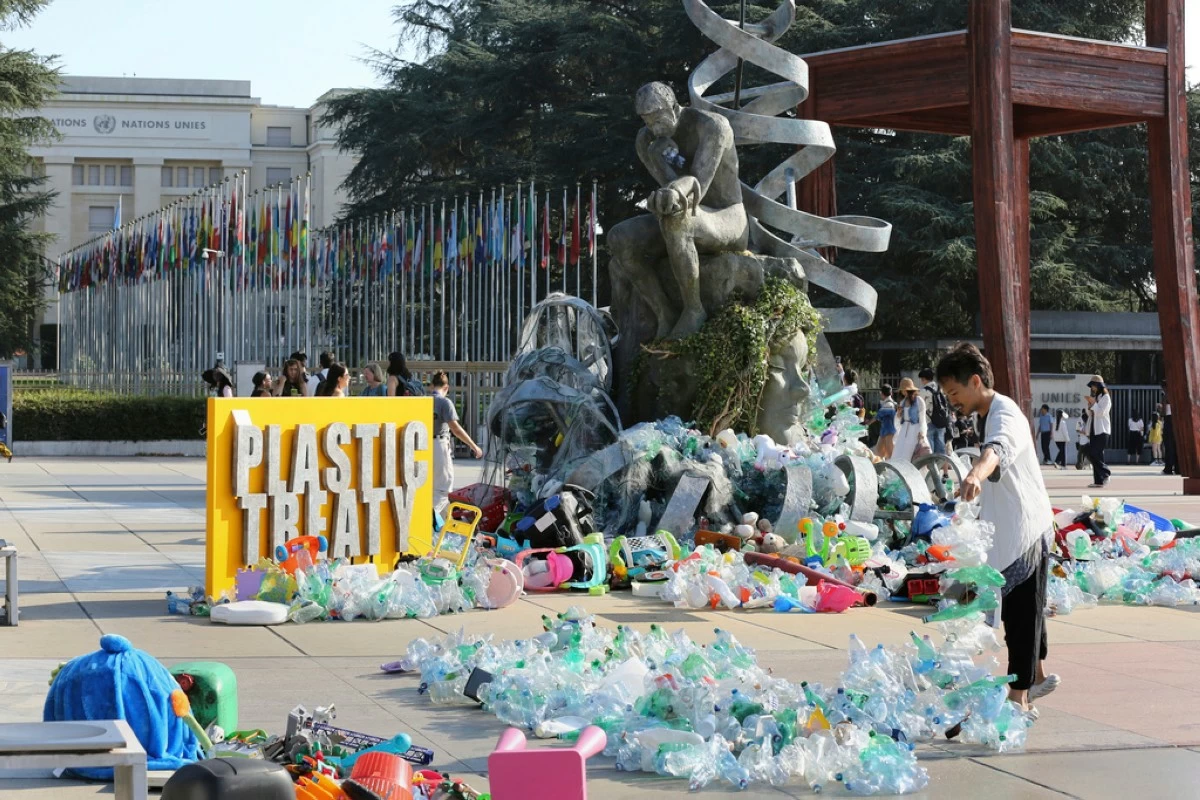
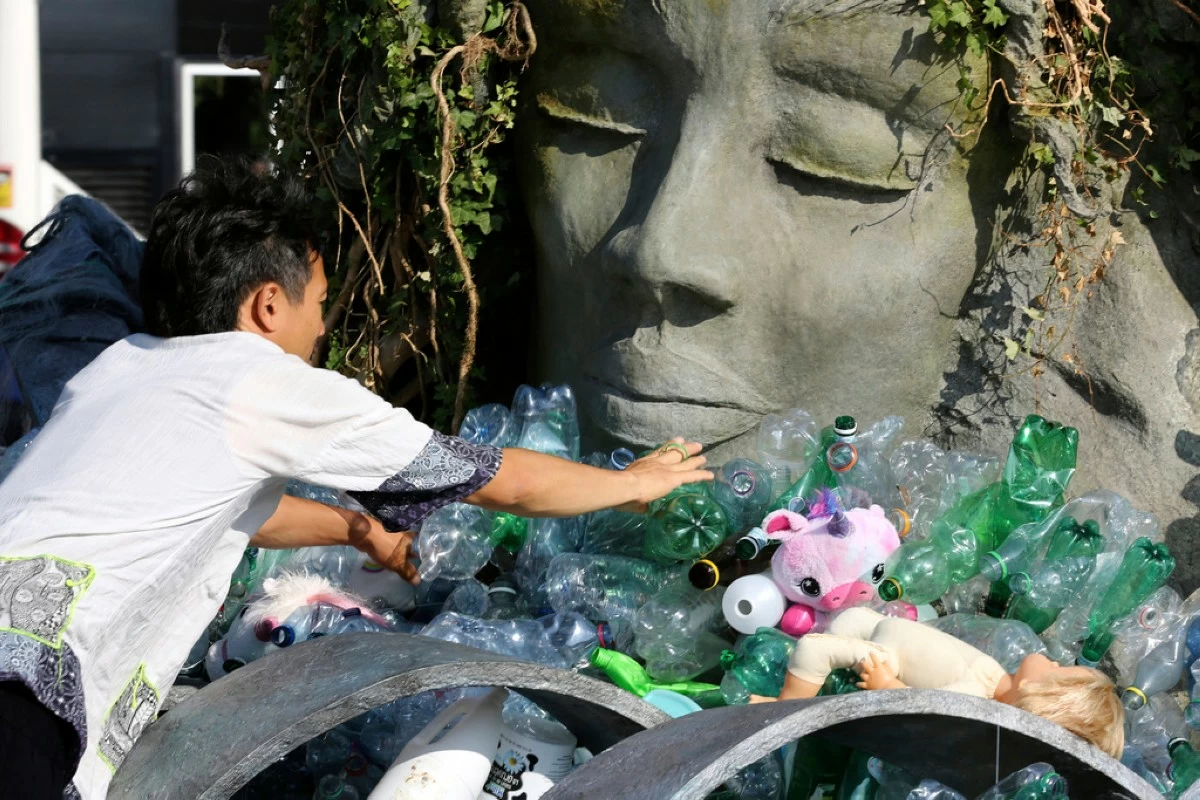
Benjamin Von Wong, right, a Canadian artist and activist, heaps piles of plastic waste onto a large sculpture that he designed in front of the United Nations office in Geneva, Switzerland, Monday, Aug. 11, 2025. (AP Photo/ Jennifer McDermott)
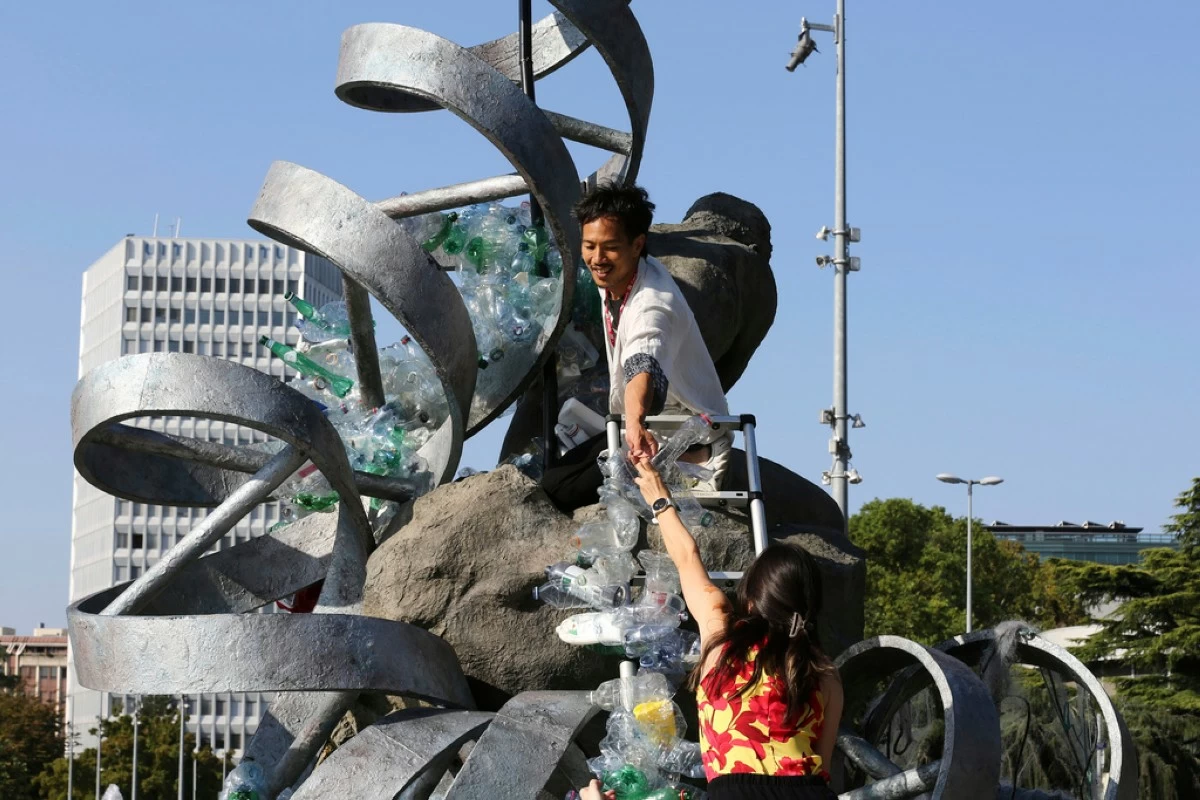
Benjamin Von Wong, a Canadian artist and activist, heaps piles of plastic waste onto a large sculpture that he designed in front of the United Nations office in Geneva, Switzerland, Monday, Aug. 11, 2025. (AP Photo/ Jennifer McDermott)
Benjamin Von Wong, top, a Canadian artist and activist, heaps piles of plastic waste onto a large sculpture that he designed in front of the United Nations office in Geneva, Switzerland, Monday, Aug. 11, 2025. (AP Photo/ Jennifer McDermott)
Benjamin Von Wong, a Canadian artist and activist, designed the nearly 6 meter (18 foot) sculpture called the "Thinker's Burden" and built it with a team. It's his take on the famous sculpture by Auguste Rodin, "The Thinker" in Paris. There is a male figure in deep thought, like Rodin depicted. But instead of sitting atop a rock, Von Wong's figure sits atop Mother Earth while cradling a baby and clutching plastic bottles. A strand of DNA intertwines them to highlight the health impacts of plastic pollution.
With the help of volunteers, Von Wong is adding plastic waste to the installation over the course of the negotiations to reflect the growing cost of inaction. He climbed a ladder Monday to reach the top of the sculpture and weave plastic bottles through the DNA. He put a plastic toy car in front.
"By the end of this week, we should have a sculpture almost completely drowned in plastics, however, the hope is, a strong and ambitious plastics treaty means that we can solve this problem once and for all," he said.
The Minderoo Foundation, an Australian philanthropic organization, was the largest donor for the project. Local nonprofits and community groups collected the plastic trash.
Standing by the sculpture, Maria Ivanova, an expert in international environmental governance, said it "wakes you up." Ivanova is the co-director of the Plastics Center at Northeastern University in Boston.
"People don't change their minds because of facts. They do because of feelings," she said. "And this is where I think art is absolutely critical to shift the needle on policy."
Delegates and tourists stopped to ask Von Wong about his work and pose for photos in front of it. Michael Bonser, head of the Canadian delegation, called the artwork "extraordinarily profound."
"It gives us a sense, every day, of what we need to be doing inside the room, what we need to walk out with. And that's a deal that allows us to reverse the trend," he said. "That's going to be challenging, but I think it's possible."
About 3,700 people are taking part in the talks, representing 184 countries and more than 600 organizations. They are crafting the first global, legally binding treaty on plastics pollution.
Many agree the pace of the negotiations needs to speed up. They arrived in Geneva with hundreds of disagreements to be resolved. The number of unresolved issues grew last week, instead of shrinking.
European Commissioner Jessika Roswall said she's concerned about the lack of progress, and "it's time to get results." Roswall is commissioner for environment, water resilience and a competitive circular economy.
United Nations Environment Programme Executive Director Inger Andersen told reporters it's still possible to agree on a treaty this week that ends plastic pollution.
"This is within grasp," Andersen said. "The window remains open to leave Geneva with this treaty."
ADVERTISEMENT
.most-popular .layout-ratio{ padding-bottom: 79.13%; } @media (min-width: 768px) and (max-width: 1024px) { .widget-title { font-size: 15px !important; } }

{{ articles_filter_1561_widget.title }}

.most-popular .layout-ratio{ padding-bottom: 79.13%; } @media (min-width: 768px) and (max-width: 1024px) { .widget-title { font-size: 15px !important; } }

{{ articles_filter_1562_widget.title }}

.most-popular .layout-ratio{ padding-bottom: 79.13%; } @media (min-width: 768px) and (max-width: 1024px) { .widget-title { font-size: 15px !important; } }

{{ articles_filter_1563_widget.title }}

{{ articles_filter_1564_widget.title }}

.mb-article-details { position: relative; } .mb-article-details .article-body-preview, .mb-article-details .article-body-summary{ font-size: 17px; line-height: 30px; font-family: "Libre Caslon Text", serif; color: #000; } .mb-article-details .article-body-preview iframe , .mb-article-details .article-body-summary iframe{ width: 100%; margin: auto; } .read-more-background { background: linear-gradient(180deg, color(display-p3 1.000 1.000 1.000 / 0) 13.75%, color(display-p3 1.000 1.000 1.000 / 0.8) 30.79%, color(display-p3 1.000 1.000 1.000) 72.5%); position: absolute; height: 200px; width: 100%; bottom: 0; display: flex; justify-content: center; align-items: center; padding: 0; } .read-more-background a{ color: #000; } .read-more-btn { padding: 17px 45px; font-family: Inter; font-weight: 700; font-size: 18px; line-height: 16px; text-align: center; vertical-align: middle; border: 1px solid black; background-color: white; } .hidden { display: none; }
function initializeAllSwipers() { // Get all hidden inputs with cms_article_id document.querySelectorAll('[id^="cms_article_id_"]').forEach(function (input) { const cmsArticleId = input.value; const articleSelector = '#article-' + cmsArticleId + ' .body_images'; const swiperElement = document.querySelector(articleSelector); if (swiperElement && !swiperElement.classList.contains('swiper-initialized')) { new Swiper(articleSelector, { loop: true, pagination: false, navigation: { nextEl: '#article-' + cmsArticleId + ' .swiper-button-next', prevEl: '#article-' + cmsArticleId + ' .swiper-button-prev', }, }); } }); } setTimeout(initializeAllSwipers, 3000); const intersectionObserver = new IntersectionObserver( (entries) => { entries.forEach((entry) => { if (entry.isIntersecting) { const newUrl = entry.target.getAttribute("data-url"); if (newUrl) { history.pushState(null, null, newUrl); let article = entry.target; // Extract metadata const author = article.querySelector('.author-section').textContent.replace('By', '').trim(); const section = article.querySelector('.section-info ').textContent.replace(' ', ' '); const title = article.querySelector('.article-title h1').textContent; // Parse URL for Chartbeat path format const parsedUrl = new URL(newUrl, window.location.origin); const cleanUrl = parsedUrl.host + parsedUrl.pathname; // Update Chartbeat configuration if (typeof window._sf_async_config !== 'undefined') { window._sf_async_config.path = cleanUrl; window._sf_async_config.sections = section; window._sf_async_config.authors = author; } // Track virtual page view with Chartbeat if (typeof pSUPERFLY !== 'undefined' && typeof pSUPERFLY.virtualPage === 'function') { try { pSUPERFLY.virtualPage({ path: cleanUrl, title: title, sections: section, authors: author }); } catch (error) { console.error('ping error', error); } } // Optional: Update document title if (title && title !== document.title) { document.title = title; } } } }); }, { threshold: 0.1 } ); function showArticleBody(button) { const article = button.closest("article"); const summary = article.querySelector(".article-body-summary"); const body = article.querySelector(".article-body-preview"); const readMoreSection = article.querySelector(".read-more-background"); // Hide summary and read-more section summary.style.display = "none"; readMoreSection.style.display = "none"; // Show the full article body body.classList.remove("hidden"); } document.addEventListener("DOMContentLoaded", () => { let loadCount = 0; // Track how many times articles are loaded const offset = [1, 2, 3, 4, 5, 6, 7, 8, 9, 10]; // Offset values const currentUrl = window.location.pathname.substring(1); let isLoading = false; // Prevent multiple calls if (!currentUrl) { console.log("Current URL is invalid."); return; } const sentinel = document.getElementById("load-more-sentinel"); if (!sentinel) { console.log("Sentinel element not found."); return; } function isSentinelVisible() { const rect = sentinel.getBoundingClientRect(); return ( rect.top < window.innerHeight && rect.bottom >= 0 ); } function onScroll() { if (isLoading) return; if (isSentinelVisible()) { if (loadCount >= offset.length) { console.log("Maximum load attempts reached."); window.removeEventListener("scroll", onScroll); return; } isLoading = true; const currentOffset = offset[loadCount]; window.loadMoreItems().then(() => { let article = document.querySelector('#widget_1690 > div:nth-last-of-type(2) article'); intersectionObserver.observe(article) loadCount++; }).catch(error => { console.error("Error loading more items:", error); }).finally(() => { isLoading = false; }); } } window.addEventListener("scroll", onScroll); });

Sign up by email to receive news.