ADVERTISEMENT

PH debt-to-GDP hits 20-year high: A cautionary peak

Published Aug 11, 2025 12:05 am  |  Updated Aug 10, 2025 03:47 pm
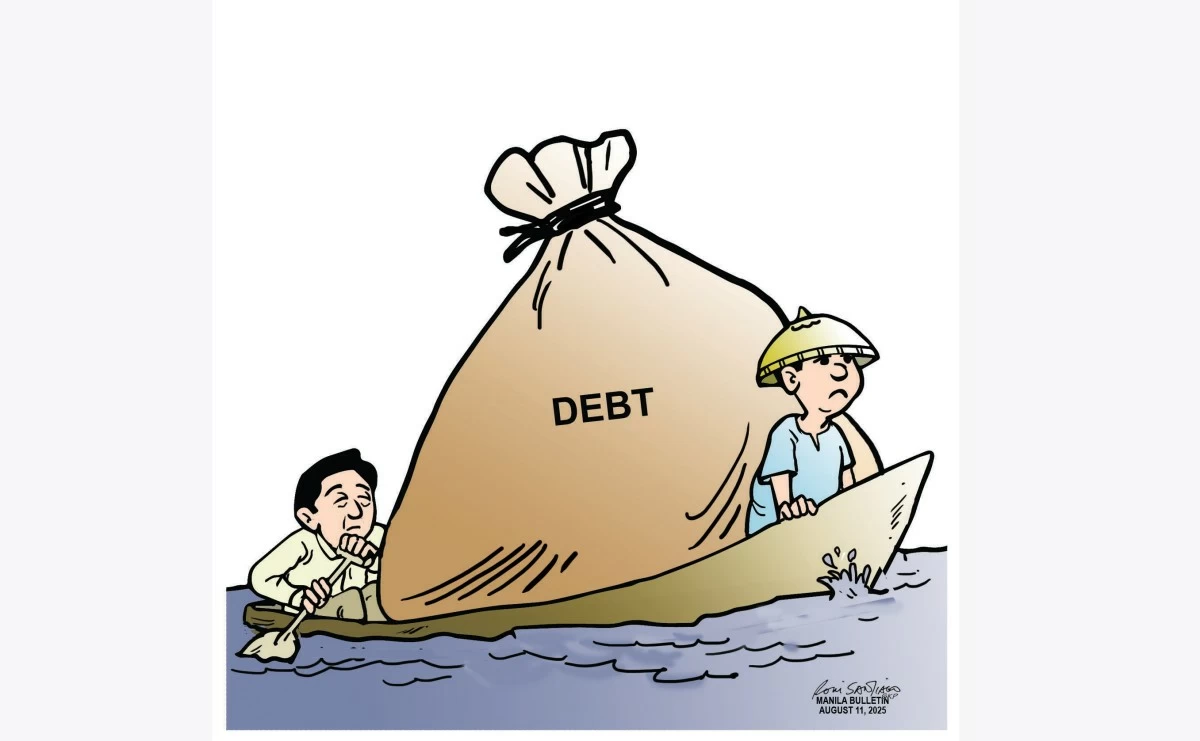
The Philippine national government’s debt-to-GDP ratio climbed to 63.1 percent by the end of the second quarter of 2025, marking the highest level in two decades. Just three months prior, the ratio had surged to 62 percent, already the sharpest rise since 2005. This escalation arrives at a moment when fiscal prudence should take center stage, not retreat.
What does this milestone truly signify?
The debt-to-GDP ratio is a critical gauge of a nation’s fiscal health. Crossing the 60 percent threshold is an indicator of structural vulnerability. The World Bank projects a gradual easing, estimating a decline to around 60.2 percent by end-2025, and further to 59.7 percent in 2026 assuming consistent growth and disciplined fiscal consolidation. However, these forecasts are made with a caveat, as they hinge on steady economic performance without new shocks to revenue or spending.
On the upside, the Philippine economy showed resilience with GDP growth accelerating in the second quarter of 2025 to 5.5 percent. Sustained growth can help bring the debt ratio down by expanding the baseline of economic output. But attainment of GDP growth must be complemented by the implementation of effective tax reforms. Moreover, revenue leakages must be plugged, and the government must ensure that borrowing translates into high-multiplier public goods like infrastructure and digital services.
The Department of Finance continues to manage the government's borrowings strategically. As of June 2025, total outstanding debt was ₱17.27 trillion, with approximately 69.2 percent sourced domestically, reducing exposure to foreign exchange fluctuations. Moreover, most borrowings (around 91.5 percent) are fixed-rate, and over 81 percent have long-term maturities, signaling judicious structuring amid rising rate environments..
At present, the government maintains that the debt situation remains “stable,” and the administration retains some fiscal leeway for priority programs. Nonetheless, the costs of complacency cannot be underestimated. Without renewed focus on boosting tax revenue and curbing low-value spending, the next shock —be it from global rate hikes, energy price surges, or natural disasters—could severely strain fiscal space.
World Bank officials caution that while current projections are optimistic, the real question is whether the Philippines’ tax base and economy can grow robustly enough to withstand unexpected disruptions. If urgent and effective action is not taken, the debt trajectory might plateau, or worse, climb.
As policymakers look ahead, several courses of action are crucial.
First: Prioritize recurrent revenue mobilization, not just new taxes but better enforcement and base widening.
Second: Ensure borrowed funds are channeled into transformative, growth-enhancing investments.
Third: Preserve fiscal buffers, maintaining prudent debt servicing and maturity structure without compromising essential services.
Fourth: Communicate clearly, building public trust and investor confidence through transparency and realistic forecasts.
The foregoing must be viewed as a package of priority measures that must be acted upon decisively in order to reap maximum benefits.
If the Philippines is to capitalize on its economic promise, it cannot afford to ignore this latest fiscal checkpoint. The rise to a 20-year high should be a catalyst for reform, not a footnote. Managing debt responsibly today is the cornerstone for sustainable prosperity tomorrow.
ADVERTISEMENT
.most-popular .layout-ratio{ padding-bottom: 79.13%; } @media (min-width: 768px) and (max-width: 1024px) { .widget-title { font-size: 15px !important; } }

{{ articles_filter_1561_widget.title }}

.most-popular .layout-ratio{ padding-bottom: 79.13%; } @media (min-width: 768px) and (max-width: 1024px) { .widget-title { font-size: 15px !important; } }

{{ articles_filter_1562_widget.title }}

.most-popular .layout-ratio{ padding-bottom: 79.13%; } @media (min-width: 768px) and (max-width: 1024px) { .widget-title { font-size: 15px !important; } }

{{ articles_filter_1563_widget.title }}

{{ articles_filter_1564_widget.title }}

.mb-article-details { position: relative; } .mb-article-details .article-body-preview, .mb-article-details .article-body-summary{ font-size: 17px; line-height: 30px; font-family: "Libre Caslon Text", serif; color: #000; } .mb-article-details .article-body-preview iframe , .mb-article-details .article-body-summary iframe{ width: 100%; margin: auto; } .read-more-background { background: linear-gradient(180deg, color(display-p3 1.000 1.000 1.000 / 0) 13.75%, color(display-p3 1.000 1.000 1.000 / 0.8) 30.79%, color(display-p3 1.000 1.000 1.000) 72.5%); position: absolute; height: 200px; width: 100%; bottom: 0; display: flex; justify-content: center; align-items: center; padding: 0; } .read-more-background a{ color: #000; } .read-more-btn { padding: 17px 45px; font-family: Inter; font-weight: 700; font-size: 18px; line-height: 16px; text-align: center; vertical-align: middle; border: 1px solid black; background-color: white; } .hidden { display: none; }
function initializeAllSwipers() { // Get all hidden inputs with cms_article_id document.querySelectorAll('[id^="cms_article_id_"]').forEach(function (input) { const cmsArticleId = input.value; const articleSelector = '#article-' + cmsArticleId + ' .body_images'; const swiperElement = document.querySelector(articleSelector); if (swiperElement && !swiperElement.classList.contains('swiper-initialized')) { new Swiper(articleSelector, { loop: true, pagination: false, navigation: { nextEl: '#article-' + cmsArticleId + ' .swiper-button-next', prevEl: '#article-' + cmsArticleId + ' .swiper-button-prev', }, }); } }); } setTimeout(initializeAllSwipers, 3000); const intersectionObserver = new IntersectionObserver( (entries) => { entries.forEach((entry) => { if (entry.isIntersecting) { const newUrl = entry.target.getAttribute("data-url"); if (newUrl) { history.pushState(null, null, newUrl); let article = entry.target; // Extract metadata const author = article.querySelector('.author-section').textContent.replace('By', '').trim(); const section = article.querySelector('.section-info ').textContent.replace(' ', ' '); const title = article.querySelector('.article-title h1').textContent; // Parse URL for Chartbeat path format const parsedUrl = new URL(newUrl, window.location.origin); const cleanUrl = parsedUrl.host + parsedUrl.pathname; // Update Chartbeat configuration if (typeof window._sf_async_config !== 'undefined') { window._sf_async_config.path = cleanUrl; window._sf_async_config.sections = section; window._sf_async_config.authors = author; } // Track virtual page view with Chartbeat if (typeof pSUPERFLY !== 'undefined' && typeof pSUPERFLY.virtualPage === 'function') { try { pSUPERFLY.virtualPage({ path: cleanUrl, title: title, sections: section, authors: author }); } catch (error) { console.error('ping error', error); } } // Optional: Update document title if (title && title !== document.title) { document.title = title; } } } }); }, { threshold: 0.1 } ); function showArticleBody(button) { const article = button.closest("article"); const summary = article.querySelector(".article-body-summary"); const body = article.querySelector(".article-body-preview"); const readMoreSection = article.querySelector(".read-more-background"); // Hide summary and read-more section summary.style.display = "none"; readMoreSection.style.display = "none"; // Show the full article body body.classList.remove("hidden"); } document.addEventListener("DOMContentLoaded", () => { let loadCount = 0; // Track how many times articles are loaded const offset = [1, 2, 3, 4, 5, 6, 7, 8, 9, 10]; // Offset values const currentUrl = window.location.pathname.substring(1); let isLoading = false; // Prevent multiple calls if (!currentUrl) { console.log("Current URL is invalid."); return; } const sentinel = document.getElementById("load-more-sentinel"); if (!sentinel) { console.log("Sentinel element not found."); return; } function isSentinelVisible() { const rect = sentinel.getBoundingClientRect(); return ( rect.top < window.innerHeight && rect.bottom >= 0 ); } function onScroll() { if (isLoading) return; if (isSentinelVisible()) { if (loadCount >= offset.length) { console.log("Maximum load attempts reached."); window.removeEventListener("scroll", onScroll); return; } isLoading = true; const currentOffset = offset[loadCount]; window.loadMoreItems().then(() => { let article = document.querySelector('#widget_1690 > div:nth-last-of-type(2) article'); intersectionObserver.observe(article) loadCount++; }).catch(error => { console.error("Error loading more items:", error); }).finally(() => { isLoading = false; }); } } window.addEventListener("scroll", onScroll); });

Sign up by email to receive news.