






Manila Bulletin
 Business
Trade & Industry
Manila lobbies US for exemption from semiconductor tariffs
Business
Trade & Industry
Manila lobbies US for exemption from semiconductor tariffs
Business
Trade & Industry
Manila lobbies US for exemption from semiconductor tariffs
Manila lobbies US for exemption from semiconductor tariffs
Published Aug 11, 2025 02:02 pm


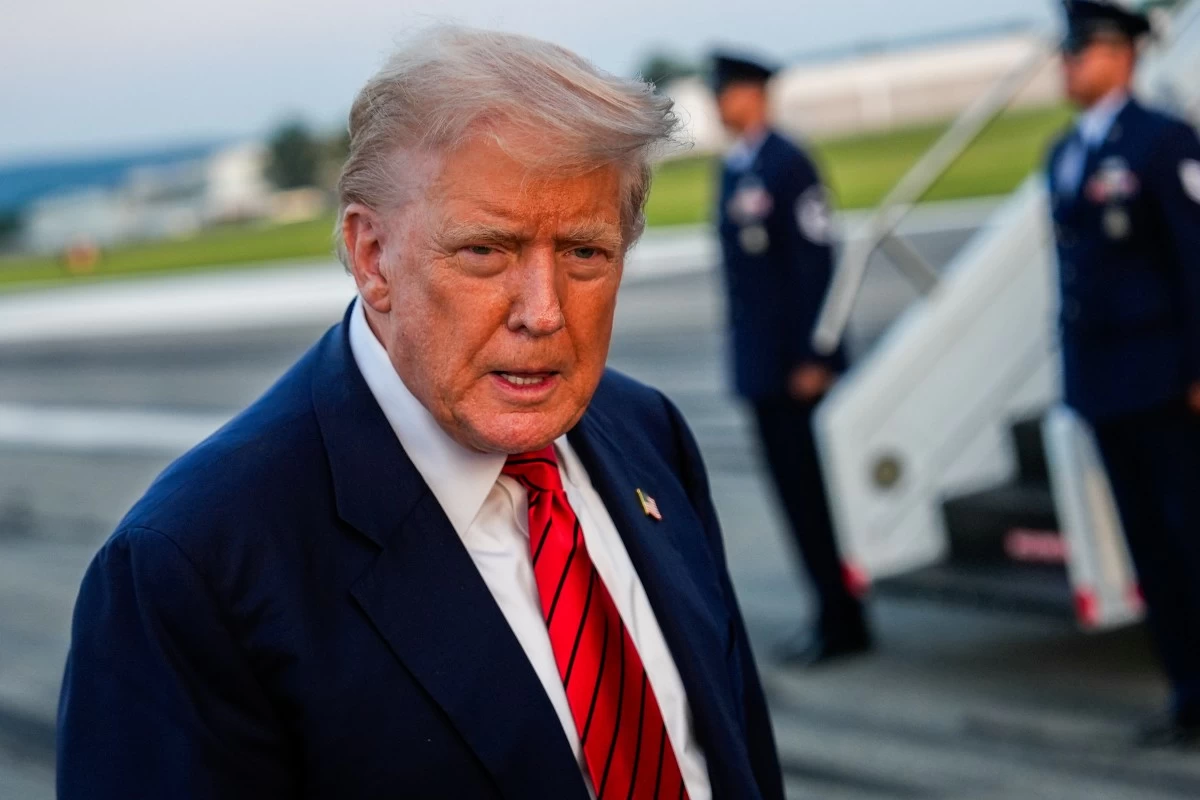
President Donald Trump speaks with reporters before boarding Air Force One at Lehigh Valley International Airport, Sunday, Aug. 3, 2025, in Allentown, Pa. (AP Photo/Julia Demaree Nikhinson)
The Marcos administration is pushing for the exemption of the Philippines from the planned imposition of a 100 percent tariff threatened by United States (US) President Donald Trump on foreign-made semiconductors, cushioning the industry from a potential slowdown in investments.
Special Assistant to the President for Investment and Economic Affairs Secretary Frederick Go described that the government is still in a “gray space” after Trump’s industry-shifting announcement last week.
Trump has said that he will impose tariffs on semiconductor imports, with exceptions for companies that are manufacturing in the US or those that have committed to doing so.
According to Go, some of America’s trading partners have claimed that their semiconductor exports are already exempted from the US’ latest tariff threat after reaching a deal with the Trump administration.
“And of course, we are lobbying that our semiconductor exports likewise be exempted if there is such,” he told reporters on the sidelines of the Economic Journalists Association of the Philippines (EJAP) Economic Forum 2025.
Go, a prominent figure in Marcos’ economic team, said the government will still schedule a meeting with the Office of the US Trade Representative (USTR) to clarify this situation.
“There's nothing to my knowledge, up to today, if any country has actually signed. I think so far, everything is a media announcement,” he added.
Last week, the Semiconductor and Electronics Industries in the Philippines Foundation Inc. (SEIPI) stated that the tariffs on semiconductors could lead to a drop in investments, potentially slowing down economic growth.
SEIPI President Danilo Lachica said some semiconductor companies operating in the country have already expressed interest in building manufacturing facilities in the US.
Lachica warned that such a prospect could “crush” the semiconductor industry and the economy at large.
According to the Philippine Statistics Authority (PSA), electronic products such as semiconductors were the commodity group with the highest import value in June, amounting to $2.56 billion.
Allaying the industry’s fears, Go emphasized that the best option for the government is to leverage the local industry’s specialty in semiconductors to potentially get an exemption.
Unlike other chip-importing nations, the Philippines focused mainly on the assembly, testing, and packaging of these products.
“We’re hoping that they view the work we do here in the Philippines…to be part of the process that the US may not really want to do. These processes that semiconductor companies probably want to offshore,” explained Go.
On the flip side, if the Trump administration moves to actually impose tariffs, there could still be a semblance of good news for the local semiconductor sector.
Go said that imposing 100 percent tariffs on all foreign-based semiconductors would reduce every country to a level playing field.
“I mean, the best case, maybe they will tweet next week, it's exempted again,” he quipped, referencing Trump’s tendency to back track on his policy announcements.
In a related development, the official said the government is also working on the exemption of several Philippine exports as part of the ongoing negotiations with the US for a reciprocal trade deal.
Due to a non-disclosure agreement, he said he cannot divulge what these products are.
He, however, floated that these are the products that the country “produces in abundance” that cannot be replicated in the US.
Last month, the Philippines secured a deal with the US to cut its tariff rate from 20 percent to 19 percent, which is higher than the initial 17 percent. This new levy took effect on Aug. 7.
While details of the agreement are not yet made public, President Marcos said the country will offer zero tariffs to American-made automobiles, soy, wheat, and pharmaceutical products in return.
Currently, the country maintains the second-lowest tariff rate in Southeast Asia. However, it now shares this position with four other major US trading partners: Cambodia, Malaysia, Thailand, and Indonesia.
With no advantage in hand, Go said the Philippines could still have leverage with the US compared to its neighbors.
He stated that the country will revert to its strengths—the highly skilled workforce and benefits under laws such as the Corporate Recovery and Tax Incentives for Enterprises, which aim to maximize opportunities for reinvigorating the economy (CREATE MORE), and the Public-Private Partnership (PPP) code.