ADVERTISEMENT

India grants free 30-day e-tourist visa for Filipinos

Published Aug 11, 2025 02:10 pm
The Indian government has granted Filipinos a free 30-day e-tourist visa, which is valid for double entry, from Aug. 1, 2025 to July 31, 2026, the Embassy of India in the Philippines announced.

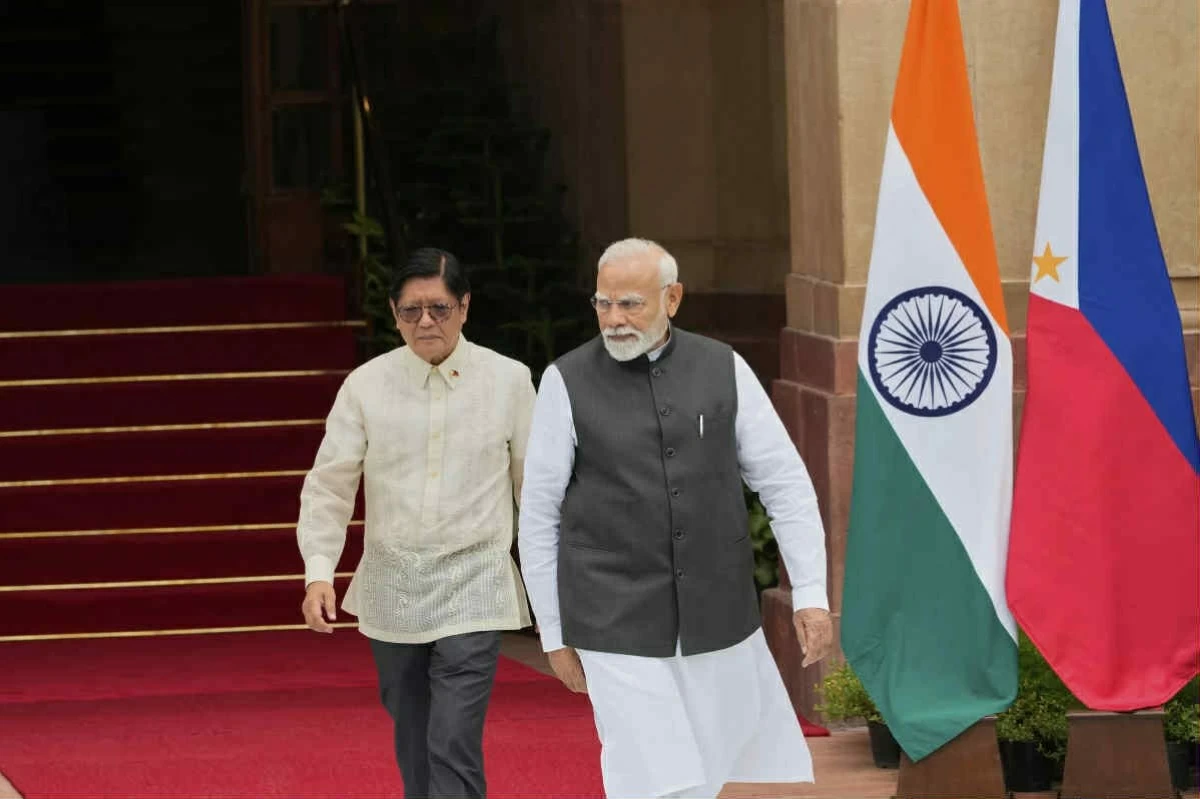
Indian Prime Minister Narendra Modi (right) with President Ferdinand 'Bongbong' Marcos Jr. before delegation level talks in New Delhi, India on Tuesday, Aug. 5, 2025. (AP Photo/Manish Swarup)
The e-tourist visa will be on a gratis (free) basis for the initial period of one year, the embassy said in its notice.

“By default, a double entry e-Tourist visa valid for 30 days from the date of the first arrival in India will be granted to the applicant,” the embassy explained.

“Double entries will be granted within the e-Visa validity period stamped by the Bureau of Immigration on the Passport at the time of entry. The first arrival must be made on or before the date mentioned in the Electronic Travel Authorization (ETA),” it added.

Those who want to apply for the 30-day e-Tourist Visa may do so online via https://indianvisaonline.gov.in/evisa/tvoa.html, but applicants must apply at least four days to 30 days in advance of the date of arrival to be eligible for the free visa issuance.

However, applicants for other e-visa categories—e-tourist visas for longer duration, e-Business, e-Conference, e-Medical, e-Medical Attendant, e-Ayush, and e-Student—will be asked to pay the necessary visa fees.

Applicants will also need to pay the prescribed visa fees if they want regular paper visas, including tourist visa.

They must also ensure that their passports are still valid for six months by the time they apply for an e-visa, and that they can produce either a return or onward journey ticket and proof of sufficient fund for their stay in India during immigration check.

The embassy reminded applicants that the e-visa is “non-extendable, non-convertible, and not valid for visiting Protected/Restricted and Cantonment Areas.”

Other rules regarding the e-Tourist and e-Visa program are published on https://indianvisaonline.gov.in/evisa/tvoa.html.

This announcement came after the Philippine government approved visa-free privileges for Indian nationals in June, allowing Indian nationals to stay visa-free in the country for 14 days.

In the same month, Air India also announced that there will be direct flights between Manila and Delhi starting Oct. 1 this year in a bid to boost the tourism, trade, and cultural exchanges between the two countries.

Related Tags

India e-Tourist visa Embassy of India in the Philippines Air India
ADVERTISEMENT
.most-popular .layout-ratio{ padding-bottom: 79.13%; } @media (min-width: 768px) and (max-width: 1024px) { .widget-title { font-size: 15px !important; } }

{{ articles_filter_1561_widget.title }}

.most-popular .layout-ratio{ padding-bottom: 79.13%; } @media (min-width: 768px) and (max-width: 1024px) { .widget-title { font-size: 15px !important; } }

{{ articles_filter_1562_widget.title }}

.most-popular .layout-ratio{ padding-bottom: 79.13%; } @media (min-width: 768px) and (max-width: 1024px) { .widget-title { font-size: 15px !important; } }

{{ articles_filter_1563_widget.title }}

{{ articles_filter_1564_widget.title }}

.mb-article-details { position: relative; } .mb-article-details .article-body-preview, .mb-article-details .article-body-summary{ font-size: 17px; line-height: 30px; font-family: "Libre Caslon Text", serif; color: #000; } .mb-article-details .article-body-preview iframe , .mb-article-details .article-body-summary iframe{ width: 100%; margin: auto; } .read-more-background { background: linear-gradient(180deg, color(display-p3 1.000 1.000 1.000 / 0) 13.75%, color(display-p3 1.000 1.000 1.000 / 0.8) 30.79%, color(display-p3 1.000 1.000 1.000) 72.5%); position: absolute; height: 200px; width: 100%; bottom: 0; display: flex; justify-content: center; align-items: center; padding: 0; } .read-more-background a{ color: #000; } .read-more-btn { padding: 17px 45px; font-family: Inter; font-weight: 700; font-size: 18px; line-height: 16px; text-align: center; vertical-align: middle; border: 1px solid black; background-color: white; } .hidden { display: none; }
function initializeAllSwipers() { // Get all hidden inputs with cms_article_id document.querySelectorAll('[id^="cms_article_id_"]').forEach(function (input) { const cmsArticleId = input.value; const articleSelector = '#article-' + cmsArticleId + ' .body_images'; const swiperElement = document.querySelector(articleSelector); if (swiperElement && !swiperElement.classList.contains('swiper-initialized')) { new Swiper(articleSelector, { loop: true, pagination: false, navigation: { nextEl: '#article-' + cmsArticleId + ' .swiper-button-next', prevEl: '#article-' + cmsArticleId + ' .swiper-button-prev', }, }); } }); } setTimeout(initializeAllSwipers, 3000); const intersectionObserver = new IntersectionObserver( (entries) => { entries.forEach((entry) => { if (entry.isIntersecting) { const newUrl = entry.target.getAttribute("data-url"); if (newUrl) { history.pushState(null, null, newUrl); let article = entry.target; // Extract metadata const author = article.querySelector('.author-section').textContent.replace('By', '').trim(); const section = article.querySelector('.section-info ').textContent.replace(' ', ' '); const title = article.querySelector('.article-title h1').textContent; // Parse URL for Chartbeat path format const parsedUrl = new URL(newUrl, window.location.origin); const cleanUrl = parsedUrl.host + parsedUrl.pathname; // Update Chartbeat configuration if (typeof window._sf_async_config !== 'undefined') { window._sf_async_config.path = cleanUrl; window._sf_async_config.sections = section; window._sf_async_config.authors = author; } // Track virtual page view with Chartbeat if (typeof pSUPERFLY !== 'undefined' && typeof pSUPERFLY.virtualPage === 'function') { try { pSUPERFLY.virtualPage({ path: cleanUrl, title: title, sections: section, authors: author }); } catch (error) { console.error('ping error', error); } } // Optional: Update document title if (title && title !== document.title) { document.title = title; } } } }); }, { threshold: 0.1 } ); function showArticleBody(button) { const article = button.closest("article"); const summary = article.querySelector(".article-body-summary"); const body = article.querySelector(".article-body-preview"); const readMoreSection = article.querySelector(".read-more-background"); // Hide summary and read-more section summary.style.display = "none"; readMoreSection.style.display = "none"; // Show the full article body body.classList.remove("hidden"); } document.addEventListener("DOMContentLoaded", () => { let loadCount = 0; // Track how many times articles are loaded const offset = [1, 2, 3, 4, 5, 6, 7, 8, 9, 10]; // Offset values const currentUrl = window.location.pathname.substring(1); let isLoading = false; // Prevent multiple calls if (!currentUrl) { console.log("Current URL is invalid."); return; } const sentinel = document.getElementById("load-more-sentinel"); if (!sentinel) { console.log("Sentinel element not found."); return; } function isSentinelVisible() { const rect = sentinel.getBoundingClientRect(); return ( rect.top < window.innerHeight && rect.bottom >= 0 ); } function onScroll() { if (isLoading) return; if (isSentinelVisible()) { if (loadCount >= offset.length) { console.log("Maximum load attempts reached."); window.removeEventListener("scroll", onScroll); return; } isLoading = true; const currentOffset = offset[loadCount]; window.loadMoreItems().then(() => { let article = document.querySelector('#widget_1690 > div:nth-last-of-type(2) article'); intersectionObserver.observe(article) loadCount++; }).catch(error => { console.error("Error loading more items:", error); }).finally(() => { isLoading = false; }); } } window.addEventListener("scroll", onScroll); });

Sign up by email to receive news.