






Manila Bulletin
 Business
Trade & Industry
Gov't to lift rice import suspension as harvest season nears
Business
Trade & Industry
Gov't to lift rice import suspension as harvest season nears
Business
Trade & Industry
Gov't to lift rice import suspension as harvest season nears
Gov't to lift rice import suspension as harvest season nears
Published Aug 11, 2025 06:02 pm


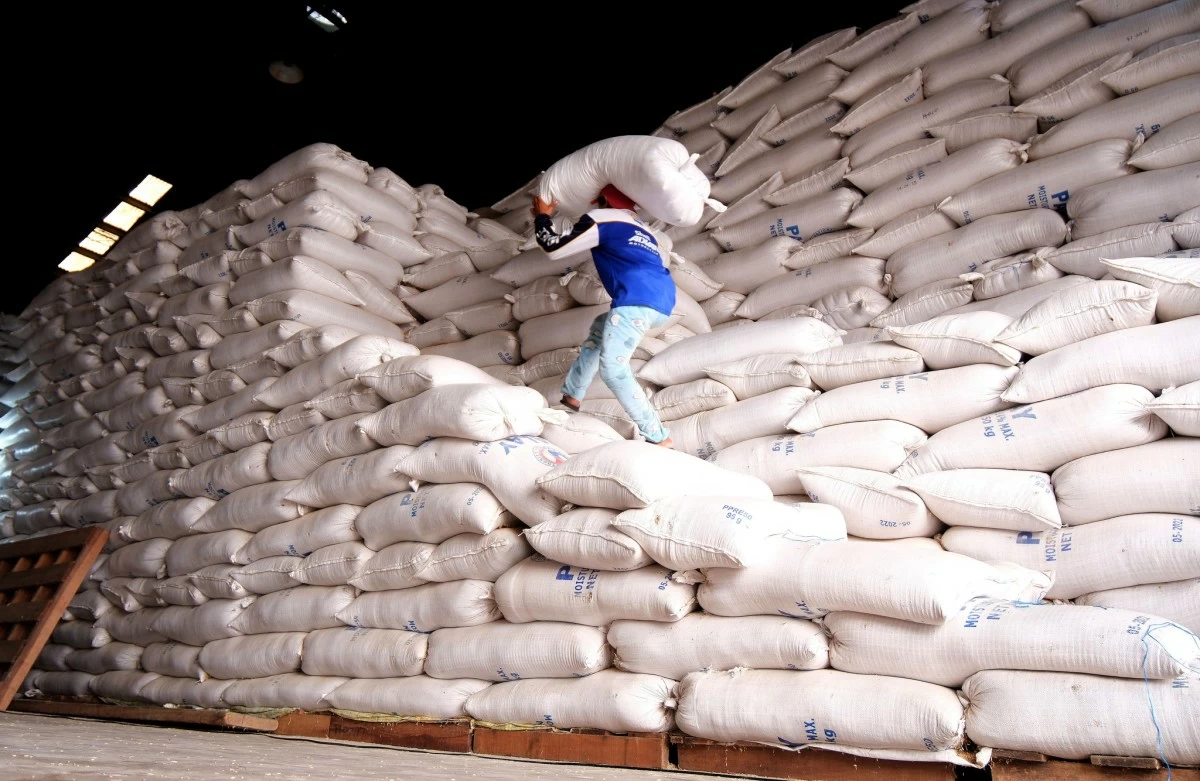
Department of Agriculture (DA) photo
The government will not extend the 60-day suspension of rice imports, which forms part of an ongoing effort to address challenges faced by farmers, once the deadline expires in October.
Finance Secretary Ralph Recto said on Monday, Aug. 11, that the import pause will unlikely be extended given that it was timed for the expected bountiful season for the staple.
“The only reason for the suspension essentially is because it's harvest season,” he said at the sidelines of the Economic Journalists Association of the Philippines (EJAP) 2025 Economic Forum.
Malacañang announced last week that the country will enforce a 60-day suspension on rice imports beginning Sept. 1.
The import pause seeks to provide the government flexibility to act quickly to protect farmers and ensure that prices are fair for consumers.
Recto said government revenue will be affected by the suspension, but noted that it will only “slightly drop.”
The official added that he does not expect much revenue loss, explaining that if the deficit is 4.6 million metric tons, it has likely already been imported.
The remaining balance, he said, will likely be brought in by year-end after the harvest season.
Canada deal eyed
Meanwhile, Department of Agriculture (DA) Secretary Francisco Tiu Laurel said the Philippines has committed to boosting its agricultural cooperation with Canada, with the prospect of a bilateral free trade agreement (FTA) under consideration.
Tiu Laurel held a meeting with Canada’s Agriculture and Agri-Food Minister Heath Macdonald last week as part of a renewed push to elevate both countries’ agri-fishery trade.
Both officials push forward the expansion of market access and diversification through a potential FTA.
“Canada remains a vital partner in supporting our vision for a more globally-competitive agriculture sector,” said Tiu Laurel.
A key outcome of the meeting was the signing of a joint statement on technical collaboration between the Bureau of Plant Industry (BPI) and the Canadian Food Inspection Agency (CFIA).
According to the DA, the agreement focuses on plant health, capacity building, scientific and regulatory advancement, and the exchange of innovations to boost productivity.