






Manila Bulletin
 Philippines
National
'Forthwith confusion' fuels House leader's call to form Concon, fix Charter's 'ambiguous' provisions
Philippines
National
'Forthwith confusion' fuels House leader's call to form Concon, fix Charter's 'ambiguous' provisions
Philippines
National
'Forthwith confusion' fuels House leader's call to form Concon, fix Charter's 'ambiguous' provisions
'Forthwith confusion' fuels House leader's call to form Concon, fix Charter's 'ambiguous' provisions
Published Aug 11, 2025 07:21 pm


At A Glance
- Citing the "enduring ambiguities" in the 1987 Constitution--one of which was seen in the impeachment case against Vice President Sara Duterte--Deputy Speaker Antipolo City 1st district Rep. Ronaldo "Ronnie" Puno sought the creation of a constitutional convention (Concon) for the purpose of fixing such problems once and for all.
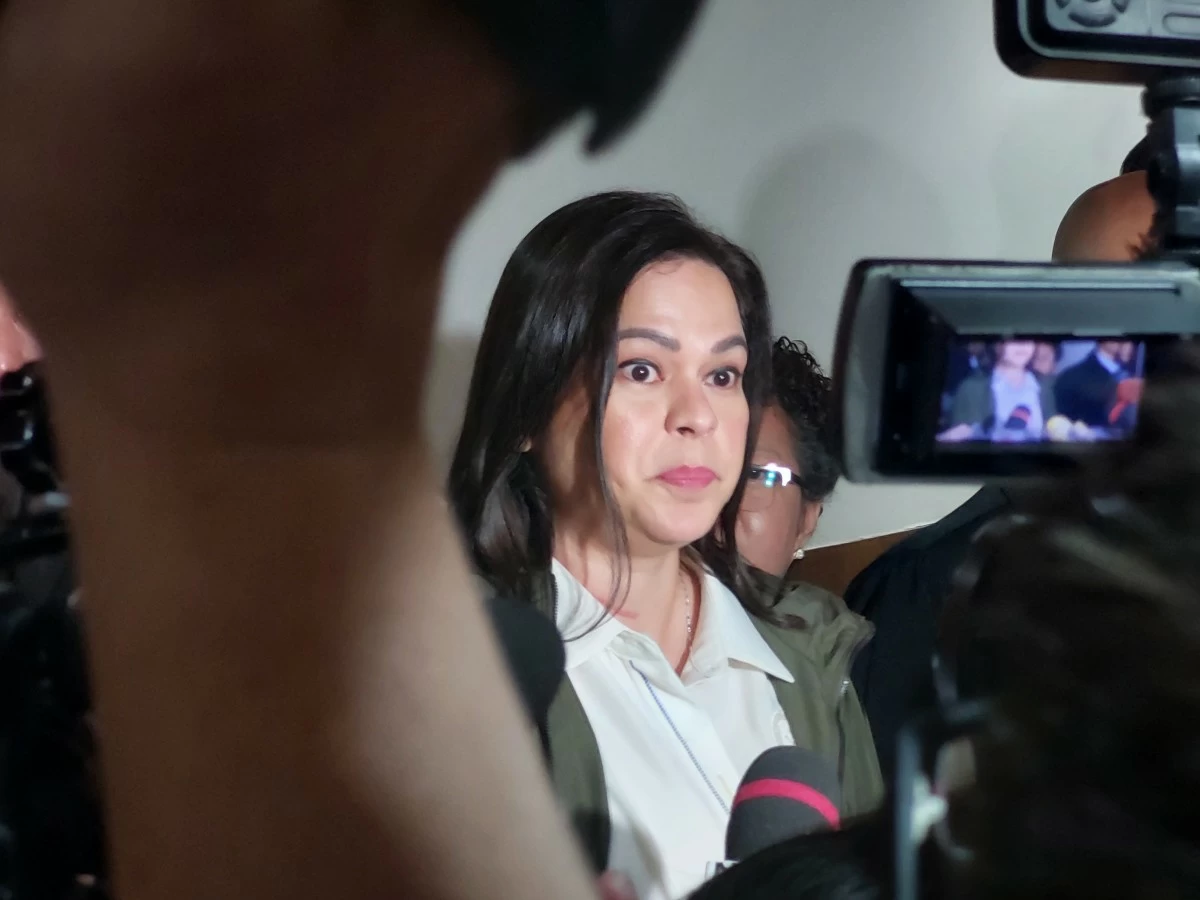
Vice President Sara Duterte (Ellson Quismorio/ MANILA BULLETIN)
Citing the "enduring ambiguities" in the 1987 Constitution--one of which was seen in the impeachment case against Vice President Sara Duterte--Deputy Speaker Antipolo City 1st district Rep. Ronaldo "Ronnie" Puno sought the creation of a constitutional convention (Concon) for the purpose of fixing such problems once and for all.
Puno, in his first privilege speech in the current 20th Congress on Monday afternoon, Aug. 11, said the proposed Concon was “the most prudent, transparent and participatory mechanism” to correct vague provisions and institute much-needed reforms in the Charter.
This, as Puno warned that such deficiencies in the Constitution weaken its legal foundations and degrade its reliability as the country’s supreme law.
“While the provisions of our Constitution are noble in aspiration, certain provisions are marked by ambiguity and procedural deficiency. These deficiencies do not merely complicate interpretation; they obstruct reform, hinder effective governance, and erode public trust,” he said.
Puno says the Concon allows the people, “through their chosen delegates, to correct textual deficiencies, reconcile contradictions, remove ambiguities, institutionalize much-needed reform, and ensure that the foundational law of the land meets the needs of a dynamic and democratic society".
The Concon route, rather than a constituent assembly (Com-ass), ensures “singularity of purpose”, freeing delegates from being preoccupied or derailed by lawmaking, oversight functions, and impeachment concerns, Puno said.
In pointing out the urgency of instituting reforms in the Constitution, the Deputy Speaker discussed several instances in which ambiguous provisions and textual flaws weakened the Charter’s legal foundations.
The most recent example, Puno said, is the interpretation of the word “forthwith” in Article XI, Section 3(4) on impeachment, which should have been a procedural safeguard against delay, but has instead become a cause of deadlock and controversy.
Forthwith means "immediately". However, the Senate infamously took months before acting on the House-initiated impeachment complaint against Vice President Duterte.
Puno said this issue has raised serious constitutional and jurisprudential questions. “Does the legislature now view the recent interpretation of ‘forthwith’ as applicable to ALL similar clauses in the Charter? Can the clear urgency mandated by constitutional language now be indefinitely stalled under the guise of interpretive discretion?” he asked.
This case alone shows how a single ambiguous word “can become the justification for legislative inaction, procedural manipulation, or worse, the loss of accountability itself,” said Puno.
“A Constitution that fails to provide clear, unambiguous guidance undermines its own purpose as the country’s fundamental law. When its wording is subject to multiple interpretations, the predictability of law dissolves, opening the door to legal confusion and arbitrary application,” he stresed.
Other ambiguous provisions
In his privilege speech, Puno also cited other instances of constitutional ambiguity: These are:
• Article VIII, Section 8 on the Judicial and Bar Council (JBC), which states that members of the JBC should include “a representative of Congress,” without specifying how this would be done within a bicameral legislature. The Supreme Court (SC) had to rule on this ambiguity, and stated that only one member of Congress can serve in the JBC at any given time. This has resulted in an awkward compromise of only one member of Congress, alternating between the Senate and the House of Representatives, sitting in the JBC.
• Article VI, Section 28, paragraph 4 on the grant of tax exemptions. This provision states that “no law granting any tax exemption shall be passed without the concurrence of a majority of all the Members of the Congress". Should Congress act as a joint body or separately? The ambiguous wording has implications not only on how tax exemption laws are passed, but also in determining quorums and voting thresholds.
• Article VII, Section 19 on the presidential grant of amnesty, which needs to be concurred in by “a majority of the members of Congress". The provision fails to specify whether this should occur through a joint vote or as separate votes by the Senate and the House. This lack of procedural clarity has led to intense debates when presidential amnesty was granted to members of the Magdalo Group, including former Senator Antonio Trillanes IV.
• Article X, Section 8 on setting a fixed three-year term for elective local officials, except barangay officials. The provision, which allowed Congress to pass at least five laws to postpone the holding of the barangay elections, has been abused either for political expediency or because of budgetary constraints, eroding “democratic accountability at the most local level of governance".
“A Constitution that allows repeated legislative interference in electoral timelines, without limit, is a Constitution vulnerable to manipulation,” Puno pointed out.