ADVERTISEMENT

BSP's dovish stance, currency weakness tolerance to weigh on peso

Published Aug 11, 2025 12:01 am
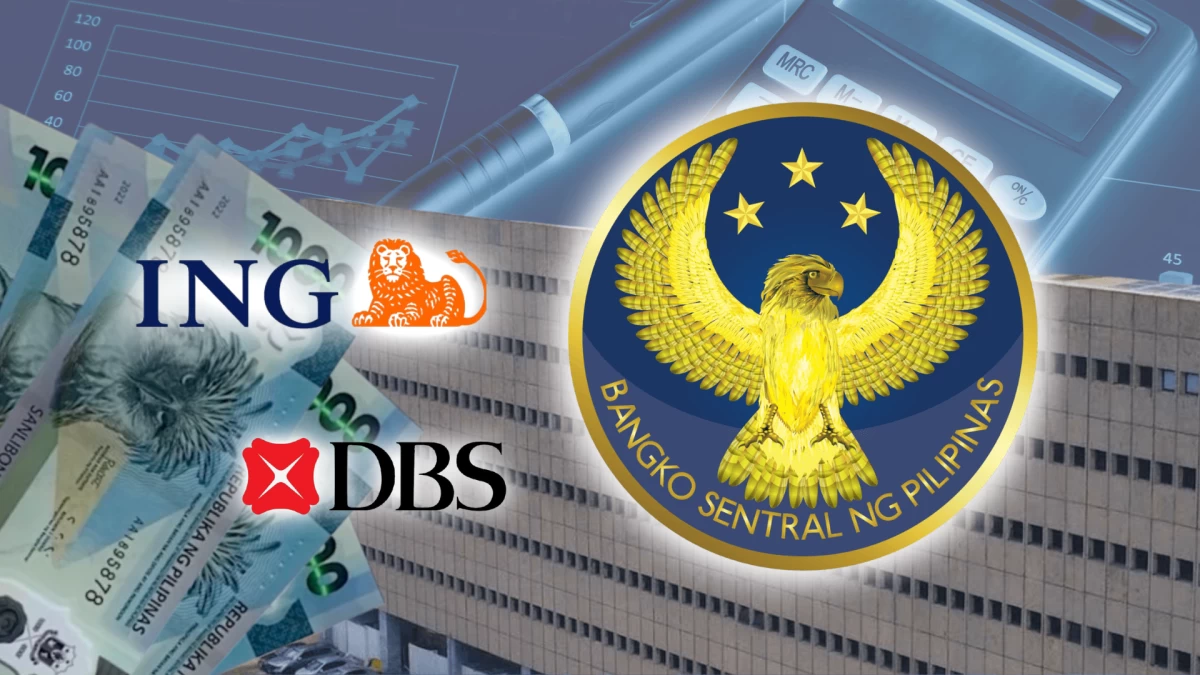
Dutch financial giant ING said the Philippine peso is likely to continue losing ground against the United States (US) dollar as the Bangko Sentral ng Pilipinas (BSP) remains unfazed by its weakening and is expected to deliver substantial cuts in key borrowing rates.
“Given our expectations of still large rate cuts and BSP’s increasing tolerance for currency weakness, we expect Philippine peso to trade with a weakening bias,” said Deepali Bhargava, regional head of research at ING Asia-Pacific.
Last Friday, the Philippine peso—shedding 14 cents—depreciated against the US dollar to close the week at ₱57.11 from ₱56.97 last Thursday.
According to the Bankers Association of the Philippines (BAP), the local currency hit an intraday low of ₱57.22 and a high of ₱56.845 after opening at ₱56.92 on Friday, Aug. 8. Total trading volume declined to $2.456 billion from Thursday’s $2.706 billion.
Despite weakening, MUFG Global Research senior currency analyst Lloyd Chan noted that the peso led regional currencies that strengthened versus the greenback last Thursday. “The Philippine peso’s move comes as BSP Governor Eli Remolona Jr. signaled more forceful intervention during periods of sustained currency weakness.”
Bhargava said the peso will keep facing pressure because it is overvalued compared to other currencies and the country has two big deficits — in trade and in the government budget.
DBS Group Research senior economist Radhika Rao also said the peso’s value is now near the high end of its normal range over the past decade, meaning it is “overvalued” compared to the currencies of major trading partners.
To recall, the current account deficit widened to $17.5 billion or 3.8 percent of gross domestic product (GDP) in 2024, from $12.4 billion or 2.8 percent in 2023.
Latest BSP data showed that the country’s current account deficit doubled to $4.2 billion in the first quarter of 2025 from $2.1 billion a year earlier. The current account, or net dollar inflows, includes trade in goods and services, income from Filipinos working abroad, and other foreign earnings.
“Trend for 2025 points to two-way forces with a narrower deficit on frontloading of exports, but weaker service receipts,” Rao said.
Moreover, Rao said the government’s fiscal deficit grew after the Covid-19 pandemic, as spending increased despite revenues improving to 16.7 percent of the country’s total economic output.
Earlier reports from the Bureau of the Treasury showed that the government incurred a ₱765.5 billion fiscal deficit from January to June this year, a 25 percent increase compared to ₱613.9 billion in the same period last year.
It also exceeded the ₱760.7 billion program for the period, which the Treasury blamed on faster and higher public spending to boost economic growth. As such, Rao expects the full-year budget deficit to reach 5.3 percent to 5.5 percent of GDP, with the higher range being the country’s target.
When it comes to the easing cycle, both Bhargava and Rao look forward to a cumulative 50 basis points (bps) by year-end, one each in the third and fourth quarters. Both economists cited softer inflation for their dovish expectations.
If realized, the current 5.25 percent key policy rate would settle to 5.74 percent before crossing in 2026. The BSP has so far reduced a total of 125 bps since it started easing in August last year to tame the post-pandemic price movements.

Related Tags

Bangko Sentral ng Pilipinas (BSP) Philippine peso
ADVERTISEMENT
.most-popular .layout-ratio{ padding-bottom: 79.13%; } @media (min-width: 768px) and (max-width: 1024px) { .widget-title { font-size: 15px !important; } }

{{ articles_filter_1561_widget.title }}

.most-popular .layout-ratio{ padding-bottom: 79.13%; } @media (min-width: 768px) and (max-width: 1024px) { .widget-title { font-size: 15px !important; } }

{{ articles_filter_1562_widget.title }}

.most-popular .layout-ratio{ padding-bottom: 79.13%; } @media (min-width: 768px) and (max-width: 1024px) { .widget-title { font-size: 15px !important; } }

{{ articles_filter_1563_widget.title }}

{{ articles_filter_1564_widget.title }}

.mb-article-details { position: relative; } .mb-article-details .article-body-preview, .mb-article-details .article-body-summary{ font-size: 17px; line-height: 30px; font-family: "Libre Caslon Text", serif; color: #000; } .mb-article-details .article-body-preview iframe , .mb-article-details .article-body-summary iframe{ width: 100%; margin: auto; } .read-more-background { background: linear-gradient(180deg, color(display-p3 1.000 1.000 1.000 / 0) 13.75%, color(display-p3 1.000 1.000 1.000 / 0.8) 30.79%, color(display-p3 1.000 1.000 1.000) 72.5%); position: absolute; height: 200px; width: 100%; bottom: 0; display: flex; justify-content: center; align-items: center; padding: 0; } .read-more-background a{ color: #000; } .read-more-btn { padding: 17px 45px; font-family: Inter; font-weight: 700; font-size: 18px; line-height: 16px; text-align: center; vertical-align: middle; border: 1px solid black; background-color: white; } .hidden { display: none; }
function initializeAllSwipers() { // Get all hidden inputs with cms_article_id document.querySelectorAll('[id^="cms_article_id_"]').forEach(function (input) { const cmsArticleId = input.value; const articleSelector = '#article-' + cmsArticleId + ' .body_images'; const swiperElement = document.querySelector(articleSelector); if (swiperElement && !swiperElement.classList.contains('swiper-initialized')) { new Swiper(articleSelector, { loop: true, pagination: false, navigation: { nextEl: '#article-' + cmsArticleId + ' .swiper-button-next', prevEl: '#article-' + cmsArticleId + ' .swiper-button-prev', }, }); } }); } setTimeout(initializeAllSwipers, 3000); const intersectionObserver = new IntersectionObserver( (entries) => { entries.forEach((entry) => { if (entry.isIntersecting) { const newUrl = entry.target.getAttribute("data-url"); if (newUrl) { history.pushState(null, null, newUrl); let article = entry.target; // Extract metadata const author = article.querySelector('.author-section').textContent.replace('By', '').trim(); const section = article.querySelector('.section-info ').textContent.replace(' ', ' '); const title = article.querySelector('.article-title h1').textContent; // Parse URL for Chartbeat path format const parsedUrl = new URL(newUrl, window.location.origin); const cleanUrl = parsedUrl.host + parsedUrl.pathname; // Update Chartbeat configuration if (typeof window._sf_async_config !== 'undefined') { window._sf_async_config.path = cleanUrl; window._sf_async_config.sections = section; window._sf_async_config.authors = author; } // Track virtual page view with Chartbeat if (typeof pSUPERFLY !== 'undefined' && typeof pSUPERFLY.virtualPage === 'function') { try { pSUPERFLY.virtualPage({ path: cleanUrl, title: title, sections: section, authors: author }); } catch (error) { console.error('ping error', error); } } // Optional: Update document title if (title && title !== document.title) { document.title = title; } } } }); }, { threshold: 0.1 } ); function showArticleBody(button) { const article = button.closest("article"); const summary = article.querySelector(".article-body-summary"); const body = article.querySelector(".article-body-preview"); const readMoreSection = article.querySelector(".read-more-background"); // Hide summary and read-more section summary.style.display = "none"; readMoreSection.style.display = "none"; // Show the full article body body.classList.remove("hidden"); } document.addEventListener("DOMContentLoaded", () => { let loadCount = 0; // Track how many times articles are loaded const offset = [1, 2, 3, 4, 5, 6, 7, 8, 9, 10]; // Offset values const currentUrl = window.location.pathname.substring(1); let isLoading = false; // Prevent multiple calls if (!currentUrl) { console.log("Current URL is invalid."); return; } const sentinel = document.getElementById("load-more-sentinel"); if (!sentinel) { console.log("Sentinel element not found."); return; } function isSentinelVisible() { const rect = sentinel.getBoundingClientRect(); return ( rect.top < window.innerHeight && rect.bottom >= 0 ); } function onScroll() { if (isLoading) return; if (isSentinelVisible()) { if (loadCount >= offset.length) { console.log("Maximum load attempts reached."); window.removeEventListener("scroll", onScroll); return; } isLoading = true; const currentOffset = offset[loadCount]; window.loadMoreItems().then(() => { let article = document.querySelector('#widget_1690 > div:nth-last-of-type(2) article'); intersectionObserver.observe(article) loadCount++; }).catch(error => { console.error("Error loading more items:", error); }).finally(() => { isLoading = false; }); } } window.addEventListener("scroll", onScroll); });

Sign up by email to receive news.