






Manila Bulletin
 Business
Banking & Finance
BSP unlikely to slash rates by 75bps, governor says two cuts more likely
Business
Banking & Finance
BSP unlikely to slash rates by 75bps, governor says two cuts more likely
Business
Banking & Finance
BSP unlikely to slash rates by 75bps, governor says two cuts more likely
BSP unlikely to slash rates by 75bps, governor says two cuts more likely
August cut 'more likely'
By Derco Rosal
Published Aug 11, 2025 01:43 pm


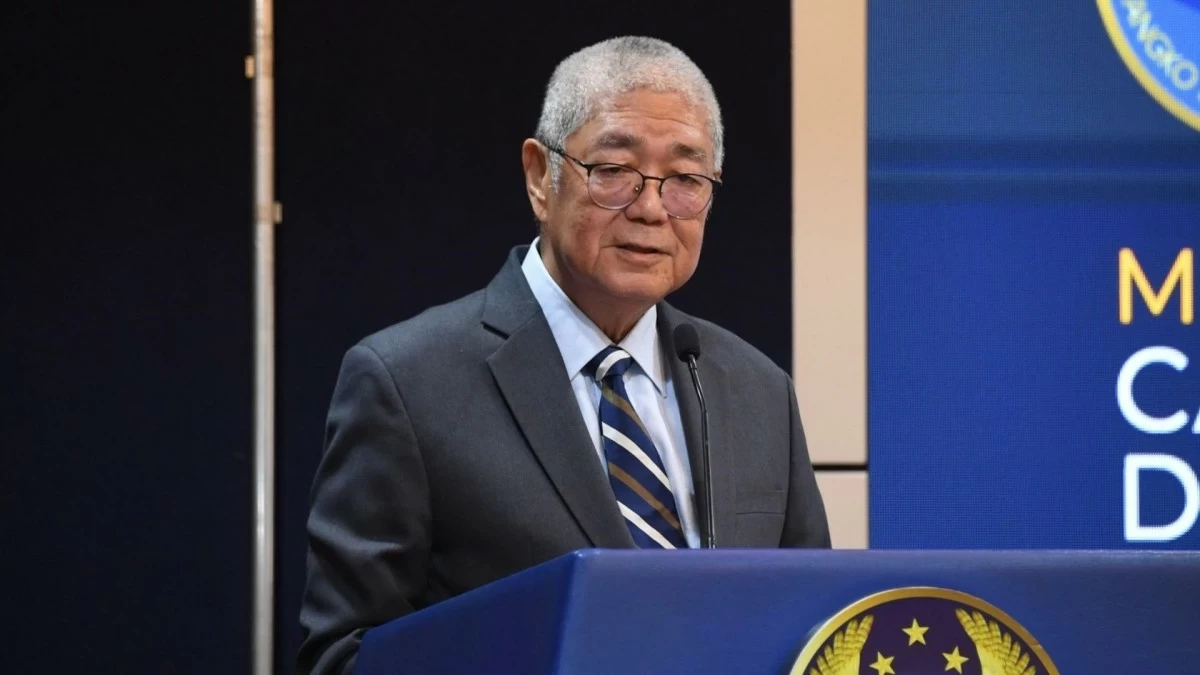
With an already narrow output gap and the economy in a “goldilocks” or ideal state, the Bangko Sentral ng Pilipinas (BSP) said slashing key borrowing costs further by three-quarters of a point is unlikely, with two cuts more likely than one.
“I think two is more likely than one. Two is still more likely. Three is unlikely,” BSP Governor Eli M. Remolona Jr. told reporters on the sidelines of EJAP Economic Forum 2025 on Monday, Aug. 11.
This was Remolona’s answer when asked about the likelihood of just one cut despite the nearly six-year lows in inflation rates in recent months, and the gross domestic product (GDP) only modestly expanding by 5.5 percent in the second quarter from 5.4 percent in the first quarter.
Remolona asserted that three reductions before the year ends are “unlikely” as this magnitude would exceed the “goldilocks” rate and output gap that the BSP is targeting. “The output gap is already small.”
Core inflation, excluding volatile food and energy items, held at an elevated 2.3 percent in July. This was faster than the 2.2 percent in June but lower than 2.9 percent a year earlier.
For Remolona, the July core inflation “still looks good,” adding that he expects it to increase gradually, hitting the midpoint of the government’s retained inflation target of two percent to four percent by 2027.
As such, lowering the key policy rate by 25 basis points (bps) at the upcoming Aug. 28 policy meeting is “quite likely.”
A goldilocks economy refers to a balanced state where growth is steady enough to avoid recession but not excessive enough to trigger high inflation.
The BSP has so far reduced 125 basis points (bps) since it kicked off its easing cycle in August last year to tame the raging inflation. Its latest cut was in June when it was brought down to 5.25 percent from 5.5 percent previously.
Remolona also noted that the ratio for big banks was slashed by 200 basis points (bps) to five percent from seven percent in February this year. The ratio for digital banks was shaved by 150 bps to 2.5 percent from four percent, and for thrift banks, it was reduced by 100 bps, bringing it down to zero.
“Both measures, I think, have helped stimulate growth in the economy without causing inflation,” Remolona said. “It’s always tricky. You have to balance the risk of inflation against the need for growth.”
Data from the Philippine Statistics Authority (PSA) showed that the Philippine economy expanded by 5.5 percent in the first half of 2025, one percentage point (ppt) slower than the 6.5 percent recorded in the same period last year.
Private-sector economists see further reductions in key borrowing costs as necessary given that inflation has been hitting nearly six-year lows in recent months, and the second-quarter growth has still been muted.
HSBC Association of Southeast Asian Nations (ASEAN) economist Aris Dacanay earlier said he believes the second-quarter GDP results “will increase his conviction that more monetary easing is needed, fast.”
Radhika Rao, senior economist at Singapore-based DBS Bank, argued that the BSP still has room for further reductions in the coming months, even after the BSP has so far cut one-third of its total interest rate hikes post-pandemic.
Rao said the real interest rate is still about 350 to 400 bps above inflation, giving the BSP a cushion to back its more dovish stance.