






The Philippines, together with the Asia-Pacific region, must play a bigger role in advancing international humanitarian law based on its experiences in addressing past and present humanitarian conflicts, the Department of Foreign Affairs (DFA) said on Monday, Aug. 11.
Manila Bulletin
 Philippines
National
Asia Pacific must make stronger push for int'l humanitarian law—PH
Philippines
National
Asia Pacific must make stronger push for int'l humanitarian law—PH
Philippines
National
Asia Pacific must make stronger push for int'l humanitarian law—PH
Asia Pacific must make stronger push for int'l humanitarian law—PH
Published Aug 11, 2025 04:35 pm


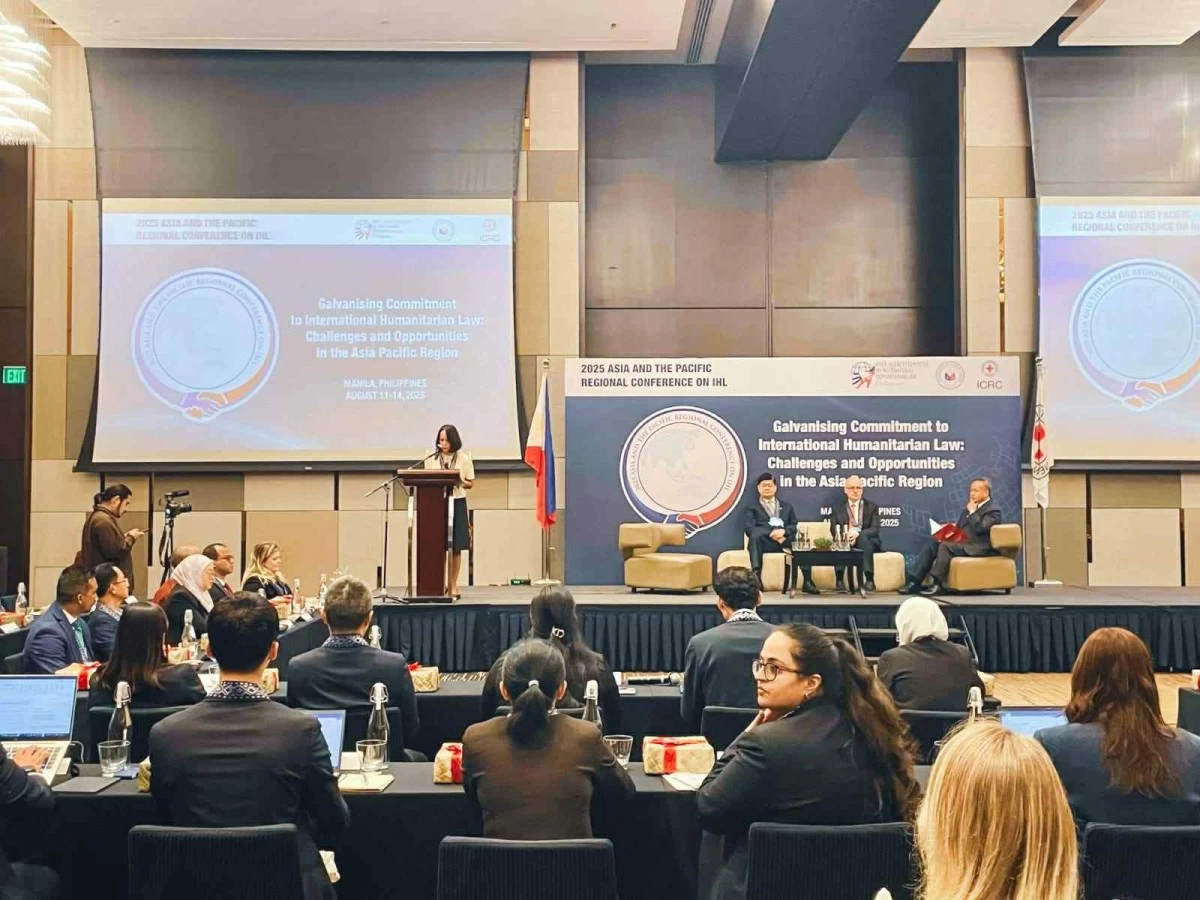
The Department of Foreign Affairs (DFA), in partnership with the International Committee of the Red Cross (ICRC), hosts the Asia Pacific Regional Conference on International Humanitarian Law in Makati City. (Photo from DFA via X post)
Speaking during the 2025 Asia and the Pacific Regional Conference on IHL held in Makati City, DFA Assistant Secretary for the Office of United Nations and International Organizations Maria Teresa Almojuela underscored the region’s capacity to now use its “hard-won lessons” and “wisdom” in shaping the direction of international humanitarian law.
“Today, here in Manila, we assert that it is high time for the Asia-Pacific to tell our own stories, to share our hard-won lessons and wisdom built up over the decades, and to use these to advance the cause of humanitarian protection,” she said.
In particular, the DFA official added that the Philippines’ hosting of the regional conference was its “deliberate and principled response to the demands of our times,” which she said is now witness to “the most serious breaches and threats to humanitarian law.”
Almojuela described Asia-Pacific as “home to immense diversity in cultures, geographies, and political realities,” but she also pointed out that the humanitarian issues in the region were “compounded by a confluence of other challenges, from climate-related disasters, rapid urbanization, to protracted displacement, maritime disputes, and the legacies of past conflicts.”
“When scanning IHL-related literature, it does not take long to notice that the most prominent perspectives are often shaped by voices from elsewhere in the world,” she emphasized.
The Philippines, in particular, has stood as “a leading proponent” of International Humanitarian Law after former president Manuel A. Roxas signed the 1929 Geneva Convention, a precursor to the modern-day international conventions that the Philippines and many others countries are now signatories to.
Since then, the Philippines has ratified all four of the 1949 Geneva Conventions and its Additional Protocols, and has become a party to key treaties—the Convention on Cluster Munitions, the Anti-Personnel Mine Convention, the Arms Trade Treaty, and the Treaty on the Prohibition of Nuclear Weapons, among others.
The DFA official said that the Philippines has enshrined the principles of international humanitarian law in domestic laws, such as the Republic Act 9851 or the Philippine Act on Crimes Against International Humanitarian Law.
“This legacy affirms a fundamental part of our DNA: our diplomacy puts people at the center and that the Filipino people are peacemakers and peacebuilders,” Almojuela said.
“We are not passive bystanders, but active bridgebuilders in the pursuit of humanitarian law,” she added. “Our history and actions point to our disposition as firm believers of multilateralism. In an increasingly complex global environment, we believe that it is only through cooperation that we can ensure that IHL remains relevant and responsive to modern-day challenges.”
While the Philippines’ journey to peace has been met with challenges—with insurgencies dating back to the late 1960s—the official said these experiences shaped the way the country implements international humanitarian law.
She pointed out that President Marcos himself in his latest State of the Nation Address (SONA) last month announced the dismantling of the remaining guerilla fronts in the country.
“This milestone is a profound testament to how an unwavering commitment to IHL and peacebuilding, grounded in an inclusive and development-oriented approach, presents the clearest pathway to lasting peace,” Almojuela furthered.
“Even in times of relative peace, we remain steadfast and vigilant in upholding IHL, both domestically and internationally, with the same discipline, vigor, and humanity that governs conduct in wartime,” she added.