







History Month: Celebrating the stories of our people
Published Aug 10, 2025 12:05 am


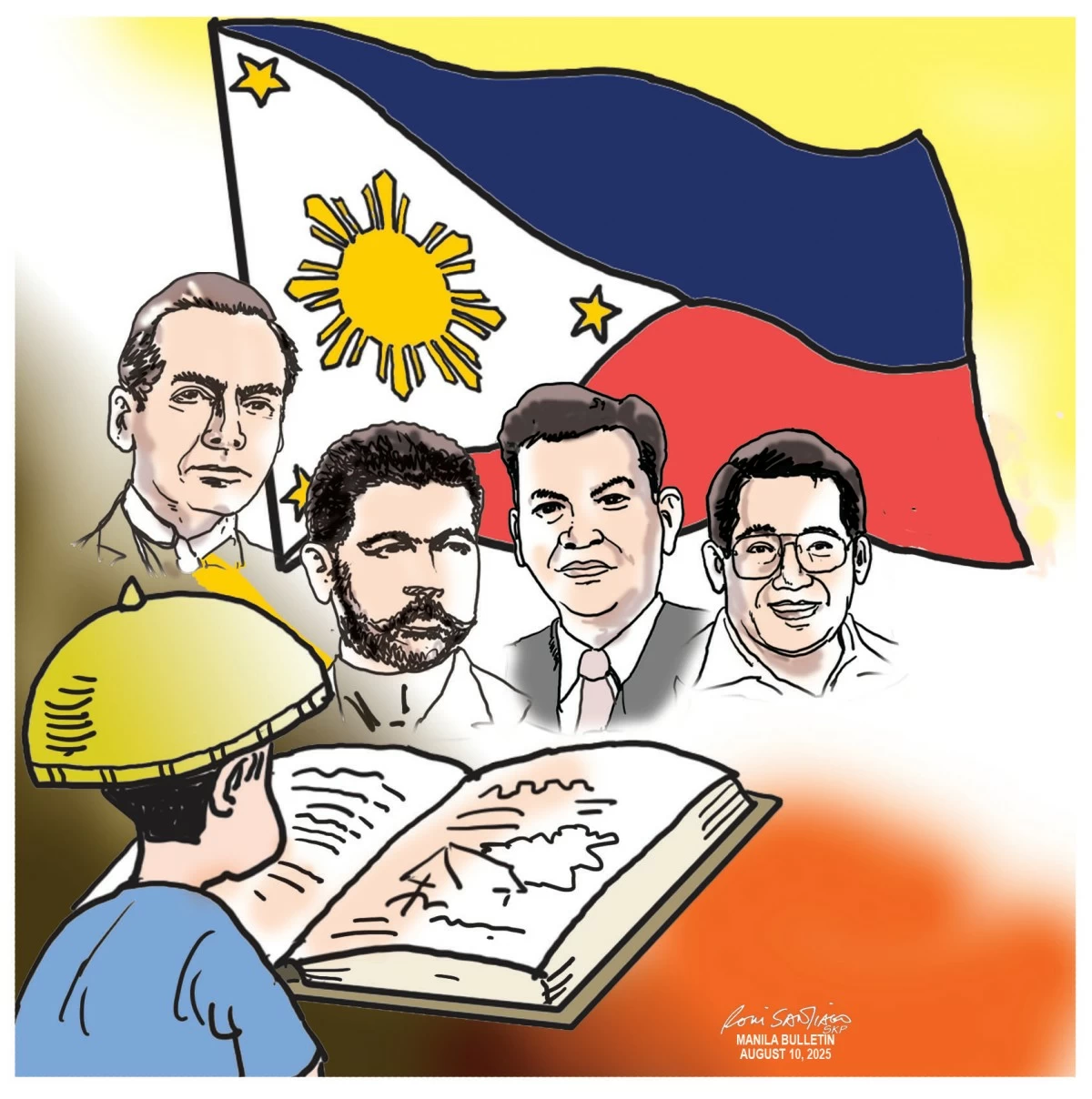
Every August, the Philippines observes History Month — Buwan ng Kasaysayan — a time to reconnect with the long, complex, and often hard-fought journey of our nation. Declared under Proclamation No. 339, s. 2012, and signed by President Benigno S. Aquino III, History Month seeks to deepen historical awareness among Filipinos and promote the conservation of our shared heritage.
The National Historical Commission of the Philippines (NHCP) leads the 2025 celebration with the theme “Diwa ng kasaysayan, kabilin sa kabataan” (Spirit of history, heritage for the youth), focusing on educating and engaging the younger generation. More than ever, this message resonates in a time where historical distortion and digital misinformation threaten to rewrite the past.
The NHCP, through its network of museums and partners, is organizing exhibits, lectures, and commemorative rites across the country. Among the key observances are the 127th anniversary of the Bacoor Assembly held Aug. 1, the birth anniversaries of Manuel L. Quezon (Aug. 19), Marcelo H. del Pilar (Aug. 30), and Ramon Magsaysay (Aug. 31), and the death anniversary of Ninoy Aquino (Aug. 21) — lives that shaped the democratic and civic landscape of the Philippines.
August is no random choice. It holds deep historical weight. On Aug. 23, 1896, Andres Bonifacio and the Katipuneros launched the Cry of Pugad Lawin, tearing their cedulas in defiance of Spanish rule — a defining moment in the Philippine Revolution. Days later, the Battle of San Juan del Monte marked the first major clash of the revolution. These events mark not just the beginning of armed resistance, but also the birth of Filipino nationalism in action.
But History Month is more than marking anniversaries. It is a reminder to ask: What do we do with the lessons of the past? In a time where social media can distort facts and manipulate memory, remembering becomes an act of resistance. It is our civic duty to know our history so as to defend truth and protect democracy.
Commemorating History Month means honoring not just heroes, but also the ideals they fought for — freedom, dignity, justice, and sovereignty. It also means embracing the diverse narratives of our regions, indigenous peoples, and those whose stories have long been marginalized. History Month is an invitation to tell these stories — and to ensure they are passed on to future generations.
The NHCP calls on schools, LGUs, civic organizations, and the public to organize meaningful observances. More than ceremonies, these are acts of cultural preservation and civic education. By lifting the voices of our heroes and celebrating the stories of our people — including women, indigenous communities, and local leaders — we strengthen national identity.
This year’s celebration opened with the “History to Experience” exposition on Aug. 1 to 3 bringing history to life for young Filipinos through interactive exhibits. Other major events will be the GSIS Historians Fair, National Conference on Local History and Heritage, the General Assembly of the Local Historical Committees Network, and several regional workshops.
Let August be more than a month of flags and programs. Let it be a time to ask ourselves what kind of nation we want to become — and how understanding our past can help us get there. Because the past is not only behind us; it lives within us, guiding the steps we take as a people.