






Manila Bulletin
 Business
The Economy
Higher US tariffs on India may benefit Philippines, Southeast Asia—think tank
Business
The Economy
Higher US tariffs on India may benefit Philippines, Southeast Asia—think tank
Business
The Economy
Higher US tariffs on India may benefit Philippines, Southeast Asia—think tank
Higher US tariffs on India may benefit Philippines, Southeast Asia—think tank
Published Aug 9, 2025 03:17 pm


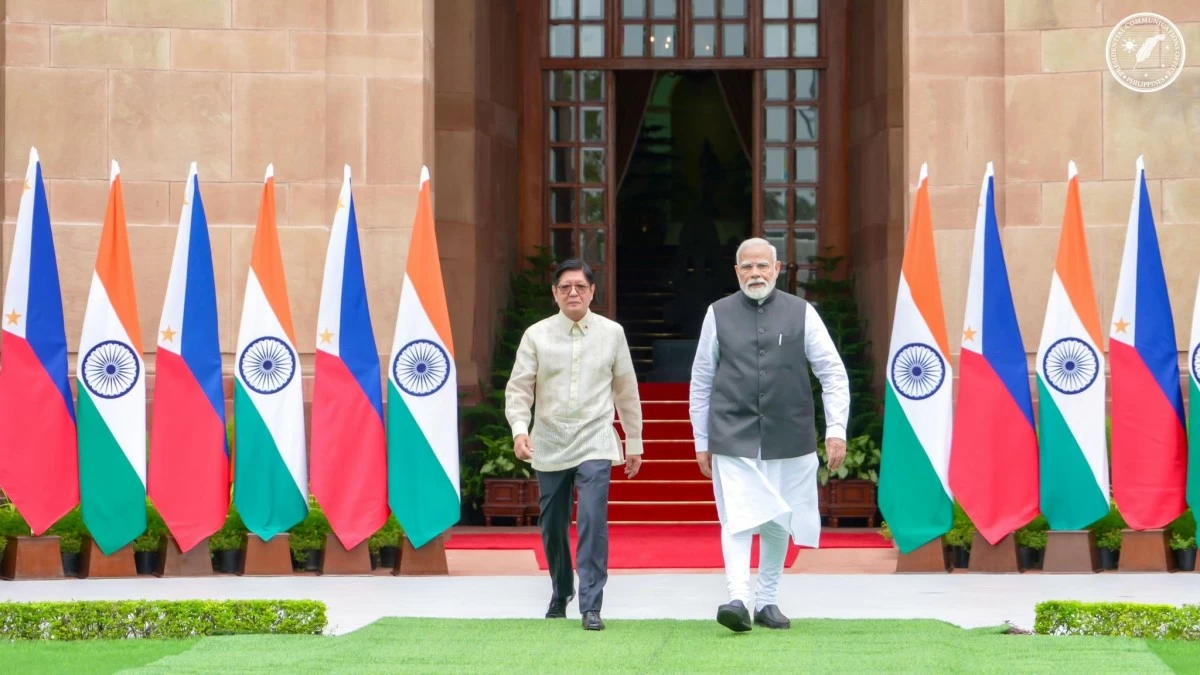
President Ferdinand R. Marcos Jr. and Indian Prime Minister Narendra Modi meet at Hyderabad House during Marcos' State Visit in India. (Photo courtesy of PCO)
The Philippines and Southeast Asia may attract foreign investments avoiding China and India if the United States (US) pushes through with its threat of higher tariffs on Indian goods, according to the think tank Capital Economics.
“[US] President [Donald] Trump’s threat to impose an additional 25-percent tariff on imports from India—bringing the total effective tariff rate to 36 percent once product exemptions are included—could have significant implications for both India’s economy and the global oil market,” warned Capital Economics senior Asia economist Gareth Leather in an Aug. 8 report.
In particular, “if penal tariffs on India are introduced (Trump has given India a deadline of Aug. 27) and look likely to stay in place, companies seeking to diversify away from China may look instead to economies with lower US tariff exposure—such as Vietnam, Indonesia, and the Philippines (which have all been hit by tariffs of around 20 percent),” Leather said.
Trump and President Ferdinand R. Marcos Jr. had agreed on a 19-percent US tariff on Philippine products, alongside zero tariffs on certain American goods entering the Philippines.
For Leather, the lower tariffs for the three Southeast Asian countries compared to India’s “could lead to a jump in investment in these countries.”
In July, Leather said that the economic impact of the 19-percent tariff on the Philippines is expected to be modest due to its limited reliance on US demand.
Leather had also said that the tariff agreement with the US helps prevent the Philippines from losing competitiveness in the region.
He had noted that the Marcos-Trump deal lacks provisions on rerouting Chinese goods, unlike agreements with other countries, though such clauses may be added later.
Meanwhile, Leather said in the same report that low Philippine inflation points to more Bangko Sentral ng Pilipinas (BSP) rate cuts.
He noted that on top of the fall in headline inflation to 0.9 percent in July amid a “temporary” dip in food prices, core inflation also eased to 2.3 percent, prompting BSP Governor Eli M. Remolona Jr. to reiterate that a “more accommodative monetary policy stance remains warranted.”
Leather said that the second-quarter gross domestic product (GDP) growth rate of 5.5 percent, meanwhile, meant that “the economy should hold up relatively well over the coming quarters.”
“The combination of low inflation and steady growth as well as the dovish comments from the central bank governor support our view that further gradual easing is likely. We expect another 50 basis points (bps) of cuts this year, which makes us a little more dovish than the consensus,” he said. The policy rate currently stands at 5.25 percent.
The BSP’s policy-setting Monetary Board (MB) has three remaining interest rate decisions before year-end—at its meetings on Aug. 28, Oct. 9, and Dec. 11.
Capital Economics had forecast Philippine GDP growth at 5.3 percent this year, below the government’s target of 5.5 to 6.5 percent and last year’s expansion of 5.7 percent.
The think tank expects headline inflation to average 1.6 percent in 2025, lower than 2024’s 3.2 percent.