






Manila Bulletin
 Philippines
National
Philippines to launch first coral larvae cryobank to fight mass reef die-off
Philippines
National
Philippines to launch first coral larvae cryobank to fight mass reef die-off
Philippines
National
Philippines to launch first coral larvae cryobank to fight mass reef die-off
Philippines to launch first coral larvae cryobank to fight mass reef die-off
By Jel Santos
Published Aug 8, 2025 11:46 am
|
Updated Aug 8, 2025 01:22 pm


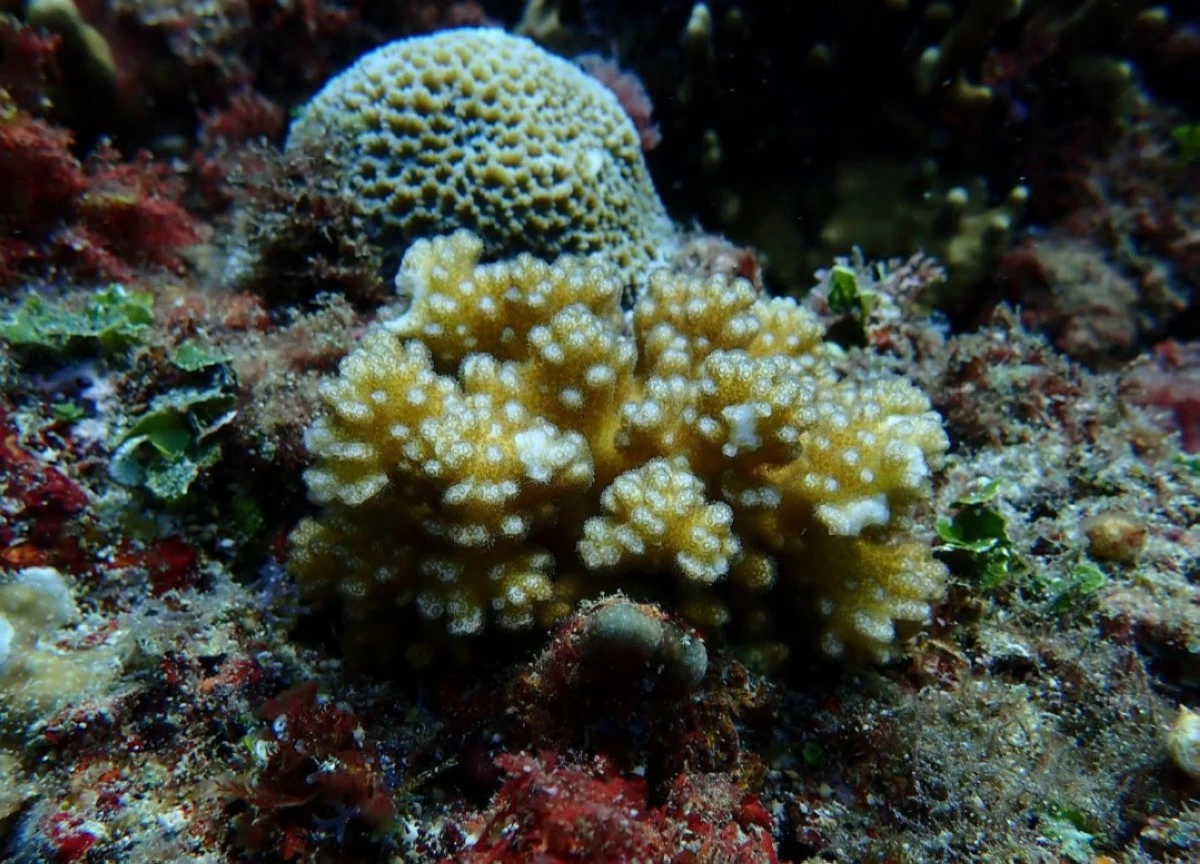
(PHOTO: UP-MSI)
In a race to save the country’s vanishing coral reefs, the University of the Philippines Marine Science Institute (UP-MSI) is set to open the Philippines’ first coral larvae cryobank, a high-tech facility that will freeze and store coral life for future reef restoration efforts.
The cryobank project is part of a wider regional initiative, titled “Coral Conservation Capacity Development in the Coral Triangle: A Cryorepository Network for Coral Larvae,” which brings together research institutions from the Philippines, Taiwan, Indonesia, Malaysia, and Thailand.
The effort seeks to establish the first regional network of coral cryobanks in the Coral Triangle, the global epicenter of marine biodiversity.
“It’s not just about preserving corals today, it’s about building a foundation for future research and reef restoration that can benefit generations to come,” Dr. Maria Vanessa Baria-Rodriguez, who leads the Philippine team, said in a statement.
Baria-Rodriguez heads the Interactions of Marine Bionts and Benthic Ecosystems Laboratory (IMBiBE) at UP MSI, which will house the cryobank facility at its Bolinao Marine Laboratory in Pangasinan.
The international project is spearheaded by Dr. Chiahsin Lin of Taiwan’s National Dong Hwa University and the National Museum of Marine Biology and Aquarium (NMMBA), and is backed by the Coral Research & Development Accelerator Platform through the Marine Environment and Resources Foundation, Inc.
UP-MSI said initial cryopreservation work is focused on pocilloporid corals, a group known for their fast growth and ability to quickly recolonize damaged reefs.
These brooding corals release larvae that are collected from hatchery-monitored colonies and preserved in liquid nitrogen for long-term storage, it added.
Despite their rapid reproductive cycle, pocilloporids are highly vulnerable to climate stress, particularly coral bleaching. This makes them ideal candidates for early intervention through cryopreservation.
Last December, Dr. Lin and his students conducted a four-day cryopreservation training at the UP MSI Bolinao Marine Laboratory.
Research assistants from IMBiBE were trained in advanced techniques such as vitrification and cryobanking.
In February 2025, a follow-up training was held at the NMMBA in Taiwan, further strengthening technical capabilities and cross-border collaboration.
Since then, IMBiBE’s team has begun monthly field work to collect and bank pocilloporid larvae.
Early trials have already led to the successful cryopreservation of early-stage coral larvae.
As such, the project aims to expand cryopreservation methods to other coral species and develop advanced tools such as a fourth-generation laser-assisted warming device and a cryojig system.
With the coral cryobank nearing completion, Baria-Rodriguez and her team are pushing forward to help secure the future of Philippine reefs.