







Let's work together to build on inflation breakthrough
Published Aug 8, 2025 12:05 am
|
Updated Aug 7, 2025 06:45 pm


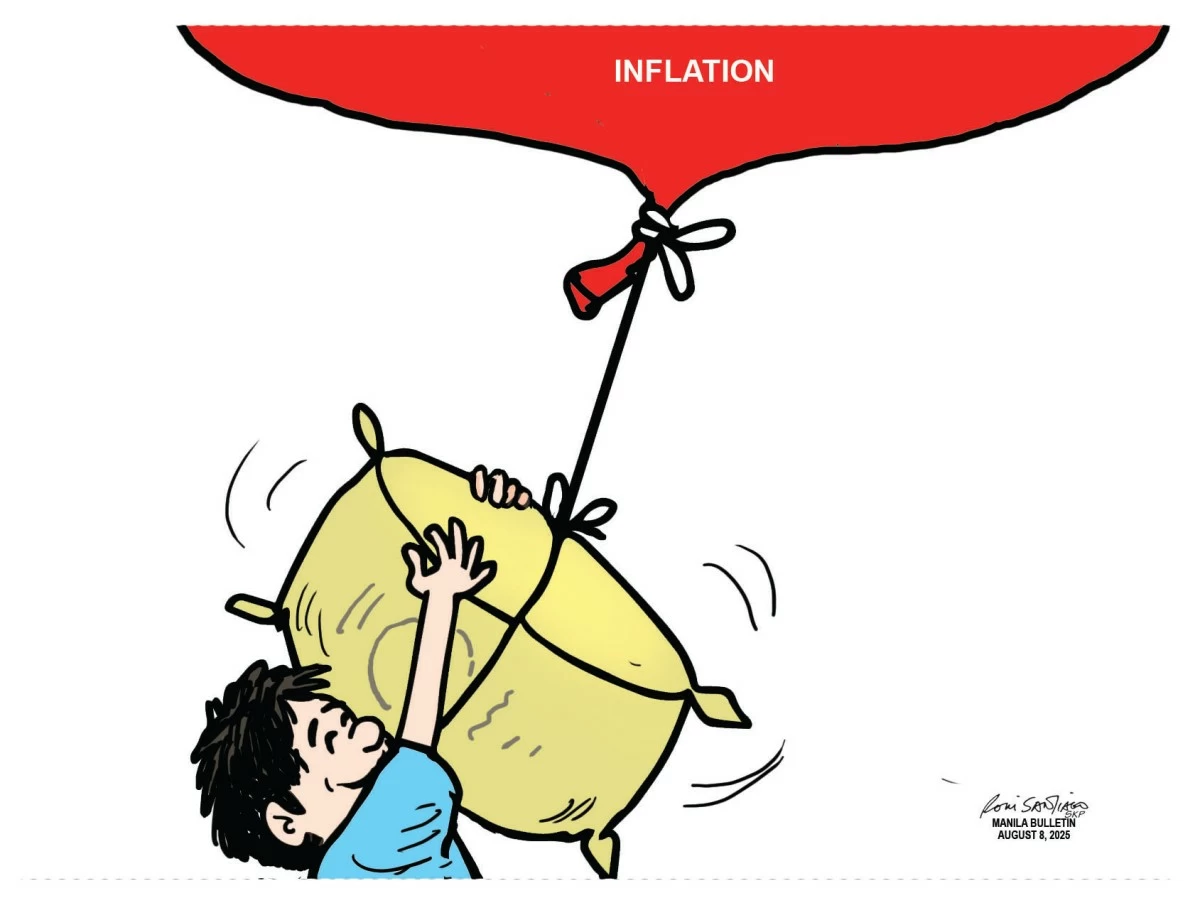
The Philippines’ inflation rate sank to 0.9 percent in July, the lowest since October 2019 and a remarkable drop from June’s 1.4 percent. This was mainly brought about by the steep drop in rice prices.
This development is a moral necessity more than its statistical relief. It reflects billions in everyday burdens lifted from households—parents no longer forced to choose between rice and medicine, workers breathing easier with lower fares and electricity bills, families able to afford more than survival.
The release of rice buffer stocks and direct sales via Kadiwa stores worked wonders and proved transformative. To sustain this, structural reforms must be consolidated. Congress and the Executive must finalize amendments to the Rice Tariffication Law—reinstating a stronger National Food Authority and extending and scaling up the Rice Competitiveness Enhancement Fund (RCEF). That will assure rice affordability while empowering local production in the long run.
In the interim, it would help that President Marcos has already ordered the suspension of rice imports for 60 days starting Sept. 1.
Low inflation won’t last long if rice yields remain stagnant. This is why it is necessary to strengthen agricultural productivity. The administration must invest relentlessly in irrigation, post-harvest facilities, seeds, mechanization, and extension services—an agenda that is very crucial. We must invest in economic self-defense.
The food price emergency declared in February 2025 revealed weaknesses in supply chains and profiteering. Therefore, a robust anti-hoarding policy, active monitoring, and enforcement under the Anti-Agricultural Economic Sabotage Act is essential.
But the government can’t do this alone. The private sector must collaborate and not just sit as an observer.
Traders and retailers can commit to transparent pricing and fair returns, especially in rice, vegetables, and corn. Joining pooled procurement initiatives like Rice for All can help stabilize markets.
Agri-tech firms must locally scale innovations—cold storage, automated drying, precision farming—under public-private partnerships, matching government grants from RCEF.
Banks and financiers should provide better support to MSMEs and cooperatives, underwriting smallholders who need upfront capital to boost palay output.
When business actors engage with rural communities and share the burden—and the benefits as well—of lower inflation, everyone wins.
Critics rightly point out that inflation below one percent inflation doesn’t always translate to real relief for the poor. As one critic noted, a headline inflation figure is “meaningless to poor Pinoys” if localized price spikes and hunger persist. That sting must be taken seriously. But mere criticism doesn’t bring about change; concrete actions do.
It would help if rice subsidies are scaled up and delivered directly to the poorest households via vouchers or digital transfers, targeting relief where headline inflation fails to reach. Accelerating wage growth for the bottom 30 percent while concurrently driving utilities and fuel costs lower may be considered. This way, incomes rise without reigniting inflation cycles, echoing economic voices calling for coupled supply investment and fair wage models.
To sustain this achievement, the administration’s policy must evolve from reactive interventions to proactive paths built on fairness, investment, and accountability.
If the government anchors its success in real productivity gains—not imports mixed with short-term fixes—and if business backs price transparency and infrastructure investment, then the 0.9 percent figure will be the starting point of lasting affordability, empowered rural communities, and an economy that honors every Filipino’s dignity.
Let this be the turning point. It can be attained under a collective effort.