






Manila Bulletin
 Philippines
National
Duterte asks ICC to disqualify prosecutor over conflict of interest
Philippines
National
Duterte asks ICC to disqualify prosecutor over conflict of interest
Philippines
National
Duterte asks ICC to disqualify prosecutor over conflict of interest
Duterte asks ICC to disqualify prosecutor over conflict of interest
Published Aug 8, 2025 07:20 am


At A Glance
- Duterte's legal team claimed Khan should be disqualified "immediately and without delay," noting his prior legal representation of unnamed victims of the drug war in the Philippines before becoming ICC prosecutor.
Former president Rodrigo Duterte has formally asked the International Criminal Court (ICC) to disqualify Chief Prosecutor Karim Khan from further involvement in the case against him, citing a “grievous conflict of interest” and accusing Khan of abusing the criminal process.
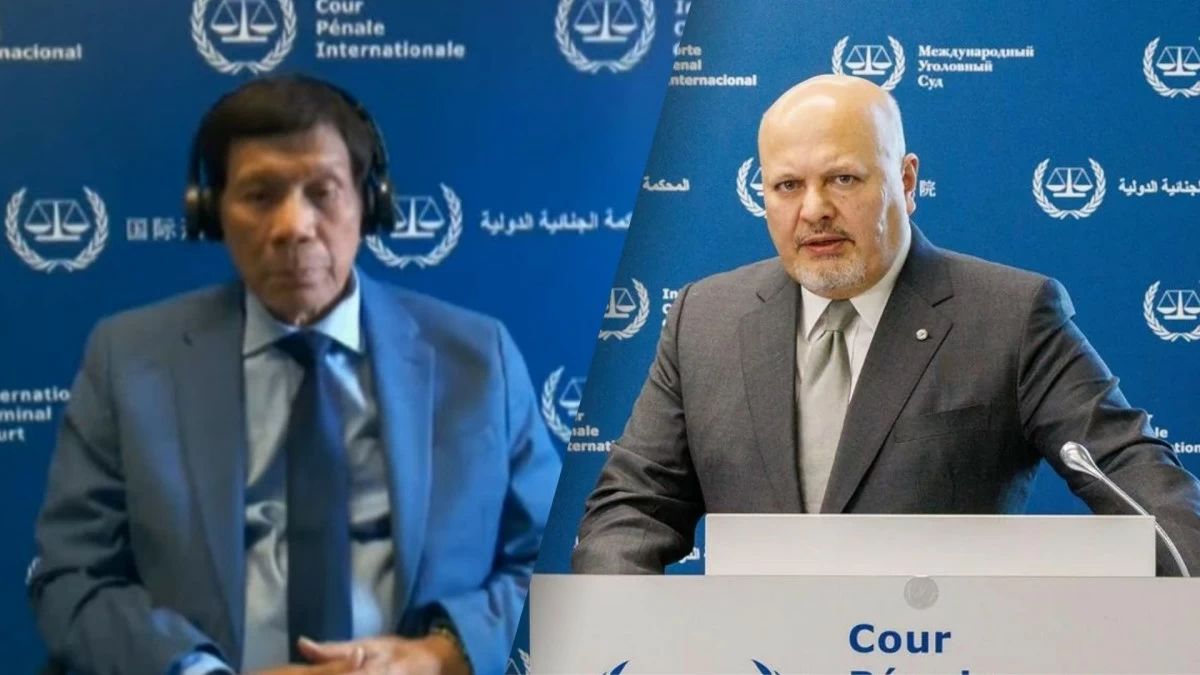
Former president Rodrigo Duterte and ICC chief prosecutor Karim Khan (ICC photos)
In a redacted request filed August 7 and made public by the court’s Appeals Chamber, Duterte’s legal team claimed Khan should be disqualified “immediately and without delay,” noting his prior legal representation of unnamed victims of the drug war in the Philippines before becoming ICC prosecutor.
“The extent of Mr. Khan’s contamination of the integrity of the investigation against Mr. Duterte will be litigated at the confirmation of charges hearing,” the filing read.
“For the time being, the Appeals Chamber is requested to disqualify Mr. Khan from resuming a role in the case against Mr. Duterte should he surmount his current difficulties,” it added.
According to Duterte’s counsel, British lawyer Nicholas Kaufman, Khan’s failure to disclose his prior role as a victims’ representative created an “irreconcilable conflict of interest” and a violation of the ICC’s obligation of impartiality.
The request alleges that Khan, as a private lawyer in 2018, represented individuals who claimed to be victims of the anti-drug campaign in the Philippines, and then used information from that prior role when he later led the ICC investigation into the same campaign.
The defense also accused Khan of failing to seek a waiver from his former clients and only disclosing his prior involvement in March 2025, just one day before the ICC issued a warrant for Duterte’s arrest.
Khan was present in court during Duterte’s initial appearance on March 14 and only went on self-imposed leave weeks later amid unrelated allegations of sexual misconduct.
Under ICC rules, a prosecutor must refrain from participating in any case where “their impartiality might reasonably be doubted,” especially if they had prior involvement in a related legal proceeding.
The defense emphasized that the roles of prosecutor and victims’ counsel are “diametrically opposed,” with prosecutors duty-bound to seek both incriminating and exonerating evidence, while victims’ lawyers serve only their clients’ interests.
“This conflation of these roles, leading to a blatant conflict of interest, is precisely what Rule 34(1)(b) seeks to prevent,” the request read.
Kaufman also cited a recent ICC ruling involving Khan’s alleged conflict of interest in the Venezuela investigation, where the Appeals Chamber said there was “reason to believe” disqualification was warranted due to a close familial relationship with a government counsel.
The ICC has set the confirmation of charges hearing against Duterte for Sept. 23. Duterte has been in ICC custody since March following the issuance of the warrant related to the alleged commission of crimes against humanity in connection with the drug war during his presidency.