

ADVERTISEMENT

PH can't stay out of Taiwan conflict—Marcos

Published Aug 7, 2025 07:19 am

At A Glance

  • The President stressed that the welfare of overseas Filipino workers in Taiwan would also compel the government to act.
President Marcos said the Philippines “cannot stay out” of a potential conflict in Taiwan due to its proximity and the presence of thousands of Filipino workers, even as he clarified that Manila’s primary concern is humanitarian, not military.
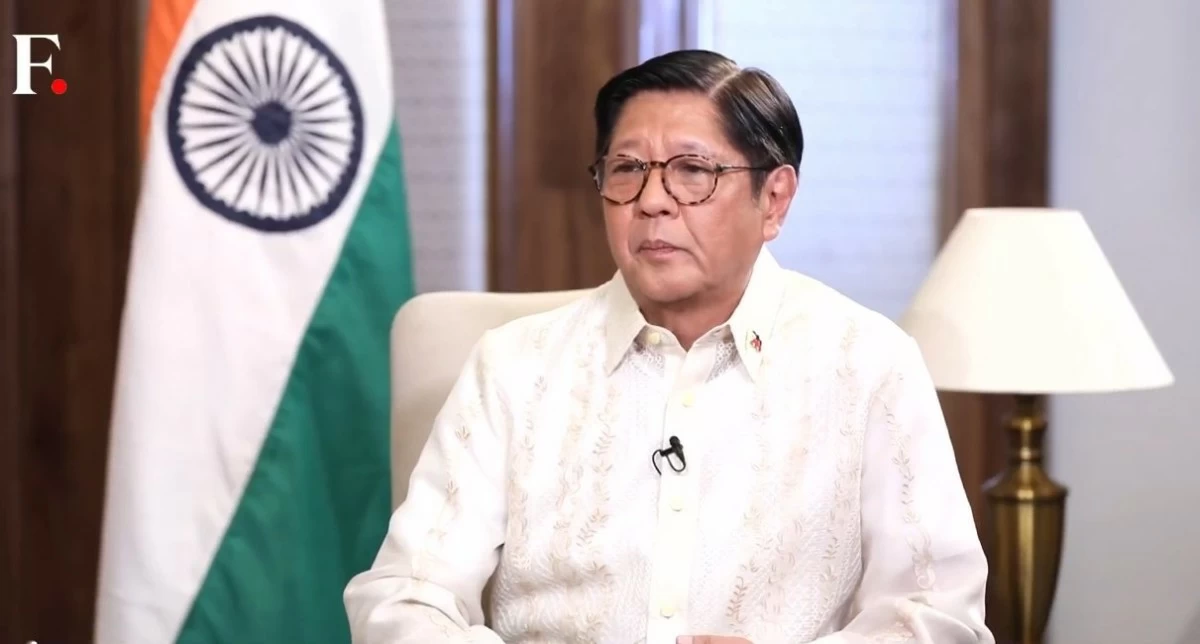
President Ferdinand 'Bongbong' Marcos Jr. (Firstpost)
Marcos said this amid tensions in the Taiwan Strait, with growing concerns that regional military conflict could spill over and affect neighboring countries, including the Philippines.
In an interview with Indian news website Firstpost, the President said it is impossible for the Philippines to stay out of the Taiwan conflict.
“To be very practical about it, if there is a confrontation over Taiwan between China and the United States, there is no way that the Philippines can stay out of it. Simply because of our physical geographic location,” he said.
“And so if you think about it, if there is an all-out war, then we will be drawn into it. And I assure you with the greatest hesitation, but again, we will have to defend our territory and our sovereignty,” he added.
The President stressed that the welfare of overseas Filipino workers (OFWs) in Taiwan would also compel the government to act.
“There are many, many Filipino nationals in Taiwan, and that would be immediately a humanitarian problem, because we will have to get involved,” he said.
“We will have to go in there, or find a way to go in there and to bring our people home, as we do whenever they find themselves in areas of conflict. And that for me would be the most considerable concern for us, at least in the early days,” he added.
Marcos acknowledged the risks and challenges of carrying out such a mission.
“We would immediately mobilize everything that we could to bring our people out,” he said.
“And that's not an easy thing to do, considering that you are in the middle of a combat zone. So it would not be a small problem by any means,” Marcos said.
The President’s remarks came amid rising concerns that China may attempt to invade Taiwan within the decade, which analysts warned could trigger a broader regional conflict.

‘China will do what it said it would’

Meanwhile, President Marcos said China could be trusted in the sense that it is open and consistent about its ambitions, even if the Philippines continues to face difficulties in its maritime disputes with Beijing.
“Well, China can be trusted in the sense that they are – it's very clear. China is not shy about saying that what they are intending to do, what are their aspirations,” he said.
“And so you can be – they can be trusted in that sense. They can certainly be trusted because they will work for that direction, in that direction,” he added.
Marcos acknowledged, however, that the Philippines’ own experience with China remains “very, very problematic.”
“This is not something that's going to go away tomorrow,” he said, referring to persistent maritime tensions in the West Philippine Sea.
Still, Marcos noted that relations outside of the dispute have remained stable, citing a pragmatic approach taken by both the Philippines and India in their dealings with Beijing.
“Apart from the 10-dash line of China and how it actually comes into the EEZ (exclusive economic zone) of the Philippines and all, apart from that, our dealings with China are quite nice, quite smooth,” he said.
“India, I think, is doing the same thing because your business, the commercial dealings, the import-export that's coming, the trade that's going in and out of China, is still continuing except for the area where there is conflict,” he added.
The President said he often reminds Chinese officials to focus on areas of mutual benefit rather than conflict.
“We should define our relationship in other things – our cultural ties, our social ties, our economic ties, our historical ties, et cetera, et cetera,” he said.
“Unfortunately, modern world has brought us here, and there is this now. We will just have to deal with it,” he added.
Despite the challenges, Marcos emphasized the value of preserving cooperation where possible.
“Let us not allow what — the difficult part of our relationship — to color or to define what the rest of us are doing together that is advantageous to both our countries, and it's working relatively well,” he said.

Related Tags

President Marcos Bongbong Marcos PH-China PH-Taiwan
ADVERTISEMENT
.most-popular .layout-ratio{ padding-bottom: 79.13%; } @media (min-width: 768px) and (max-width: 1024px) { .widget-title { font-size: 15px !important; } }

{{ articles_filter_1561_widget.title }}

.most-popular .layout-ratio{ padding-bottom: 79.13%; } @media (min-width: 768px) and (max-width: 1024px) { .widget-title { font-size: 15px !important; } }

{{ articles_filter_1562_widget.title }}

.most-popular .layout-ratio{ padding-bottom: 79.13%; } @media (min-width: 768px) and (max-width: 1024px) { .widget-title { font-size: 15px !important; } }

{{ articles_filter_1563_widget.title }}

{{ articles_filter_1564_widget.title }}

.mb-article-details { position: relative; } .mb-article-details .article-body-preview, .mb-article-details .article-body-summary{ font-size: 17px; line-height: 30px; font-family: "Libre Caslon Text", serif; color: #000; } .mb-article-details .article-body-preview iframe , .mb-article-details .article-body-summary iframe{ width: 100%; margin: auto; } .read-more-background { background: linear-gradient(180deg, color(display-p3 1.000 1.000 1.000 / 0) 13.75%, color(display-p3 1.000 1.000 1.000 / 0.8) 30.79%, color(display-p3 1.000 1.000 1.000) 72.5%); position: absolute; height: 200px; width: 100%; bottom: 0; display: flex; justify-content: center; align-items: center; padding: 0; } .read-more-background a{ color: #000; } .read-more-btn { padding: 17px 45px; font-family: Inter; font-weight: 700; font-size: 18px; line-height: 16px; text-align: center; vertical-align: middle; border: 1px solid black; background-color: white; } .hidden { display: none; }
function initializeAllSwipers() { // Get all hidden inputs with cms_article_id document.querySelectorAll('[id^="cms_article_id_"]').forEach(function (input) { const cmsArticleId = input.value; const articleSelector = '#article-' + cmsArticleId + ' .body_images'; const swiperElement = document.querySelector(articleSelector); if (swiperElement && !swiperElement.classList.contains('swiper-initialized')) { new Swiper(articleSelector, { loop: true, pagination: false, navigation: { nextEl: '#article-' + cmsArticleId + ' .swiper-button-next', prevEl: '#article-' + cmsArticleId + ' .swiper-button-prev', }, }); } }); } setTimeout(initializeAllSwipers, 3000); const intersectionObserver = new IntersectionObserver( (entries) => { entries.forEach((entry) => { if (entry.isIntersecting) { const newUrl = entry.target.getAttribute("data-url"); if (newUrl) { history.pushState(null, null, newUrl); let article = entry.target; // Extract metadata const author = article.querySelector('.author-section').textContent.replace('By', '').trim(); const section = article.querySelector('.section-info ').textContent.replace(' ', ' '); const title = article.querySelector('.article-title h1').textContent; // Parse URL for Chartbeat path format const parsedUrl = new URL(newUrl, window.location.origin); const cleanUrl = parsedUrl.host + parsedUrl.pathname; // Update Chartbeat configuration if (typeof window._sf_async_config !== 'undefined') { window._sf_async_config.path = cleanUrl; window._sf_async_config.sections = section; window._sf_async_config.authors = author; } // Track virtual page view with Chartbeat if (typeof pSUPERFLY !== 'undefined' && typeof pSUPERFLY.virtualPage === 'function') { try { pSUPERFLY.virtualPage({ path: cleanUrl, title: title, sections: section, authors: author }); } catch (error) { console.error('ping error', error); } } // Optional: Update document title if (title && title !== document.title) { document.title = title; } } } }); }, { threshold: 0.1 } ); function showArticleBody(button) { const article = button.closest("article"); const summary = article.querySelector(".article-body-summary"); const body = article.querySelector(".article-body-preview"); const readMoreSection = article.querySelector(".read-more-background"); // Hide summary and read-more section summary.style.display = "none"; readMoreSection.style.display = "none"; // Show the full article body body.classList.remove("hidden"); } document.addEventListener("DOMContentLoaded", () => { let loadCount = 0; // Track how many times articles are loaded const offset = [1, 2, 3, 4, 5, 6, 7, 8, 9, 10]; // Offset values const currentUrl = window.location.pathname.substring(1); let isLoading = false; // Prevent multiple calls if (!currentUrl) { console.log("Current URL is invalid."); return; } const sentinel = document.getElementById("load-more-sentinel"); if (!sentinel) { console.log("Sentinel element not found."); return; } function isSentinelVisible() { const rect = sentinel.getBoundingClientRect(); return ( rect.top < window.innerHeight && rect.bottom >= 0 ); } function onScroll() { if (isLoading) return; if (isSentinelVisible()) { if (loadCount >= offset.length) { console.log("Maximum load attempts reached."); window.removeEventListener("scroll", onScroll); return; } isLoading = true; const currentOffset = offset[loadCount]; window.loadMoreItems().then(() => { let article = document.querySelector('#widget_1690 > div:nth-last-of-type(2) article'); intersectionObserver.observe(article) loadCount++; }).catch(error => { console.error("Error loading more items:", error); }).finally(() => { isLoading = false; }); } } window.addEventListener("scroll", onScroll); });

Sign up by email to receive news.