






Manila Bulletin
 Philippines
Metro Manila
Metro Manila cities crack down on illegal parking, unauthorized fee collectors
Philippines
Metro Manila
Metro Manila cities crack down on illegal parking, unauthorized fee collectors
Philippines
Metro Manila
Metro Manila cities crack down on illegal parking, unauthorized fee collectors
Metro Manila cities crack down on illegal parking, unauthorized fee collectors
Published Aug 7, 2025 03:05 pm
|
Updated Aug 13, 2025 10:05 am


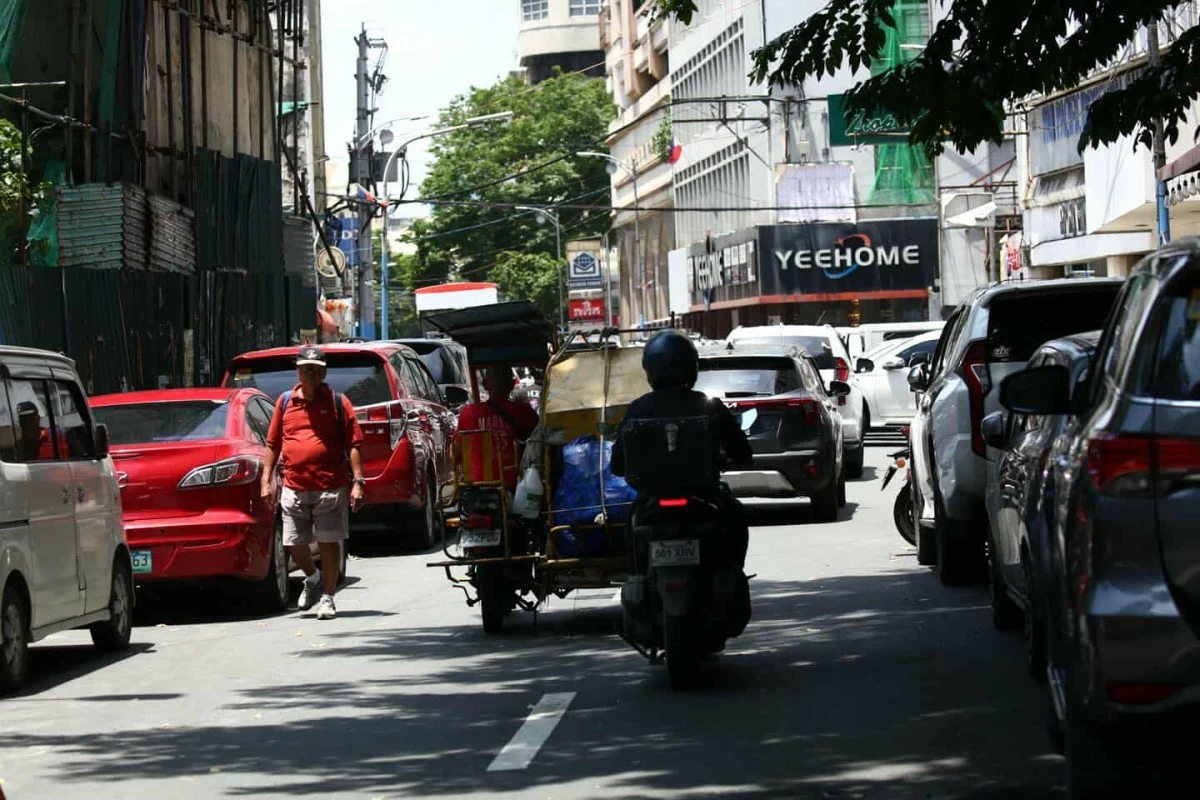
Vehicles double-parked along Escolta Street in Manila on Sunday, August 3.
The Department of the Interior and Local Government (DILG) and the Metropolitan Manila Development Authority (MMDA) on Friday suggested a partial parking ban on public streets in the National Capital Region (NCR). (Photo by John Louie Abrina)
Metro Manila cities are intensifying efforts to eliminate illegal parking and have started cracking down on unauthorized individuals collecting parking fees as part of broader initiatives to improve traffic flow and promote road discipline.
Caloocan
In an interview with the Manila Bulletin, Caloocan City's Public Safety and Traffic Management Department (PSTMD) Chief Jay Bernardo said eight teams have been deployed to various areas of the city to apprehend owners of illegally parked vehicles and maintain order along major thoroughfares.
Since the implementation of the Single Ticketing System (STS), Bernardo said that their teams have started issuing an average of 40 to 50 tickets daily.
He added that these violations are automatically recorded in the Land Transportation Office (LTO) system, ensuring appropriate penalties for violators.
Aside from illegal parking, authorities are also going after “callers,” or unauthorized individuals posing as parking attendants.
He said that several individuals have already faced legal consequences for violating the ordinance.
First-time offenders typically undergo inquest proceedings, with bail amounts starting at P1,000. Those unable to post bail remain in detention.
The PSTMD chief also appealed to Caloocan residents to avoid using public roads as personal garages.
In response to concerns from car owners, the city government is exploring solutions to provide legal and safe parking options.
Caloocan City Mayor Dale Gonzalo "Along" Malapitan has directed city officials to identify idle private lots that could be leased for residential parking.
The city assured the public that enforcement will continue in a firm but fair manner, as part of the city's efforts to promote road discipline, safety, and order in Caloocan.
Manila
In Manila, the city government is warning the public against a fraudulent text scam currently circulating falsely claiming to be from a "GoManila" mobile application.
The scam involves messages informing recipients that they have an alleged parking or traffic violation and must settle fees through a suspicious link: https://gomanlia.com.
The city officials reiterated that this link is not affiliated with the official application.
The public is strongly urged not to click on the link or provide any personal or payment information. These phishing attempts are designed to collect sensitive data such as credit card details.
The Manila Traffic and Parking Bureau (MTPB) Motorcycle Unit, in coordination with the Metropolitan Manila Development Authority (MMDA), is also conducting joint clearing operations targeting illegal parking and road obstructions as part of Manila’s ongoing efforts to maintain traffic flow and pedestrian safety.
Pasig
In Pasig City, the Traffic and Parking Management Office (TPMO) said that official parking rates are enforced in city-owned parking facilities and other public areas where street parking is permitted.
According to the Pasig City Revenue Code, parking fees for streets are based on vehicle type, which is categorized into four groups: motorcycles/tricycles, light vehicles (cars and jeeps), medium vehicles (vans and delivery trucks), and heavy vehicles (10-wheelers and buses).
See the complete list of rates below:
Meanwhile, rates for building or basement parking apply to LGU-owned facilities such as Mega Parking I and II, as well as open-space parking within the perimeter of government buildings or other areas designated by the TPMO with the mayor’s approval.
Daytime rates for building and basement parking are the same as those for street parking. Overnight parking is also available, but only for motorcycles, light vehicles, and medium vehicles.
The overnight parking fees are as follows:
• P80 for motorcycles/tricycles
• P300 for light vehicles
• P400 for medium vehicles
The TPMO also deploys authorized parking attendants to city-owned facilities and designated street parking areas. It stated that authorized attendants wear TPMO uniforms and carry IDs, similar to traffic aides and enforcers.
The local government also vowed to act on any reports it receives about unauthorized attendants collecting parking fees, by warning those involved, ordering them to leave, and adding the reported areas to the TPMO’s daily monitoring.
Residents are also encouraged to report parking attendants who charge more than the official rates to the TPMO Investigation Division in Barangay Sto. Tomas.
The city has also assigned parking zones. See the photo below.
In response to the Department of the Interior and Local Government’s (DILG) proposal to prohibit parking on all public streets to help ease traffic congestion in Metro Manila, the Pasig TPMO said that any possible changes in the city will likely focus on adjusting the hours when parking is allowed or prohibited in designated one-side parking areas.
Marikina
In Marikina City, the local government said that there is a no street parking policy and no fees on all public roads. It added that there are no designated official parking attendants since no one is authorized to collect street parking fees.
The public is urged to report individuals collecting street parking fees in the city by dialing the emergency hotline 161, managed by Rescue 161 and the Operations, Preparedness, Safety, and Security (OPSS) Command Center.
For illegal parking, Marikina City Mayor Maan Teodoro announced that the city government will begin enforcing a no-parking rule on main roads to help alleviate traffic congestion.
Related story: https://mb.com.ph/2025/08/04/marikina-govt-to-implement-no-parking-rule-on-main-roads
The mayor explained that the Road Dike from Sto. Niño to Tumana and Kabayani Road, as well as Sto. Niño to Nangka will be designated as alternative routes to ease traffic along J.P. Rizal Avenue.
She also ordered all concerned city departments to conduct clearing operations along these thoroughfares.
In addition, the city government will intensify enforcement of the no-parking rule on main roads, including Bonifacio Avenue, Sumulong Highway, Shoe Avenue, Gil Fernando Avenue, J.P. Rizal Avenue, Bayan Bayanan, P.G. Molina, Katipunan, and Gen. Ordoñez.
Vehicles caught illegally parked will be towed by official city wrecker trucks, with a towing fee of P1,000.
If a vehicle is towed, the owner must present the official receipt (OR) and certificate of registration (CR) to document ownership. These documents are required for the issuance of the Order of Payment at the OPSS Redemption Center in Marikina.
Only the rightful owner may claim the vehicle.
Meanwhile, the city clarified that clamping devices are not used for illegal parking on public roads in Marikina.
Quezon City
In Quezon City, the local government is taking a firm stance against illegal parking and unauthorized fee collection, particularly in areas with existing one-side parking ordinances.
According to Mr. Dexter Cardenas, head of the Quezon City Traffic and Transport Management Department (TTMD), several barangays in the city have enacted one-side parking rules to regulate street usage in residential areas.
However, he clarified that these designated parking spaces are not subject to any parking fees, and no individual or group is authorized to collect payment for their use.
Parking along roads without official one-side parking ordinances is strictly prohibited, especially along designated Mabuhay Lanes, which are intended to remain clear at all times to facilitate emergency access and smoother traffic during rush hours.
To address violations, the TTMD has intensified coordination with barangay officials, the Quezon City Police District (QCPD), and other agencies to conduct joint inspections and clearing operations.
These include the apprehension of illegally parked vehicles and unauthorized “barkers” or individuals who solicit passengers outside of designated terminals.
These enforcement activities are being carried out in line with Quezon City Ordinance No. SP-2611, S-2017, which prohibits the unauthorized collection of parking fees, and Ordinance No. SP-2612, S-2017, which bans unregulated barker activity in public areas.
Malabon City
Personnel from Malabon City's Public Safety and Traffic Management Office (PSTMO) said that road clearing and traffic management operations are ongoing to keep streets and public spaces safe, accessible, and free from obstructions.
It added that clearing drives are held weekly or monthly in coordination with the Metropolitan Manila Development Authority (MMDA), Department of Public Works and Highways (DPWH), and barangays.
These target illegal vendors, sidewalk blockages, and illegally parked vehicles. Offenders are given 24 to 72 hours to comply before demolition or confiscation, while monitoring teams ensure cleared areas stay free from obstructions.
The city is also installing standardized, reflective traffic signs in line with DPWH and Department of Transportation (DOTr) guidelines.
These signs indicate no-parking areas, loading and unloading zones, and safety zones near schools and hospitals. Temporary signs are put up during road repairs, rerouting, and public events.
Makati City
In Makati, the city government issued City Ordinance No. 2013-A-061 amending the Makati Traffic Code (City Ordinance No. 2011-010) to include other traffic regulations implemented at the Central Business District (CBD), specifically on designated parking areas for vehicles, and the prohibitions and penalties for violations.
Part of this ordinance are the amendments aimed to simplify processes in the On Street Parking Project at the CBD, a public-private partnership of the city government with the Makati Parking Authority (MAPA) implemented since the early 1990s.
These provisions allow the city's traffic enforcers the option to use wheel clamps to immobilize an illegally parked vehicle instead of removing or towing it to an impounding area, if the latter is deemed unnecessary or impractical. This is also to help address congestion at the impounding area.
However, when a vehicle obstructs traffic flow or its removal is legally required, it shall be towed to the impounding area.
The ordinance sets the following penalties and fines for illegal parking violators:
Illegal Parking (attended vehicles) - From P200 to P1,000
Illegal Parking (unattended vehicles) - From P500 to P2,000
Obstruction - Fines can range from P150 to ₱P1,000
San Juan City
Clamping and towing operations against illegally parked vehicles are also being conducted regularly in San Juan City in accordance to its City Ordinance No. 70, Series of 2022. The ordinance designates specific areas in the city where motorists may park their vehicles.
However, parking in areas that are not marked by the city government is considered as illegal parking, with violators facing the risk of paying hefty fines and penalties:
For clamped vehicles:
Motorcycles - P500
Cars, SUVs, PUVs - P1,500
Cargo trucks, delivery vans, and buses - P2,000
For towed vehicles:
Light vehicles (under 4,500kg) - P1,500
Medium vehicles (4,501kg to 7,500kg) - P2,500
Heavy vehicles (7,501kg and above) - P4,500
The city government said these fees cover the first four kilometers of the tow which means prices can go up if the towed vehicle was brought to a distant impounding area.
Mandaluyong City
In Metro Manila's "Tiger City," its Traffic and Parking Management Department (TPMD) is tasked with ensuring that motorists strictly adhere to the traffic rules and regulations of the city, most especially City Ordinance No. 632, Series of 2016 which designates allowed parking spaces in Mandaluyong.
The ordinance also prohibits illegal parking in the city as part of the city government's efforts in ensuring that all its roads and thoroughfares are free from obstruction.
The penalties and fines for violating the ordinance are the following:
Illegal parking (attended) - P1,000 (Ist offense) / P1,000
(2nd offense) / P1,000 (3rd offense)
Illegal parking (unattended) - P2,000 with towing (1st offense) / P2,000 with towing (2nd offense) / P2,000 with towing (3rd offense)
Muntinlupa City
The Muntinlupa Traffic Management Bureau said there is no parking facility being operated by the city government that imposes fees.
Street parking or one-side parking is also prohibited in Muntinlupa as there is no ordinance that allows it.
Based on Muntinlupa Ordinance 04-022 or the Muntinlupa City Traffic Code, the following fines are being imposed on traffic violations, such as:
*Parking and waiting in prohibited areas - P400
*Parking near grade or curve - P400
*Parking on parade routes and on any special occasion - P400
*Parking for certain prohibited purposes - P400
*Parking in front of a residential or commercial establishment - P400