

ADVERTISEMENT

Marcos: PH moving away from 'car-centric' transport model

Published Aug 7, 2025 08:00 pm

At A Glance

  • President Marcos recognized that the lack of reliable public transport has forced people to buy their own vehicles, hence contributing to the traffic gridlock.
President Marcos said the Philippines is shifting away from a “car-centric” transport system, stressing that past reliance on private vehicles has worsened traffic and limited mobility for many Filipinos.
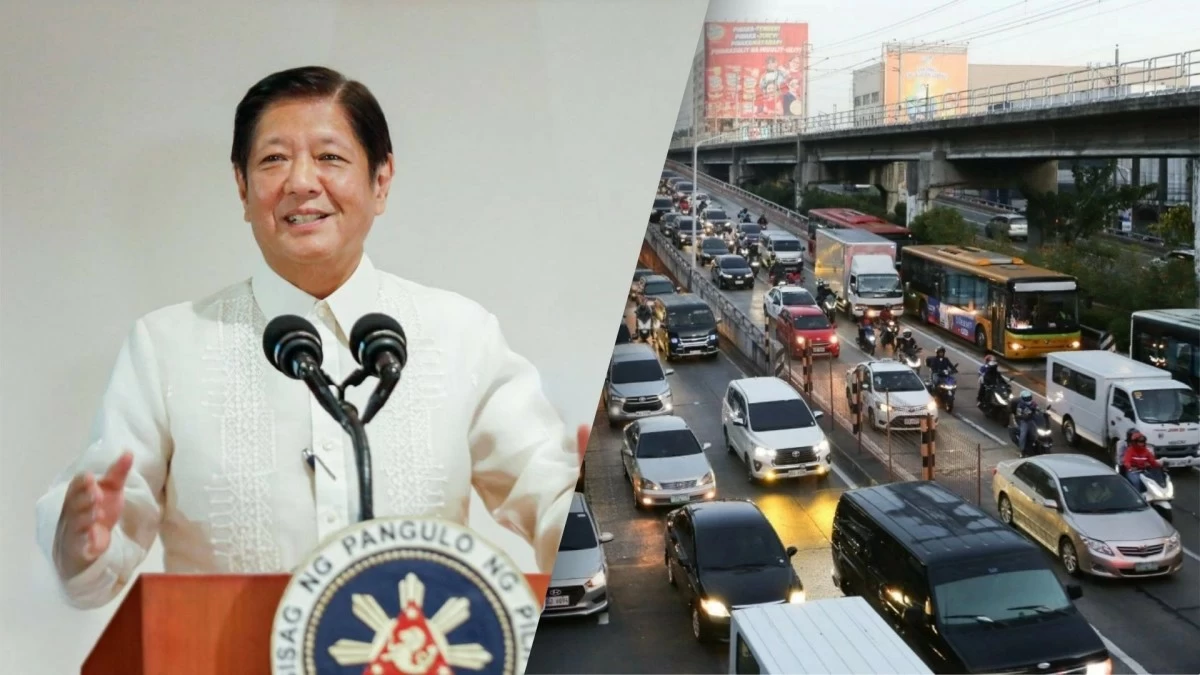
File photos
File photos
In the third episode of his podcast aired Thursday evening, Aug. 7, the President recognized that the lack of reliable public transport has forced people to buy their own vehicles, hence contributing to the traffic gridlock.
“We’ve seen the examples around the world, yung mga lugar na talagang sumobra na ang traffic dahil lahat ng tao walang public transport, walang bus, walang tren, walang subway (We’ve seen examples around the world where traffic has become extreme because people have no public transport — no buses, no trains, no subway),” he said.
“Siyempre lahat kailangan bumili ng sasakyan. Bibili ng motor, bibili ng auto. Kaya nagkaka-traffic nang husto (Of course, everyone needs to buy a vehicle. They buy a motorcycle or a car. That’s why traffic has gotten so bad),” he added.
Despite this, the President believes that the Philippines has started moving away from the notion that the country is “car-centric,” or having its urban design, infrastructure, and policies prioritize and cater primarily to the use of private vehicles.
“Wala na I think yung tawag mo ‘car-centric’ (I think this so-called ‘car-centric’ approach is over) – we’ve taken it as far as we can,” he said.
Marcos said the government is targeting shorter daily commutes for workers and commuters.
“Ang usually sa planning dapat ang commute should not be more – or going to work at saka pag-uwi… ‘yung one way should not – hindi dapat lumagpas sa isang oras. That’s the goal (Usually in planning, the commute — whether going to work or heading home — should not exceed one hour one way. That’s the goal),” he pointed out.
To achieve this, Marcos said ongoing efforts aim to improve both the quality and capacity of the country's rail and road networks.
“That’s why we are continuing to make it more efficient. We continue to add assets… not just additional lines,” he said.
The President particularly mentioned using the Dalian cars, which had not been used for a long time because they were deemed unusable.
“It’s 10 years old already, hindi pa nagamit. Ngayon pa lamang nagagamit (They’re already 10 years old and haven’t been used. It’s only now that they’re being put to use),” he said.
“Inayos-ayos, puwede naman pa lang i-modify para magamit dito sa Pilipinas (They were fixed up, and it turns out they could be modified to work here in the Philippines). So, that will be added capacity,” he added.
President Marcos also highlighted the construction of the country’s first subway as part of the broader transport reform agenda.
“Pati yung mga kalsada ginagawa natin… Magkakaroon na tayo ng subway ngayon pa lang (We’re also working on the roads. We’re about to have our subway). This is the first time that we have a subway here in the Philippines,” he said.
“These are solutions so that life will be a little easier, so that life will be more convenient, you know, going to work,” he added.

Related Tags

President Marcos Bongbong Marcos BBM Podcast public transport
ADVERTISEMENT
.most-popular .layout-ratio{ padding-bottom: 79.13%; } @media (min-width: 768px) and (max-width: 1024px) { .widget-title { font-size: 15px !important; } }

{{ articles_filter_1561_widget.title }}

.most-popular .layout-ratio{ padding-bottom: 79.13%; } @media (min-width: 768px) and (max-width: 1024px) { .widget-title { font-size: 15px !important; } }

{{ articles_filter_1562_widget.title }}

.most-popular .layout-ratio{ padding-bottom: 79.13%; } @media (min-width: 768px) and (max-width: 1024px) { .widget-title { font-size: 15px !important; } }

{{ articles_filter_1563_widget.title }}

{{ articles_filter_1564_widget.title }}

.mb-article-details { position: relative; } .mb-article-details .article-body-preview, .mb-article-details .article-body-summary{ font-size: 17px; line-height: 30px; font-family: "Libre Caslon Text", serif; color: #000; } .mb-article-details .article-body-preview iframe , .mb-article-details .article-body-summary iframe{ width: 100%; margin: auto; } .read-more-background { background: linear-gradient(180deg, color(display-p3 1.000 1.000 1.000 / 0) 13.75%, color(display-p3 1.000 1.000 1.000 / 0.8) 30.79%, color(display-p3 1.000 1.000 1.000) 72.5%); position: absolute; height: 200px; width: 100%; bottom: 0; display: flex; justify-content: center; align-items: center; padding: 0; } .read-more-background a{ color: #000; } .read-more-btn { padding: 17px 45px; font-family: Inter; font-weight: 700; font-size: 18px; line-height: 16px; text-align: center; vertical-align: middle; border: 1px solid black; background-color: white; } .hidden { display: none; }
function initializeAllSwipers() { // Get all hidden inputs with cms_article_id document.querySelectorAll('[id^="cms_article_id_"]').forEach(function (input) { const cmsArticleId = input.value; const articleSelector = '#article-' + cmsArticleId + ' .body_images'; const swiperElement = document.querySelector(articleSelector); if (swiperElement && !swiperElement.classList.contains('swiper-initialized')) { new Swiper(articleSelector, { loop: true, pagination: false, navigation: { nextEl: '#article-' + cmsArticleId + ' .swiper-button-next', prevEl: '#article-' + cmsArticleId + ' .swiper-button-prev', }, }); } }); } setTimeout(initializeAllSwipers, 3000); const intersectionObserver = new IntersectionObserver( (entries) => { entries.forEach((entry) => { if (entry.isIntersecting) { const newUrl = entry.target.getAttribute("data-url"); if (newUrl) { history.pushState(null, null, newUrl); let article = entry.target; // Extract metadata const author = article.querySelector('.author-section').textContent.replace('By', '').trim(); const section = article.querySelector('.section-info ').textContent.replace(' ', ' '); const title = article.querySelector('.article-title h1').textContent; // Parse URL for Chartbeat path format const parsedUrl = new URL(newUrl, window.location.origin); const cleanUrl = parsedUrl.host + parsedUrl.pathname; // Update Chartbeat configuration if (typeof window._sf_async_config !== 'undefined') { window._sf_async_config.path = cleanUrl; window._sf_async_config.sections = section; window._sf_async_config.authors = author; } // Track virtual page view with Chartbeat if (typeof pSUPERFLY !== 'undefined' && typeof pSUPERFLY.virtualPage === 'function') { try { pSUPERFLY.virtualPage({ path: cleanUrl, title: title, sections: section, authors: author }); } catch (error) { console.error('ping error', error); } } // Optional: Update document title if (title && title !== document.title) { document.title = title; } } } }); }, { threshold: 0.1 } ); function showArticleBody(button) { const article = button.closest("article"); const summary = article.querySelector(".article-body-summary"); const body = article.querySelector(".article-body-preview"); const readMoreSection = article.querySelector(".read-more-background"); // Hide summary and read-more section summary.style.display = "none"; readMoreSection.style.display = "none"; // Show the full article body body.classList.remove("hidden"); } document.addEventListener("DOMContentLoaded", () => { let loadCount = 0; // Track how many times articles are loaded const offset = [1, 2, 3, 4, 5, 6, 7, 8, 9, 10]; // Offset values const currentUrl = window.location.pathname.substring(1); let isLoading = false; // Prevent multiple calls if (!currentUrl) { console.log("Current URL is invalid."); return; } const sentinel = document.getElementById("load-more-sentinel"); if (!sentinel) { console.log("Sentinel element not found."); return; } function isSentinelVisible() { const rect = sentinel.getBoundingClientRect(); return ( rect.top < window.innerHeight && rect.bottom >= 0 ); } function onScroll() { if (isLoading) return; if (isSentinelVisible()) { if (loadCount >= offset.length) { console.log("Maximum load attempts reached."); window.removeEventListener("scroll", onScroll); return; } isLoading = true; const currentOffset = offset[loadCount]; window.loadMoreItems().then(() => { let article = document.querySelector('#widget_1690 > div:nth-last-of-type(2) article'); intersectionObserver.observe(article) loadCount++; }).catch(error => { console.error("Error loading more items:", error); }).finally(() => { isLoading = false; }); } } window.addEventListener("scroll", onScroll); });

Sign up by email to receive news.