

ADVERTISEMENT

Marcos: Humanitarian cost in Gaza 'unacceptable'; Israel must allow entry of aid

Published Aug 7, 2025 08:29 am

At A Glance

  • Asked how the Philippines could reconcile its alliance with Israel and its vote in favor of a Gaza ceasefire at the United Nations, the President said humanitarian concerns must come first.
President Marcos said the humanitarian crisis in Gaza must no longer be tolerated, calling the deaths, destruction, and starvation “unacceptable” and urging Israel to allow the entry of aid.
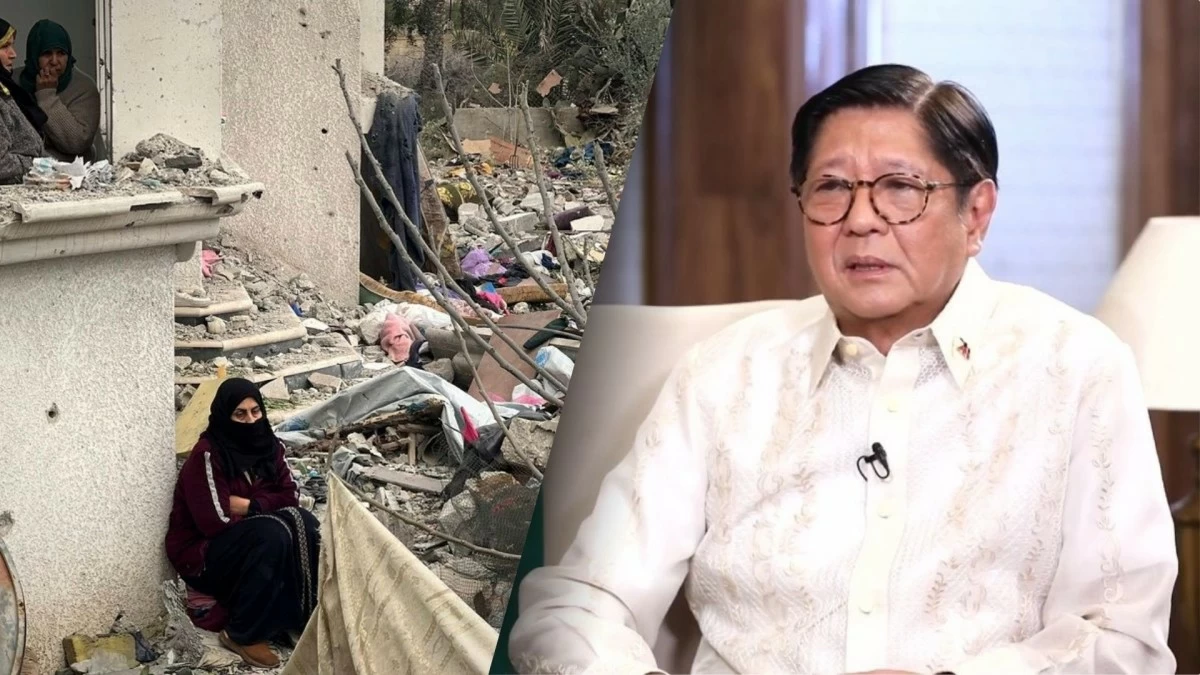
AP, Firstpost photos
Asked how the Philippines could reconcile its alliance with Israel and its vote in favor of a Gaza ceasefire at the United Nations, the President said humanitarian concerns must come first.
“I think it is unanimous that the humanitarian cost of the continued attacks on Gaza is unacceptable,” Marcos said in an interview with India’s Firstpost.
“The death, the destruction, and now the starvation that is occurring there – they should not be happening in this day and age,” he added.
Marcos said outside pressure was limited in effect and emphasized that real decisions must come from Israel itself.
“Israel has to decide to allow humanitarian aid to come in,” he said.
“We can put pressure on them. We can have resolutions in the United Nations. But at the end, the Israeli leadership has to decide that, okay, enough humanitarian costs,” he added.

‘Children bring tears to my eyes’

Marcos grew emotional while describing the toll on civilians, especially children.
“We look on in horror at the death, the destruction, the suffering. But what always brings tears to my eyes are the children,” he said.
“At least an adult, you can say we’re at war, so we have to sacrifice. How do you explain that to a child? And that’s not fair. That’s not right,” he added.
The President said this frustration with the situation may be the reason why European countries have started taking steps, including moves to recognize a Palestinian state.
“That’s why they’re starting to talk about recognizing a Palestinian state,” he said.
“Certainly from the part of the Philippines, again, of course, we are your allies, but we cannot – we do not – you know, we are always for peace,” he added.
Marcos noted that even the United States could exercise more leverage if it wanted to.
“If the United States stops sending weapons, then perhaps that would be a big diminution in terms of attacks,” he said.
“Maybe the United States could exercise a stronger hand in influencing the Israeli leadership to recognize the humanitarian cost,” he added.

Consistent stand for peace

The President said the Philippines’ support for peace applies not only in Gaza, but also in other global conflicts, including its own dispute with China and the war in Ukraine.
“Even our own situation with the West Philippine Sea… we don’t talk about the forces against this and attacking that. We talk about peace,” he said.
“And that is the same attitude that we take in the war in Ukraine.”
Marcos wished that the fighting would stop.
“We really would wish the fighting would stop, because again, when you watch the videos that are coming out of Ukraine, it looks like World War II. And I thought, you know, this is 2025,” he said.
“I thought humanity had learned its lesson already. Unfortunately, I was wrong. Yes, in a lot of ways,” he added.

Related Tags

President Marcos Bongbong Marcos PH-Israel Palestine GAZA
ADVERTISEMENT
.most-popular .layout-ratio{ padding-bottom: 79.13%; } @media (min-width: 768px) and (max-width: 1024px) { .widget-title { font-size: 15px !important; } }

{{ articles_filter_1561_widget.title }}

.most-popular .layout-ratio{ padding-bottom: 79.13%; } @media (min-width: 768px) and (max-width: 1024px) { .widget-title { font-size: 15px !important; } }

{{ articles_filter_1562_widget.title }}

.most-popular .layout-ratio{ padding-bottom: 79.13%; } @media (min-width: 768px) and (max-width: 1024px) { .widget-title { font-size: 15px !important; } }

{{ articles_filter_1563_widget.title }}

{{ articles_filter_1564_widget.title }}

.mb-article-details { position: relative; } .mb-article-details .article-body-preview, .mb-article-details .article-body-summary{ font-size: 17px; line-height: 30px; font-family: "Libre Caslon Text", serif; color: #000; } .mb-article-details .article-body-preview iframe , .mb-article-details .article-body-summary iframe{ width: 100%; margin: auto; } .read-more-background { background: linear-gradient(180deg, color(display-p3 1.000 1.000 1.000 / 0) 13.75%, color(display-p3 1.000 1.000 1.000 / 0.8) 30.79%, color(display-p3 1.000 1.000 1.000) 72.5%); position: absolute; height: 200px; width: 100%; bottom: 0; display: flex; justify-content: center; align-items: center; padding: 0; } .read-more-background a{ color: #000; } .read-more-btn { padding: 17px 45px; font-family: Inter; font-weight: 700; font-size: 18px; line-height: 16px; text-align: center; vertical-align: middle; border: 1px solid black; background-color: white; } .hidden { display: none; }
function initializeAllSwipers() { // Get all hidden inputs with cms_article_id document.querySelectorAll('[id^="cms_article_id_"]').forEach(function (input) { const cmsArticleId = input.value; const articleSelector = '#article-' + cmsArticleId + ' .body_images'; const swiperElement = document.querySelector(articleSelector); if (swiperElement && !swiperElement.classList.contains('swiper-initialized')) { new Swiper(articleSelector, { loop: true, pagination: false, navigation: { nextEl: '#article-' + cmsArticleId + ' .swiper-button-next', prevEl: '#article-' + cmsArticleId + ' .swiper-button-prev', }, }); } }); } setTimeout(initializeAllSwipers, 3000); const intersectionObserver = new IntersectionObserver( (entries) => { entries.forEach((entry) => { if (entry.isIntersecting) { const newUrl = entry.target.getAttribute("data-url"); if (newUrl) { history.pushState(null, null, newUrl); let article = entry.target; // Extract metadata const author = article.querySelector('.author-section').textContent.replace('By', '').trim(); const section = article.querySelector('.section-info ').textContent.replace(' ', ' '); const title = article.querySelector('.article-title h1').textContent; // Parse URL for Chartbeat path format const parsedUrl = new URL(newUrl, window.location.origin); const cleanUrl = parsedUrl.host + parsedUrl.pathname; // Update Chartbeat configuration if (typeof window._sf_async_config !== 'undefined') { window._sf_async_config.path = cleanUrl; window._sf_async_config.sections = section; window._sf_async_config.authors = author; } // Track virtual page view with Chartbeat if (typeof pSUPERFLY !== 'undefined' && typeof pSUPERFLY.virtualPage === 'function') { try { pSUPERFLY.virtualPage({ path: cleanUrl, title: title, sections: section, authors: author }); } catch (error) { console.error('ping error', error); } } // Optional: Update document title if (title && title !== document.title) { document.title = title; } } } }); }, { threshold: 0.1 } ); function showArticleBody(button) { const article = button.closest("article"); const summary = article.querySelector(".article-body-summary"); const body = article.querySelector(".article-body-preview"); const readMoreSection = article.querySelector(".read-more-background"); // Hide summary and read-more section summary.style.display = "none"; readMoreSection.style.display = "none"; // Show the full article body body.classList.remove("hidden"); } document.addEventListener("DOMContentLoaded", () => { let loadCount = 0; // Track how many times articles are loaded const offset = [1, 2, 3, 4, 5, 6, 7, 8, 9, 10]; // Offset values const currentUrl = window.location.pathname.substring(1); let isLoading = false; // Prevent multiple calls if (!currentUrl) { console.log("Current URL is invalid."); return; } const sentinel = document.getElementById("load-more-sentinel"); if (!sentinel) { console.log("Sentinel element not found."); return; } function isSentinelVisible() { const rect = sentinel.getBoundingClientRect(); return ( rect.top < window.innerHeight && rect.bottom >= 0 ); } function onScroll() { if (isLoading) return; if (isSentinelVisible()) { if (loadCount >= offset.length) { console.log("Maximum load attempts reached."); window.removeEventListener("scroll", onScroll); return; } isLoading = true; const currentOffset = offset[loadCount]; window.loadMoreItems().then(() => { let article = document.querySelector('#widget_1690 > div:nth-last-of-type(2) article'); intersectionObserver.observe(article) loadCount++; }).catch(error => { console.error("Error loading more items:", error); }).finally(() => { isLoading = false; }); } } window.addEventListener("scroll", onScroll); });

Sign up by email to receive news.