ADVERTISEMENT

Clearing the streets for better traffic flow: Not as easy as it sounds

Published Aug 7, 2025 12:01 am  |  Updated Aug 6, 2025 04:48 pm
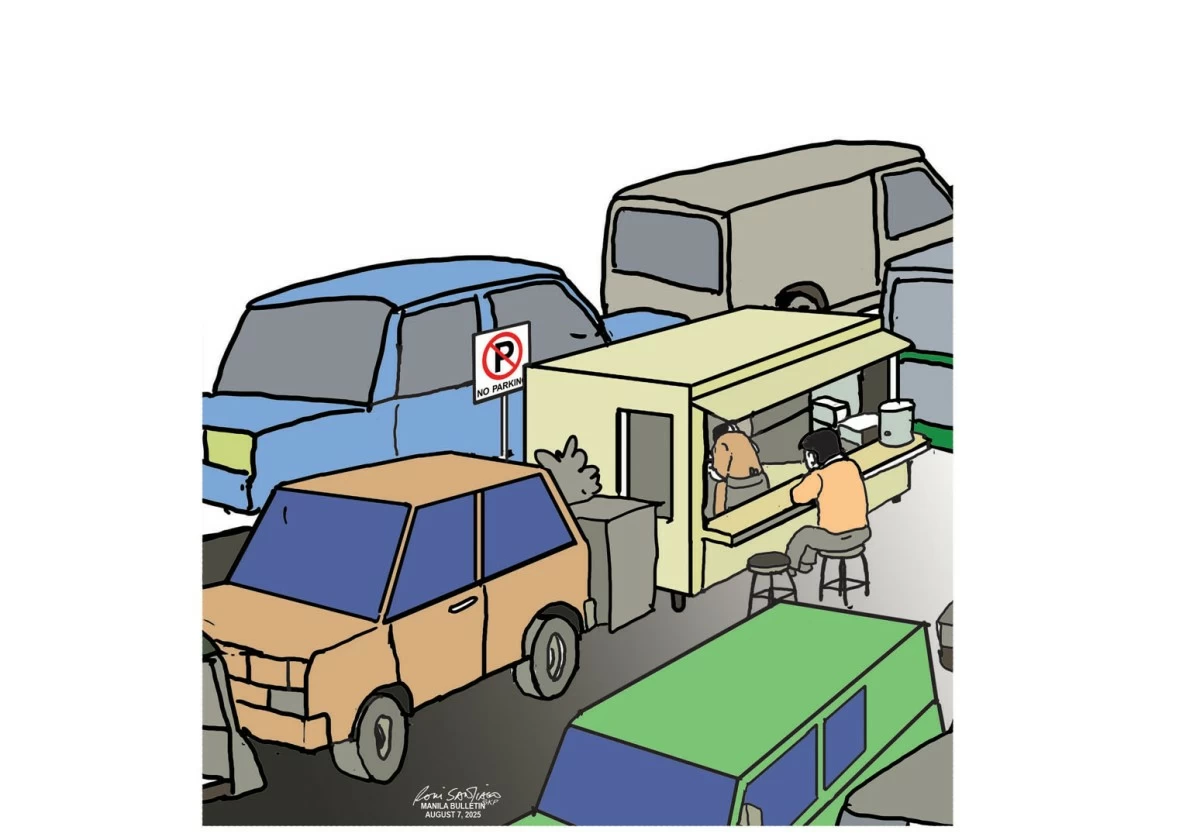
Street parking is nothing new in the Philippines, especially in urban centers. In Metro Manila, it has become part of the normal landscape, where in many instances, there are even pylons or sign boards marking spaces for certain people apparently living in the area.
Many barangays and subdivisions, aware of the traffic that street parking can cause, have found solutions to this. One, which seems to be effective, is to allow parking only on one side of the street. Another, which is not popular because it entails an expense, is an empty lot converted into parking space, for a small fee, of course. But these initiatives have made little impact on the general problem that is expanding its reach as more people purchase vehicles, mostly for reliable mobility to go to work or school.
Many inner-city neighborhoods lack parking infrastructure. Condominiums and apartments have been built with inadequate parking provisions, pushing residents to the streets. Businesses contribute, too. Restaurants that can seat 50 people often have parking for only four to six cars. Vulcanizing shops and car repair shops routinely operate on sidewalks and streets, using public space as their work area. The jeepneys that still ply their routes occupy intersection corners as makeshift terminals, creating a bottle neck that further slows down traffic. And in many streets parallel to main thoroughfares, food vans have claimed a lane with facilities for customers, like tables and chairs.
Early this week, a proposal from the Department of the Interior and Local Government (DILG) and the Metro Manila Council (MMC) seeks to ban parking on inner and secondary roads across Metro Manila—either all day or at least during peak hours. The goal is to restore public roads to their true purpose—mobility.
Backed by President Marcos Jr.’s directive to maintain road integrity, this initiative is now under review by a Technical Working Group (TWG) that will finalize a city-by-city plan by Sept. 1. Although the intent is clear and commendable, its execution poses challenges.
These private uses of public space are not only inefficient—they are illegal. As Interior Secretary Jonvic Remulla said: “Public streets are not for private enterprise.” He emphasized that parking a private vehicle on a public road constitutes such an enterprise.
The MMDA supports a compromise: enforce a no-parking rule only during rush hours—7 a.m. to 10 a.m. and 5 p.m. to 8 p.m.—when traffic is at its worst. This more flexible approach, especially for less congested areas, acknowledges the lack of viable alternatives for residents and small businesses.
MMC president and San Juan Mayor Francis Zamora noted that not all roads are traffic-heavy. “Why ban parking in streets where no one passes?” he asked. Makati Mayor Nancy Binay also warned against a sweeping policy that disregards local realities.
That’s why the TWG’s mapping process is so critical. It must assess each area’s road usage, density, and infrastructure. A total ban without support systems—such as multi-level public parking or strict regulation of new buildings—will only displace the problem.
Ultimately, Metro Manila’s traffic woes will not be solved by any single policy. But reclaiming the streets from cars, vendors, and jeepney terminals is a necessary first step which needs to be supported by alternative spaces to park.
Every square meter of road counts. Let’s stop using streets as storage or workspace, and start using them for what they’re meant for—getting people where they need to go.

Related Tags

NO PARKING LOCAL GOVERNMENT UNITS
ADVERTISEMENT
.most-popular .layout-ratio{ padding-bottom: 79.13%; } @media (min-width: 768px) and (max-width: 1024px) { .widget-title { font-size: 15px !important; } }

{{ articles_filter_1561_widget.title }}

.most-popular .layout-ratio{ padding-bottom: 79.13%; } @media (min-width: 768px) and (max-width: 1024px) { .widget-title { font-size: 15px !important; } }

{{ articles_filter_1562_widget.title }}

.most-popular .layout-ratio{ padding-bottom: 79.13%; } @media (min-width: 768px) and (max-width: 1024px) { .widget-title { font-size: 15px !important; } }

{{ articles_filter_1563_widget.title }}

{{ articles_filter_1564_widget.title }}

.mb-article-details { position: relative; } .mb-article-details .article-body-preview, .mb-article-details .article-body-summary{ font-size: 17px; line-height: 30px; font-family: "Libre Caslon Text", serif; color: #000; } .mb-article-details .article-body-preview iframe , .mb-article-details .article-body-summary iframe{ width: 100%; margin: auto; } .read-more-background { background: linear-gradient(180deg, color(display-p3 1.000 1.000 1.000 / 0) 13.75%, color(display-p3 1.000 1.000 1.000 / 0.8) 30.79%, color(display-p3 1.000 1.000 1.000) 72.5%); position: absolute; height: 200px; width: 100%; bottom: 0; display: flex; justify-content: center; align-items: center; padding: 0; } .read-more-background a{ color: #000; } .read-more-btn { padding: 17px 45px; font-family: Inter; font-weight: 700; font-size: 18px; line-height: 16px; text-align: center; vertical-align: middle; border: 1px solid black; background-color: white; } .hidden { display: none; }
function initializeAllSwipers() { // Get all hidden inputs with cms_article_id document.querySelectorAll('[id^="cms_article_id_"]').forEach(function (input) { const cmsArticleId = input.value; const articleSelector = '#article-' + cmsArticleId + ' .body_images'; const swiperElement = document.querySelector(articleSelector); if (swiperElement && !swiperElement.classList.contains('swiper-initialized')) { new Swiper(articleSelector, { loop: true, pagination: false, navigation: { nextEl: '#article-' + cmsArticleId + ' .swiper-button-next', prevEl: '#article-' + cmsArticleId + ' .swiper-button-prev', }, }); } }); } setTimeout(initializeAllSwipers, 3000); const intersectionObserver = new IntersectionObserver( (entries) => { entries.forEach((entry) => { if (entry.isIntersecting) { const newUrl = entry.target.getAttribute("data-url"); if (newUrl) { history.pushState(null, null, newUrl); let article = entry.target; // Extract metadata const author = article.querySelector('.author-section').textContent.replace('By', '').trim(); const section = article.querySelector('.section-info ').textContent.replace(' ', ' '); const title = article.querySelector('.article-title h1').textContent; // Parse URL for Chartbeat path format const parsedUrl = new URL(newUrl, window.location.origin); const cleanUrl = parsedUrl.host + parsedUrl.pathname; // Update Chartbeat configuration if (typeof window._sf_async_config !== 'undefined') { window._sf_async_config.path = cleanUrl; window._sf_async_config.sections = section; window._sf_async_config.authors = author; } // Track virtual page view with Chartbeat if (typeof pSUPERFLY !== 'undefined' && typeof pSUPERFLY.virtualPage === 'function') { try { pSUPERFLY.virtualPage({ path: cleanUrl, title: title, sections: section, authors: author }); } catch (error) { console.error('ping error', error); } } // Optional: Update document title if (title && title !== document.title) { document.title = title; } } } }); }, { threshold: 0.1 } ); function showArticleBody(button) { const article = button.closest("article"); const summary = article.querySelector(".article-body-summary"); const body = article.querySelector(".article-body-preview"); const readMoreSection = article.querySelector(".read-more-background"); // Hide summary and read-more section summary.style.display = "none"; readMoreSection.style.display = "none"; // Show the full article body body.classList.remove("hidden"); } document.addEventListener("DOMContentLoaded", () => { let loadCount = 0; // Track how many times articles are loaded const offset = [1, 2, 3, 4, 5, 6, 7, 8, 9, 10]; // Offset values const currentUrl = window.location.pathname.substring(1); let isLoading = false; // Prevent multiple calls if (!currentUrl) { console.log("Current URL is invalid."); return; } const sentinel = document.getElementById("load-more-sentinel"); if (!sentinel) { console.log("Sentinel element not found."); return; } function isSentinelVisible() { const rect = sentinel.getBoundingClientRect(); return ( rect.top < window.innerHeight && rect.bottom >= 0 ); } function onScroll() { if (isLoading) return; if (isSentinelVisible()) { if (loadCount >= offset.length) { console.log("Maximum load attempts reached."); window.removeEventListener("scroll", onScroll); return; } isLoading = true; const currentOffset = offset[loadCount]; window.loadMoreItems().then(() => { let article = document.querySelector('#widget_1690 > div:nth-last-of-type(2) article'); intersectionObserver.observe(article) loadCount++; }).catch(error => { console.error("Error loading more items:", error); }).finally(() => { isLoading = false; }); } } window.addEventListener("scroll", onScroll); });

Sign up by email to receive news.