






Manila Bulletin
 Business
Trade & Industry
₱40 billion in lost revenue: Illicit cigarette trade cripples gov't coffers
Business
Trade & Industry
₱40 billion in lost revenue: Illicit cigarette trade cripples gov't coffers
Business
Trade & Industry
₱40 billion in lost revenue: Illicit cigarette trade cripples gov't coffers
₱40 billion in lost revenue: Illicit cigarette trade cripples gov't coffers
By Derco Rosal
Published Aug 7, 2025 06:25 am


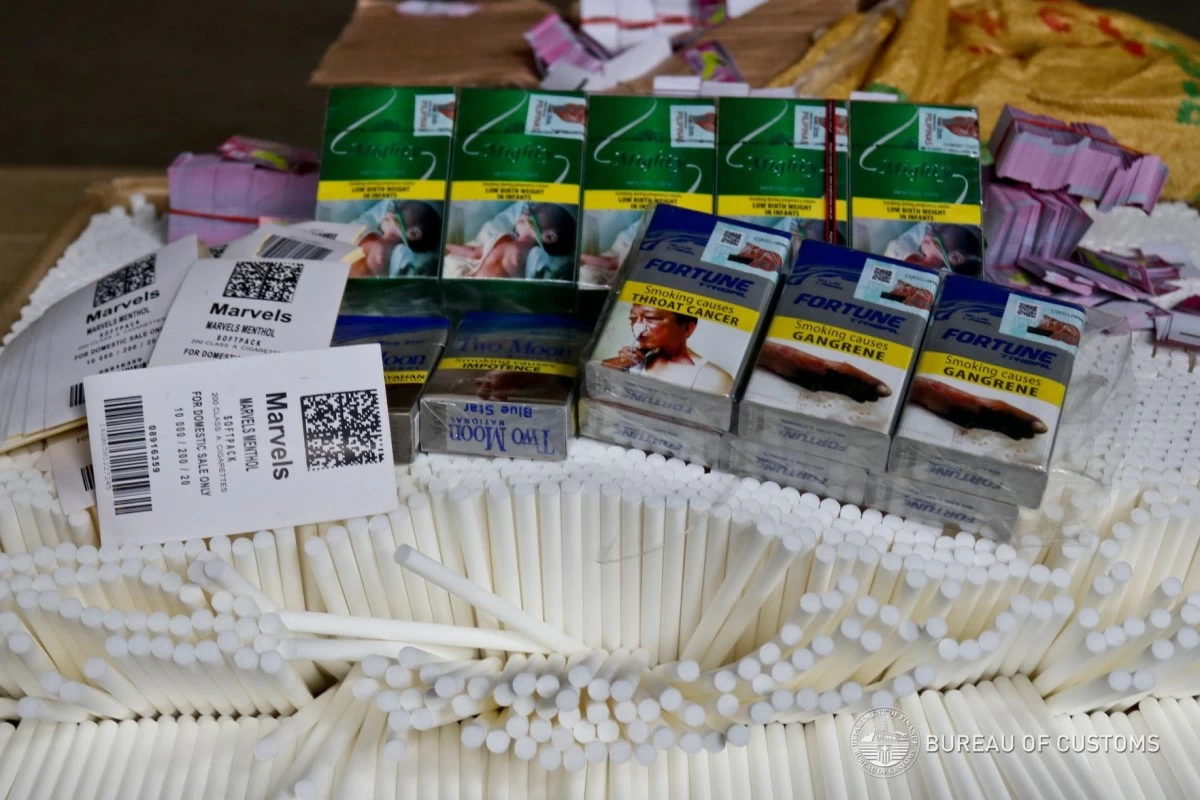
(Bureau of Customs photo)
With losses from illicit trade reaching nearly $2 billion annually, the local tobacco industry is calling for the creation of a composite strike force to ensure the imprisonment of offenders and deter the continued rise in illicit activity.
On the sidelines of a Financial Times event which focused on combating illicit trade in Southeast Asia, Philippine Tobacco Institute (PTI) President Jericho Nograles revealed that the ₱160 billion the government collects in tobacco excise taxes represents only 80 percent of the potential total revenues.
This means that 20 percent—or at least ₱40 billion—of potential revenue was lost to illicit trade.
Australian-based Rohan Pike Consulting has calculated losses to be higher, at $1.9 dollars, or around ₱116 billion on a yearly basis.
“In the Philippines, losses amounted to [nearly] $2 billion from tobacco alone. That’s a large figure—and it’s still growing. But it’s not just tobacco; other harmful products like counterfeit medicines and alcohol are also becoming increasingly problematic,” Rohan Pike told reporters.
Pike said that illicit tobacco comes from a variety of sources: “through the United Arab Emirates (UAE), now produced in Cambodia, and obviously from China, which also manufactures illicit vaping products.”
“But Indonesia is a major exporter of tobacco, both legal and illegal, and you [the Philippines] are vulnerable to that,” said Pike.
Industry estimates cited by Nograles showed that the share of illicit cigarettes in the Philippine market jumped to 19.5 percent as of end-2024, nearly doubling from around eight percent in 2021 and just below five percent before the pandemic in 2020.
While the national average for illicit cigarette consumption stands at nearly 20 percent, some provinces report rates as high as 97 percent, underscoring regional enforcement gaps.
Despite intensified enforcement, the illicit trade remains on the rise due to “lack of successful prosecution” and the absence of a centralized strike force, Nograles said.

PTI President Jericho Nograles
Unlike the United States (US), which has a dedicated agency for excisable goods like alcohol and tobacco, the Philippines, he said, lacks a clear strike force or lead agency to crack down on illicit trade, raising concerns over enforcement gaps despite the sector’s significant tax contributions.
Nograles emphasized the need for the government to “form a composite group—a task force that goes beyond just the Philippine National Police (PNP).” For him, it should include the Bureau of Internal Revenue (BIR), Bureau of Customs (BOC), Department of Finance (DOF), and Department of Justice (DOJ).
“This should be a whole-of-government approach that focuses not just on enforcement, but on achieving successful prosecution.”
“The goal isn’t just to catch offenders—it’s to put them behind bars. Because when it comes to illegal traders, real deterrence comes from the fear of imprisonment,” Nograles argued.
He also proposed including illicit trade indicators in the Department of the Interior and Local Government’s (DILG) Seal of Good Local Governance (SGLG) metrics to push local government units (LGUs) to act.