







Senate archives impeachment raps vs VP Duterte
Published Aug 6, 2025 09:06 pm


At A Glance
- The Senate moved to archive the Articles of Impeachment against Vice President Sara Duterte, adhering to the Supreme Court's ruling declaring the impeachment process initiated by the House of Representatives as unconstitutional.
With 19 senators voting in the affirmative, four against, and one abstention, the Senate moved to archive the Articles of Impeachment against Vice President Sara Duterte, adhering to the Supreme Court’s ruling declaring the impeachment process initiated by the House of Representatives as unconstitutional.
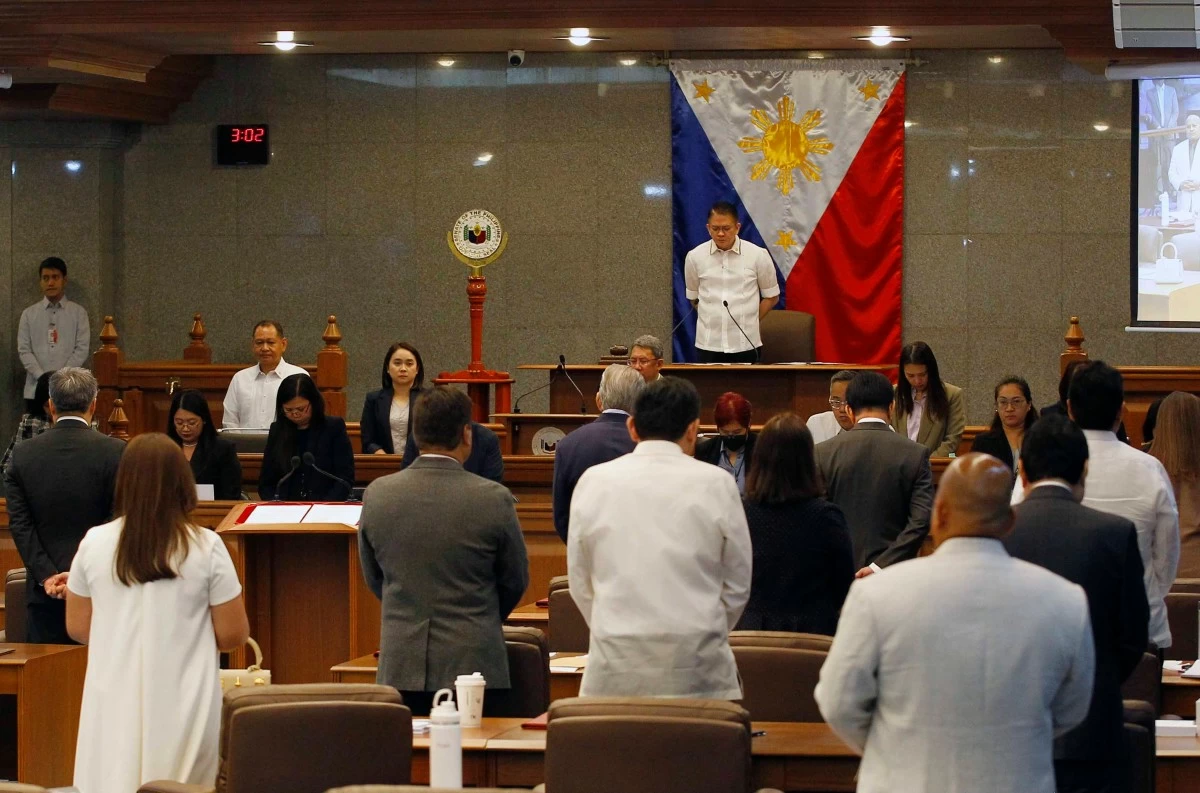
Scenes before the start of the 6th regular session of the 20th Congress at the Senate of the Philippines in Pasay City on August 6, 2025. Lawmakers are expected to focus on key national issues, including the recent Supreme Court ruling on the impeachment complaint against Vice President Sara Duterte. (Mark Balmores)
After lengthy deliberation on the motion of Sen. Rodante Marcoleta to dimiss the Vice President’s impeachment complaint, the senators eventually voted to archive the impeachment documents which it received last Feb. 5, 2025, during the 19th Congress.
Marcoleta’s motion was amended to read "adhering to the immediately executory decision rendered by the Supreme Court En Banc on 25th July, 2025 which held among others that the Articles of Impeachment are null and void ab initio and that the Senate did not acquire jurisdiction over the same."
This motion also officially transfers the Articles of Impeachment against Duterte to the archives.
Prior to this, Senate Minority Leader Vicente "Tito" Sotto III's motion to table Marcoleta's motion was rejected with only five affirmative votes and 19 negative votes, prompting them to vote on the amended motion.
In his explanation of vote, Sotto said that SC decision is pending appeal, stating that it is more prudent to wait for the result rather than "prematurely archiving if not dismissing". He said that he knows for a fact that once it is archived, it is dead.
"I know it will be a vote in the minority. But I have always voted in the minority in many issues in the Senate since 1992 up to the present, always prayed I was wrong. Unfortunately I was always right," he said.
"May God have mercy on your decision. I vote yes," he added.
Senate President Francis "Chiz" Escudero voted yes to the motion.
"I vote yes to the motion, Mr. President. I vote yes to the Rule of Law, yes to the Constitution, yes to the supremacy of the Supreme Court in interpreting it," he said.
In his explanation of vote, Escudero had a message to the House of Representatives, telling them not to allow themselves to be used for the blind hatred and ambition of a few, who did things haphazardly, gravely abused their discretion, and violated due process rights under the Constitution as found by the High Court itself.
"In spite of all these you expect everyone to roll over in obedience," he said.
"When we did not, you moved hell and high water to destroy personalities, malign reputations, and tarnish institutions," he added.
He stated that the Senate is not their playground to run after their political enemies and not an accomplice in any grand scheme.
"Let history record that in this moment, we chose the Constitution, we chose the rule of law by defending the integrity of the Supreme Court and maintaining the system of check and balances under our republican system of government," he said.
Sen. Ronald “Bato” Dela Rosa, however, said he sees no reason for the Senate not to accept the SC’s ruling on the vice president’s case when it has accepted several decisions of the high court in the past.
“Why should the ruling in this current impeachment case be any different? Is our concept of respect for and acceptance of Supreme Court decisions selective? If that is the case, are we not playing with fire?” Dela Rosa said when he explained his vote in favor of the motion to archive the impeachment complaint.
“Of course, the Senate is not a mere follower of the Supreme Court but a co-equal branch, meant to respect the powers and functions of the latter in its decisions. I trust that this Senate will continue to peacefully co-exist with the Supreme Court. Let us not allow this impeachment trial to become a venue and opportunity to disrupt our system of government,” said the senator.
“We must follow the Supreme Court ruling not because it is the most convenient thing to do but because it is what is right and just—no matter how unacceptable or painful it may be,” Dela Rosa stressed.
Senate President Pro Tempore Jinggoy Ejercito Estrada also voted yes: “Let us be clear: no one is above the law. Not the President. Not the Vice President. Not even the Senate when it sits as an impeachment court.”
“The Constitution is not just an ordinary law—it is the supreme law of the land. And if we betray it to serve political passions or popular sentiment, then we betray the Republic itself,” Estrada said.
“I refuse to be part of a Senate that defies the law, disrespects the courts, and undermines the very system of justice we claim to uphold,” he further said.
Sen. Panfilo “Ping” Lacson, who voted to abstain from the voting, said he would rather wait for the final ruling of the High Court.
“Without the words ‘immediately executory’ and the phrase on 25 July 2025, which held among others that the Articles of Impeachment are null and void ab initio and that the Senate did not acquire jurisdiction over the same, I would have voted in favor of the amended motion because I have always maintained that we must respect and not disobey the Supreme Court,” Lacson said.
“But since there is still a pending motion for reconsideration filed by the House of Representatives through the Solicitor General, I believe that the July 25 ruling is by no means final, until it rules on the motion for reconsideration with finality,” he said.
“That being said, I would rather wait, not preempt, the final ruling of the High Court. It is for these reasons that I abstain, Mr. President,” Lacson added.
Sen. Risa Hontiveros voted no against archiving the Articles of Impeachment, saying that the 1987 Constitution “entrusted the duty to try and decide all cases of impeachment to the Senate.”
“Today, we are voting to abandon this mandate. I reiterate that the Supreme Court decision is not yet final, kahit paano mo baliktarin, so make no mistake: This was an act of the Senate. It is our institution which, in the words of colleagues, killed the Articles of Impeachment,” Hontiveros lamented.
“Ang pinanggagalingan ko lamang dito: pananagutan (My only concern here is accountability). Our people must have the power to make the highest rulers accountable,” the minority senator said.
“The process of impeachment is meant to question the ‘powers that be’ and whether they deserve that power…It should not be taxing to hold power to account. Anything that will make it easier for a public officer to evade accountability should be opposed,” she said.
Sen. Loren Legarda also voted yes, “without prejudice to the Supreme Court’s disposition of the pending Motion for Reconsideration.”
“The Court speaks, and at times it speaks again. But until it does, the Senate must not act contrary to what it has already said. For these reasons, I vote yes. I honor the decision of the Supreme Court,” Legarda stressed.