






Manila Bulletin
 Philippines
National
Seismic equipment stolen from Phivolcs monitoring station at Mount Pinatubo
Philippines
National
Seismic equipment stolen from Phivolcs monitoring station at Mount Pinatubo
Philippines
National
Seismic equipment stolen from Phivolcs monitoring station at Mount Pinatubo
Seismic equipment stolen from Phivolcs monitoring station at Mount Pinatubo
Published Aug 6, 2025 04:43 pm


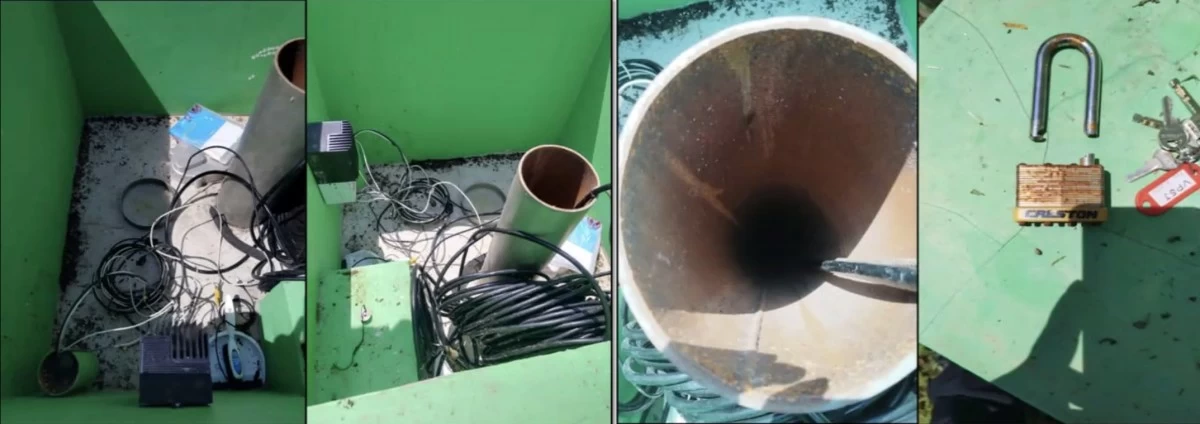
Stolen seismic monitoring equipment worth over P1 million, including solar batteries and a Kinemetrics Q330HRS+ Quanterra digitizer, was taken from the Philippine Institute of Volcanology and Seismology’s (Phivolcs) San Jose Observation Station in Tarlac after the seismic vault was forcibly opened, as discovered during a routine check on Aug. 6, 2025. (Phivolcs)
The Philippine Institute of Volcanology and Seismology (Phivolcs) reported that vital seismic monitoring equipment worth over P1 million was stolen from its San Jose Observation Station in San Jose, Tarlac, during a routine maintenance check on Wednesday, Aug. 6.
Personnel from the Pinatubo Volcano Observatory (PVO) discovered that the seismic vault of the station, which is part of the Pinatubo Volcano Network, had been forcibly opened, with several key components taken.
Among the stolen items were solar batteries valued at P70,000 and a state-of-the-art Kinemetrics Q330HRS+ Quanterra digitizer worth P1.144 million.
The Quanterra digitizer is essential to the station’s function, as it records and converts seismic data detected by specialized sensors, enabling Phivolcs to monitor volcanic and tectonic activity in the region.
The San Jose station operates a borehole seismic sensor, which plays a vital role in detecting volcanic earthquakes beneath Mount Pinatubo and in recording large-magnitude tectonic earthquakes across Northern Luzon.
“This station is one of 10 surrounding Mount Pinatubo and is outfitted with a borehole seismometer,” said Ma. Antonia V. Bornas, chief of the Phivolcs-Volcano Monitoring and Eruption Prediction Division, in Filipino during a press briefing on Wednesday.
“Being the northernmost station in our Pinatubo Network, it provides important quality control in locating volcanic earthquakes. It also contributes significantly to detecting large earthquakes in Northern Luzon,” she added.
The San Jose station was commissioned in February 2022 and has since contributed valuable data for both volcano-tectonic and tectonic earthquake monitoring.
Phivolcs noted that the recent theft is the third incident at the station following two separate thefts of solar panels in October and December 2024.
Bornas explained that while the stolen equipment may be of little use to the perpetrators, the loss is a serious setback for national monitoring efforts.
“Materially, the thief gains nothing. But for Phivolcs, the national government, and taxpayers, this is a major blow,” she said.
“It significantly reduces the accuracy of our earthquake location capability for Pinatubo and compromises our collective safety,” she added.
She also said replacing the stolen digitizer is not easy, as borehole instruments require specific models that are not readily available and are costly to import.
Phivolcs Director Teresito Bacolcol also noted the broader implications of the theft.
“The loss of this equipment is not just theft from the government—it’s theft of the community’s protection,” he said in Filipino.
“Each piece of equipment is used to monitor our active volcanoes and earthquakes. We urge everyone to protect these systems for the safety of our people,” he added.
Phivolcs reminded the public that Republic Act 10344, or the Risk Reduction and Preparedness Equipment Protection Act of 2012, penalizes the unauthorized taking, stealing, or tampering of government risk reduction equipment and related facilities.
The agency also appealed to local governments and communities around Mount Pinatubo to remain vigilant and help protect vital monitoring infrastructure.