ADVERTISEMENT

UP scientists find potential biofertilizers in bamboo, corn roots that could help Filipino farmers cut costs

Published Aug 5, 2025 06:14 pm
(PIXABAY PHOTOS)
(PIXABAY PHOTOS)
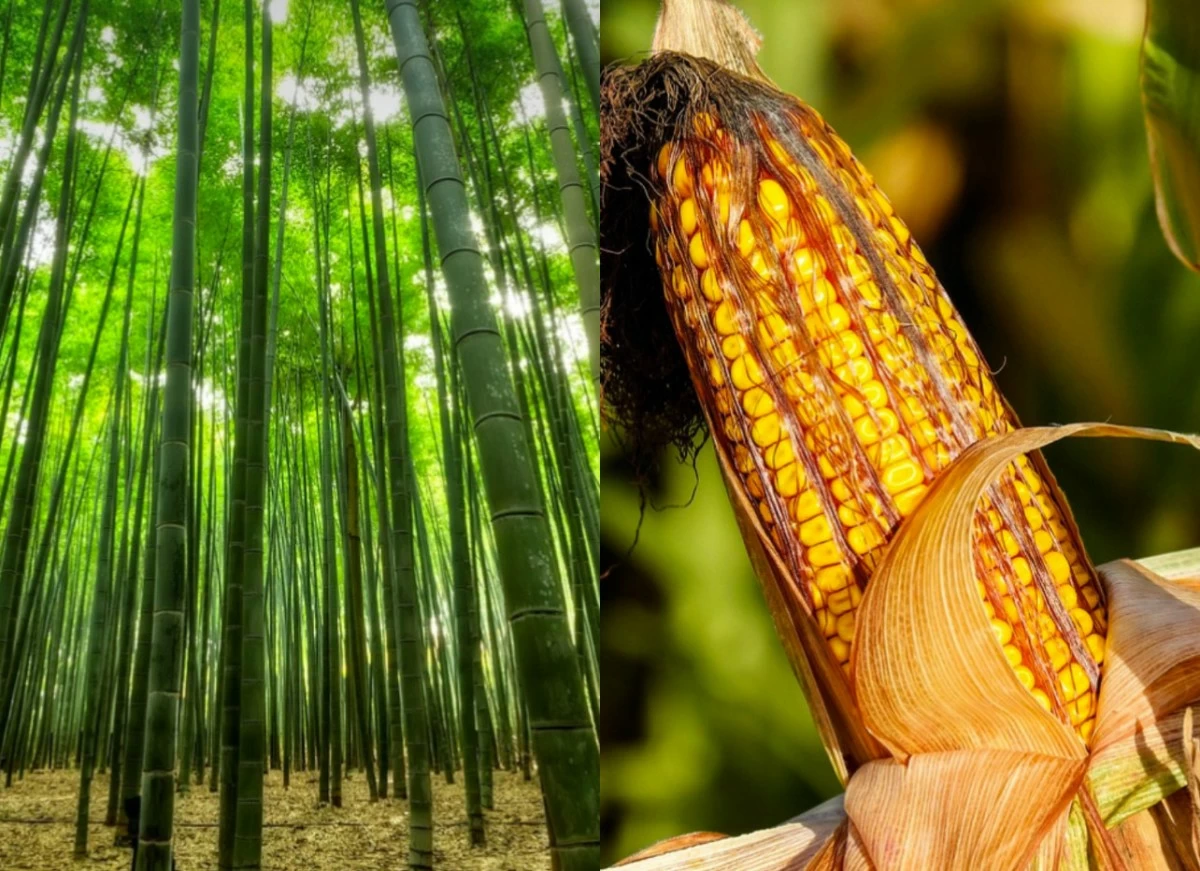
Farmers burdened by high fertilizer costs may soon have a more affordable and eco-friendly option, thanks to bacteria hiding in the roots of bamboo and corn.
Researchers from the University of the Philippines (UP) – Diliman are looking into plant growth-promoting bacteria (PGPB) as an alternative to chemical fertilizers, which are not only expensive but also harmful to the environment.
These microorganisms can help crops absorb more nutrients and produce growth hormones naturally, increasing yield without toxic runoff.
“If these microorganisms can be developed into a biofertilizer, they could help farmers improve the yield and quality of their crops,” Mary Ann Cielo Relucio-San Diego of the UPD College of Science’s Natural Sciences Research Institute (UPD-CS NSRI) said.
“Corn is one of the most in-demand grains in the world and the second most valuable staple in the Philippines. Bamboo is an economically significant and high-value crop in the country, with the Philippines being the 5th leading exporter of bamboo globally. Increasing the yield of these crops could boost our economy.”
San Diego, together with Camille Andrea Flores and Dr. Maria Auxilia Siringan, collected 27 bacterial strains from the roots of corn and bamboo grown in Cagayan province.
These strains were then screened in the lab for traits that support plant growth.
All 27 strains showed at least two beneficial traits. Four had genes for nitrogen fixation, helping plants get nitrogen from the air.
Eleven could solubilize phosphate, making it easier for plants to absorb. All of them produced indole-3-acetic acid, a natural hormone that promotes plant growth, and 24 made siderophores, which help plants pull iron from the soil, the study showed.
Two strains stood out: Enterobacter roggenkampii B1-01 and Klebsiella oxytoca B1-04. Both showed all the key growth-promoting traits tested.
But the road to commercial use is long. Researchers must first ensure the bacteria are safe for humans and the environment.
“This involves checking whether they carry genes associated with human diseases or antimicrobial resistance,” San Diego said.
After that, the bacteria must prove their effectiveness in real-world conditions.
“Next is determining whether the microorganisms can improve plant growth, as observed in our in vitro tests and predicted by their genomic features. The best way to do this is through in planta or pot experiments,” she explained.
In these experiments, researchers grow plants with and without the bacteria to compare results, such as root elongation and stem growth.
Only after lab and pot trials, followed by field testing, can the strains be developed into commercial products.
The study, titled “Multiple Plant Growth–Promoting Activities Exhibited by Root-Associated Bacteria Isolated From Bamboo and Corn,” was published in the International Journal of Microbiology.
It was funded by NSRI, with genome sequencing support from DOST-PCAARRD’s Project 4.
ADVERTISEMENT
.most-popular .layout-ratio{ padding-bottom: 79.13%; } @media (min-width: 768px) and (max-width: 1024px) { .widget-title { font-size: 15px !important; } }

{{ articles_filter_1561_widget.title }}

.most-popular .layout-ratio{ padding-bottom: 79.13%; } @media (min-width: 768px) and (max-width: 1024px) { .widget-title { font-size: 15px !important; } }

{{ articles_filter_1562_widget.title }}

.most-popular .layout-ratio{ padding-bottom: 79.13%; } @media (min-width: 768px) and (max-width: 1024px) { .widget-title { font-size: 15px !important; } }

{{ articles_filter_1563_widget.title }}

{{ articles_filter_1564_widget.title }}

.mb-article-details { position: relative; } .mb-article-details .article-body-preview, .mb-article-details .article-body-summary{ font-size: 17px; line-height: 30px; font-family: "Libre Caslon Text", serif; color: #000; } .mb-article-details .article-body-preview iframe , .mb-article-details .article-body-summary iframe{ width: 100%; margin: auto; } .read-more-background { background: linear-gradient(180deg, color(display-p3 1.000 1.000 1.000 / 0) 13.75%, color(display-p3 1.000 1.000 1.000 / 0.8) 30.79%, color(display-p3 1.000 1.000 1.000) 72.5%); position: absolute; height: 200px; width: 100%; bottom: 0; display: flex; justify-content: center; align-items: center; padding: 0; } .read-more-background a{ color: #000; } .read-more-btn { padding: 17px 45px; font-family: Inter; font-weight: 700; font-size: 18px; line-height: 16px; text-align: center; vertical-align: middle; border: 1px solid black; background-color: white; } .hidden { display: none; }
function initializeAllSwipers() { // Get all hidden inputs with cms_article_id document.querySelectorAll('[id^="cms_article_id_"]').forEach(function (input) { const cmsArticleId = input.value; const articleSelector = '#article-' + cmsArticleId + ' .body_images'; const swiperElement = document.querySelector(articleSelector); if (swiperElement && !swiperElement.classList.contains('swiper-initialized')) { new Swiper(articleSelector, { loop: true, pagination: false, navigation: { nextEl: '#article-' + cmsArticleId + ' .swiper-button-next', prevEl: '#article-' + cmsArticleId + ' .swiper-button-prev', }, }); } }); } setTimeout(initializeAllSwipers, 3000); const intersectionObserver = new IntersectionObserver( (entries) => { entries.forEach((entry) => { if (entry.isIntersecting) { const newUrl = entry.target.getAttribute("data-url"); if (newUrl) { history.pushState(null, null, newUrl); let article = entry.target; // Extract metadata const author = article.querySelector('.author-section').textContent.replace('By', '').trim(); const section = article.querySelector('.section-info ').textContent.replace(' ', ' '); const title = article.querySelector('.article-title h1').textContent; // Parse URL for Chartbeat path format const parsedUrl = new URL(newUrl, window.location.origin); const cleanUrl = parsedUrl.host + parsedUrl.pathname; // Update Chartbeat configuration if (typeof window._sf_async_config !== 'undefined') { window._sf_async_config.path = cleanUrl; window._sf_async_config.sections = section; window._sf_async_config.authors = author; } // Track virtual page view with Chartbeat if (typeof pSUPERFLY !== 'undefined' && typeof pSUPERFLY.virtualPage === 'function') { try { pSUPERFLY.virtualPage({ path: cleanUrl, title: title, sections: section, authors: author }); } catch (error) { console.error('ping error', error); } } // Optional: Update document title if (title && title !== document.title) { document.title = title; } } } }); }, { threshold: 0.1 } ); function showArticleBody(button) { const article = button.closest("article"); const summary = article.querySelector(".article-body-summary"); const body = article.querySelector(".article-body-preview"); const readMoreSection = article.querySelector(".read-more-background"); // Hide summary and read-more section summary.style.display = "none"; readMoreSection.style.display = "none"; // Show the full article body body.classList.remove("hidden"); } document.addEventListener("DOMContentLoaded", () => { let loadCount = 0; // Track how many times articles are loaded const offset = [1, 2, 3, 4, 5, 6, 7, 8, 9, 10]; // Offset values const currentUrl = window.location.pathname.substring(1); let isLoading = false; // Prevent multiple calls if (!currentUrl) { console.log("Current URL is invalid."); return; } const sentinel = document.getElementById("load-more-sentinel"); if (!sentinel) { console.log("Sentinel element not found."); return; } function isSentinelVisible() { const rect = sentinel.getBoundingClientRect(); return ( rect.top < window.innerHeight && rect.bottom >= 0 ); } function onScroll() { if (isLoading) return; if (isSentinelVisible()) { if (loadCount >= offset.length) { console.log("Maximum load attempts reached."); window.removeEventListener("scroll", onScroll); return; } isLoading = true; const currentOffset = offset[loadCount]; window.loadMoreItems().then(() => { let article = document.querySelector('#widget_1690 > div:nth-last-of-type(2) article'); intersectionObserver.observe(article) loadCount++; }).catch(error => { console.error("Error loading more items:", error); }).finally(() => { isLoading = false; }); } } window.addEventListener("scroll", onScroll); });

Sign up by email to receive news.