

ADVERTISEMENT

Private school teachers welcome DepEd's TSS increase but…

Group says P24K subsidy 'inadequate,' leaves most private school teachers behind

Published Aug 5, 2025 12:17 pm

At A Glance

  • ACT Private Schools welcomed the TSS increase to P24,000 but called it inadequate, as it excludes kindergarten, elementary, and senior high school teachers
  • The group flagged subsidy delays and low coverage, noting many junior high teachers haven't received their TSS for SY 2024–2025
  • ACT urged broader reforms—including a national minimum wage and more public school jobs—to end private school teacher exploitation
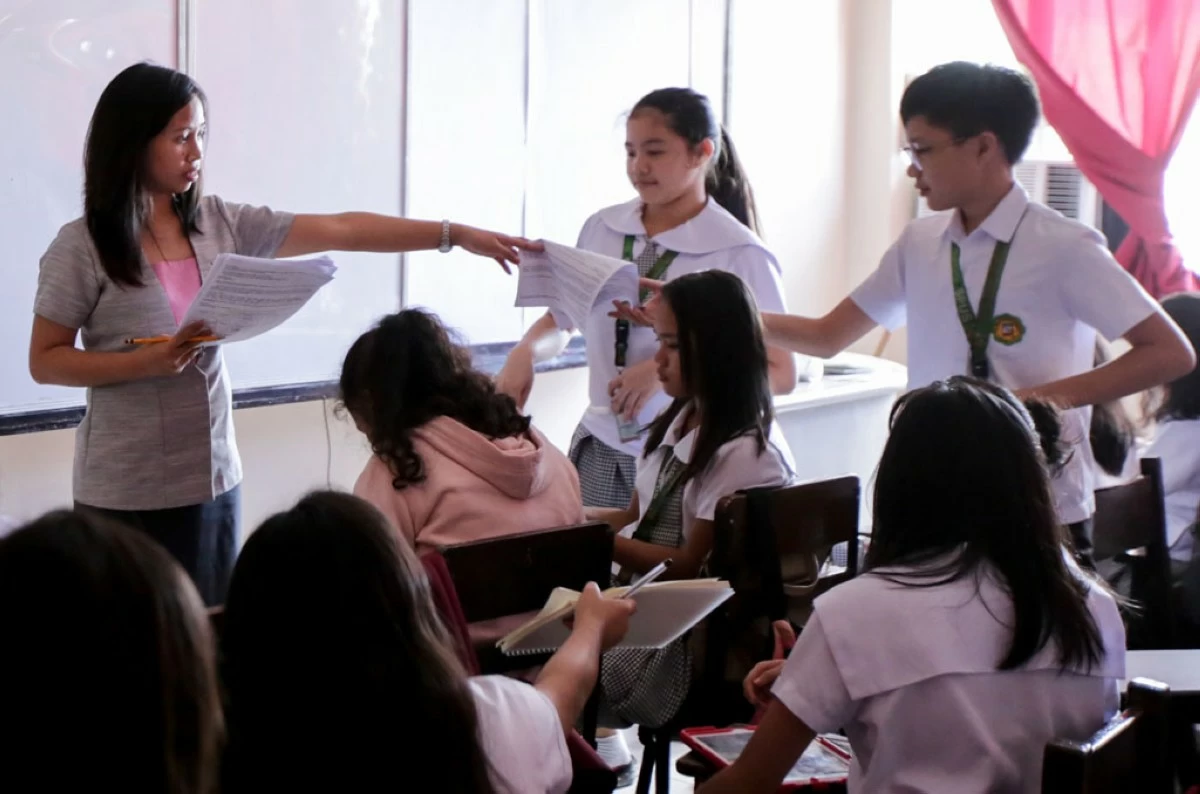
DepEd raises TSS to P24,000 but ACT Private Schools says the increase is inadequate --- excluding most private school teachers from meaningful support. (Manila Bulletin / File photo)
While private school teachers welcomed the Department of Education’s (DepEd) decision to raise the Teachers’ Salary Subsidy (TSS), a group on Tuesday, August 5, expressed concern that the current P24,000 ceiling remains insufficient—excluding the vast majority of instructors from low-income institutions who continue to fall through the cracks of government support.
The Alliance of Concerned Teachers (ACT) Private Schools, in a statement, welcomed DepEd’s recent announcement of a P6,000 increase in the TSS for private junior high school teachers but criticized it as a “gravely insufficient” response to the systemic exploitation of educators in private institutions.
TSS increase
Under the new policy, qualified private junior high school teachers under the Government Assistance to Students and Teachers in Private Education (GASTPE) Program will receive P24,000 annually starting School Year 2025–2026, up from P18,000.
The move aligns with President Marcos’ push for education equity, as outlined in his fourth State of the Nation Address (SONA).
While ACT acknowledged the increase, it emphasized that the subsidy covers only a fraction of private school teachers—excluding those in kindergarten, elementary, and senior high school levels.
“We welcome this increase in the subsidy for junior high school teachers. However, let us be very clear: this subsidy only covers a fraction of private school teachers. Kinder, elementary, and senior high school teachers remain excluded, even though they face the same heavy workloads and inadequate compensation,” said ACT Private Schools Secretary-General Jonathan Geronimo.
Address chronic delays
Geronimo also criticized the chronic delays in subsidy disbursement, noting that many junior high school teachers have yet to receive their TSS for School Year 2024–2025.
He said such delays—coupled with the modest amount of support—fail to meaningfully improve teachers’ welfare.
“Most junior high school teachers have not even received their subsidy for School Year 2024–2025,” Geronimo said. “A subsidy that is both delayed and meager does not provide dignity, nor does it address the real needs of our private school educators.”
According to ACT, the average monthly salary of private school teachers in Metro Manila is only P17,500, and even lower in the provinces.
Protect rights and welfare of all teachers
The group blamed the lack of permanent teaching positions in public schools and the government’s failure to regulate private sector wages—conditions they say force many educators into insecure and underpaid jobs.
“The government must fulfill its responsibility to protect the rights and welfare of all teachers, not just a select few,” Geronimo said. “By neglecting to expand public school positions and failing to regulate private school wages and benefits, the state is complicit in the continuing exploitation of private school teachers.”
ACT Private Schools is now calling for structural reforms, including the enactment of a P1,200 national minimum wage for all Filipino workers, as a step toward securing just compensation for educators across both public and private sectors.
“Our private school teachers play a vital role in shaping the nation, yet they continue to endure poverty wages and insecure jobs,” Geronimo said. “We demand not just token relief, but genuine reforms that uplift the teaching profession,” he added.
DepEd’s position
DepEd Secretary Sonny Angara earlier highlighted the significance of the TSS hike as part of the Marcos administration’s broader education reform agenda.
During a ceremonial signing on August 1, Angara emphasized the need to reduce disparities between public and private school teachers.
“We are taking a decisive step to narrow that gap and uplift the private education system alongside the public,” he said.
Angara also reaffirmed DepEd’s commitment to working closely with local government units, development partners, and private education stakeholders to ensure accessible and quality education for all.
DepEd’s TSS program, governed by Republic Act No. 8545 or the Expanded GASTPE Act, offers financial assistance to qualified private school teachers—those who are licensed, full-time, and teach Education Service Contracting (ESC) grantees for at least three hours weekly.

Related Tags

ACT Private Schools DepEd TSS increase 2025 private school teacher subsidy teacher salary Philippines GASTPE ESC program education equity Philippines private school teacher rights
ADVERTISEMENT
.most-popular .layout-ratio{ padding-bottom: 79.13%; } @media (min-width: 768px) and (max-width: 1024px) { .widget-title { font-size: 15px !important; } }

{{ articles_filter_1561_widget.title }}

.most-popular .layout-ratio{ padding-bottom: 79.13%; } @media (min-width: 768px) and (max-width: 1024px) { .widget-title { font-size: 15px !important; } }

{{ articles_filter_1562_widget.title }}

.most-popular .layout-ratio{ padding-bottom: 79.13%; } @media (min-width: 768px) and (max-width: 1024px) { .widget-title { font-size: 15px !important; } }

{{ articles_filter_1563_widget.title }}

{{ articles_filter_1564_widget.title }}

.mb-article-details { position: relative; } .mb-article-details .article-body-preview, .mb-article-details .article-body-summary{ font-size: 17px; line-height: 30px; font-family: "Libre Caslon Text", serif; color: #000; } .mb-article-details .article-body-preview iframe , .mb-article-details .article-body-summary iframe{ width: 100%; margin: auto; } .read-more-background { background: linear-gradient(180deg, color(display-p3 1.000 1.000 1.000 / 0) 13.75%, color(display-p3 1.000 1.000 1.000 / 0.8) 30.79%, color(display-p3 1.000 1.000 1.000) 72.5%); position: absolute; height: 200px; width: 100%; bottom: 0; display: flex; justify-content: center; align-items: center; padding: 0; } .read-more-background a{ color: #000; } .read-more-btn { padding: 17px 45px; font-family: Inter; font-weight: 700; font-size: 18px; line-height: 16px; text-align: center; vertical-align: middle; border: 1px solid black; background-color: white; } .hidden { display: none; }
function initializeAllSwipers() { // Get all hidden inputs with cms_article_id document.querySelectorAll('[id^="cms_article_id_"]').forEach(function (input) { const cmsArticleId = input.value; const articleSelector = '#article-' + cmsArticleId + ' .body_images'; const swiperElement = document.querySelector(articleSelector); if (swiperElement && !swiperElement.classList.contains('swiper-initialized')) { new Swiper(articleSelector, { loop: true, pagination: false, navigation: { nextEl: '#article-' + cmsArticleId + ' .swiper-button-next', prevEl: '#article-' + cmsArticleId + ' .swiper-button-prev', }, }); } }); } setTimeout(initializeAllSwipers, 3000); const intersectionObserver = new IntersectionObserver( (entries) => { entries.forEach((entry) => { if (entry.isIntersecting) { const newUrl = entry.target.getAttribute("data-url"); if (newUrl) { history.pushState(null, null, newUrl); let article = entry.target; // Extract metadata const author = article.querySelector('.author-section').textContent.replace('By', '').trim(); const section = article.querySelector('.section-info ').textContent.replace(' ', ' '); const title = article.querySelector('.article-title h1').textContent; // Parse URL for Chartbeat path format const parsedUrl = new URL(newUrl, window.location.origin); const cleanUrl = parsedUrl.host + parsedUrl.pathname; // Update Chartbeat configuration if (typeof window._sf_async_config !== 'undefined') { window._sf_async_config.path = cleanUrl; window._sf_async_config.sections = section; window._sf_async_config.authors = author; } // Track virtual page view with Chartbeat if (typeof pSUPERFLY !== 'undefined' && typeof pSUPERFLY.virtualPage === 'function') { try { pSUPERFLY.virtualPage({ path: cleanUrl, title: title, sections: section, authors: author }); } catch (error) { console.error('ping error', error); } } // Optional: Update document title if (title && title !== document.title) { document.title = title; } } } }); }, { threshold: 0.1 } ); function showArticleBody(button) { const article = button.closest("article"); const summary = article.querySelector(".article-body-summary"); const body = article.querySelector(".article-body-preview"); const readMoreSection = article.querySelector(".read-more-background"); // Hide summary and read-more section summary.style.display = "none"; readMoreSection.style.display = "none"; // Show the full article body body.classList.remove("hidden"); } document.addEventListener("DOMContentLoaded", () => { let loadCount = 0; // Track how many times articles are loaded const offset = [1, 2, 3, 4, 5, 6, 7, 8, 9, 10]; // Offset values const currentUrl = window.location.pathname.substring(1); let isLoading = false; // Prevent multiple calls if (!currentUrl) { console.log("Current URL is invalid."); return; } const sentinel = document.getElementById("load-more-sentinel"); if (!sentinel) { console.log("Sentinel element not found."); return; } function isSentinelVisible() { const rect = sentinel.getBoundingClientRect(); return ( rect.top < window.innerHeight && rect.bottom >= 0 ); } function onScroll() { if (isLoading) return; if (isSentinelVisible()) { if (loadCount >= offset.length) { console.log("Maximum load attempts reached."); window.removeEventListener("scroll", onScroll); return; } isLoading = true; const currentOffset = offset[loadCount]; window.loadMoreItems().then(() => { let article = document.querySelector('#widget_1690 > div:nth-last-of-type(2) article'); intersectionObserver.observe(article) loadCount++; }).catch(error => { console.error("Error loading more items:", error); }).finally(() => { isLoading = false; }); } } window.addEventListener("scroll", onScroll); });

Sign up by email to receive news.