

ADVERTISEMENT

Pangandaman hopes to steer clear of 'most corrupt' tag, reenacted budget in 2026

Published Aug 5, 2025 06:00 pm  |  Updated Aug 5, 2025 05:50 pm

At A Glance

  • PAMPANGA—While the budget department has already begun drafting guidelines in case President Ferdinand Marcos Jr. opts to reenact the 2025 budget next year, the Budget chief has crossed her fingers that this scenario will be avoided, stressing that it would be unjustifiable to reenact a budget already tagged as the most corrupt in history.
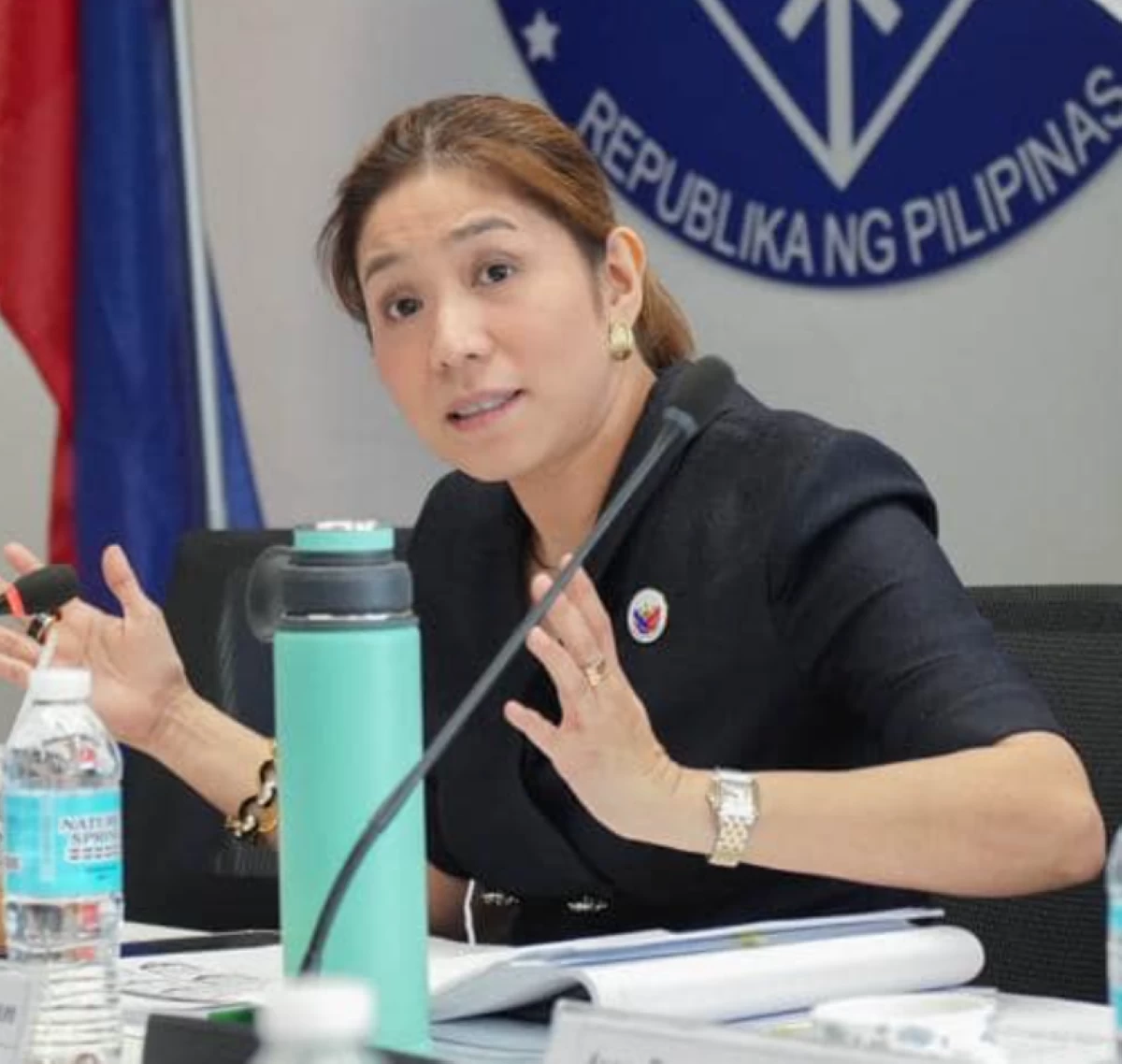
PAMPANGA — While the Department of Budget and Management (DBM) has already begun drafting guidelines in case President Ferdinand Marcos Jr. opts to reenact the 2025 national budget next year, Budget Secretary Amenah F. Pangandaman is crossing her fingers that this scenario will be avoided, stressing that it would be unjustifiable to reenact a spending plan already tagged as the most corrupt in history.

On the sidelines of her Aug. 4 inspection of flood mitigation infrastructure and roads affected by recent flooding in Pampanga, Pangandaman told reporters she is hopeful that next year’s national budget will not be labeled as bungled one, unlike how critics have branded this year’s budget.

“If you tamper with that [2026] budget [proposal], we’ll just reinstate it,” Pangandaman said, echoing the President’s warning against those planning to botch the emerging national budget. She is also hopeful for a more transparent budget.

“I’m having our legal team and budget operations team start drafting the guidelines in case a reenactment happens. But hopefully, it won’t come to that, because if the 2025 budget is reenacted—when it’s already being called the most corrupt budget—then why reenact it?” Pangandaman asserted.

Pangandaman then urged the concerned individuals to refrain from doing anything that could lead to a reenacted budget. “Let’s just study it thoroughly, even if it takes time,” she said instead.

During his fourth State of the Nation Address (SONA), Marcos’ warning was directed to agencies requesting funding for projects that do not align with the administrations plan for the country. The President, in particular, called out the misuse of the national budget on flood control infrastructure.

He vowed to go after government officials and contractors who profited from faulty flood control projects that failed during the recent rains brought about by monsoons, which left many parts of the country submerged in floodwaters.

It may be recalled that for this year’s General Appropriations Act (GAA), President Marcos vetoed ₱26.1 billion worth of public works projects intended for flood mitigation. Pangandaman explained that the Bicameral Conference Committee submitted a version of the report that differed from the National Expenditure Program (NEP) originally proposed by the DBM.

Pangandaman assured that Marcos is unlikely to veto the proposals, as long as no excessive changes are introduced.

During her post-typhoon inspection, Pangandaman reported that the 2025 allocation for flood control projects stood at ₱346.6 billion.

However, the budget allocation for flood control could be slashed by more than a quarter to ₱274.9 billion for next year, according to the disclosed figure from the emerging 2026 NEP.

Possible budget insertions were out of the equation, the DBM said. It was also clarified that although a budget cut is proposed, Congressional deliberations could still push a swing to a higher allocation.

As for official development assistance (ODA)-funded government projects, National Socioeconomic Planner Arsenio M. Balisacan noted that the lack of firm appropriations has been the cause of delayed or uncompleted ODA projects. 

For her part, Pangandaman clarified that ODA projects with completed agreements and submitted before the cut-off are already included in the NEP. If funding gets cut during Congressional deliberations, the DBM then asks the Department of Finance (DOF) to boost revenues and charge the projects under unprogrammed appropriations.

“Between me and [Finance Secretary Ralph G. Recto], we do our best to increase revenues so that we can charge it to the unprogrammed appropriations,” Pangandaman said.

While some projects are funded by the government, Pangandaman said big-ticket infrastructure still requires ODA support, emphasizing that “we need help” for items that are “too expensive and costly.”

ADVERTISEMENT
.most-popular .layout-ratio{ padding-bottom: 79.13%; } @media (min-width: 768px) and (max-width: 1024px) { .widget-title { font-size: 15px !important; } }

{{ articles_filter_1561_widget.title }}

.most-popular .layout-ratio{ padding-bottom: 79.13%; } @media (min-width: 768px) and (max-width: 1024px) { .widget-title { font-size: 15px !important; } }

{{ articles_filter_1562_widget.title }}

.most-popular .layout-ratio{ padding-bottom: 79.13%; } @media (min-width: 768px) and (max-width: 1024px) { .widget-title { font-size: 15px !important; } }

{{ articles_filter_1563_widget.title }}

{{ articles_filter_1564_widget.title }}

.mb-article-details { position: relative; } .mb-article-details .article-body-preview, .mb-article-details .article-body-summary{ font-size: 17px; line-height: 30px; font-family: "Libre Caslon Text", serif; color: #000; } .mb-article-details .article-body-preview iframe , .mb-article-details .article-body-summary iframe{ width: 100%; margin: auto; } .read-more-background { background: linear-gradient(180deg, color(display-p3 1.000 1.000 1.000 / 0) 13.75%, color(display-p3 1.000 1.000 1.000 / 0.8) 30.79%, color(display-p3 1.000 1.000 1.000) 72.5%); position: absolute; height: 200px; width: 100%; bottom: 0; display: flex; justify-content: center; align-items: center; padding: 0; } .read-more-background a{ color: #000; } .read-more-btn { padding: 17px 45px; font-family: Inter; font-weight: 700; font-size: 18px; line-height: 16px; text-align: center; vertical-align: middle; border: 1px solid black; background-color: white; } .hidden { display: none; }
function initializeAllSwipers() { // Get all hidden inputs with cms_article_id document.querySelectorAll('[id^="cms_article_id_"]').forEach(function (input) { const cmsArticleId = input.value; const articleSelector = '#article-' + cmsArticleId + ' .body_images'; const swiperElement = document.querySelector(articleSelector); if (swiperElement && !swiperElement.classList.contains('swiper-initialized')) { new Swiper(articleSelector, { loop: true, pagination: false, navigation: { nextEl: '#article-' + cmsArticleId + ' .swiper-button-next', prevEl: '#article-' + cmsArticleId + ' .swiper-button-prev', }, }); } }); } setTimeout(initializeAllSwipers, 3000); const intersectionObserver = new IntersectionObserver( (entries) => { entries.forEach((entry) => { if (entry.isIntersecting) { const newUrl = entry.target.getAttribute("data-url"); if (newUrl) { history.pushState(null, null, newUrl); let article = entry.target; // Extract metadata const author = article.querySelector('.author-section').textContent.replace('By', '').trim(); const section = article.querySelector('.section-info ').textContent.replace(' ', ' '); const title = article.querySelector('.article-title h1').textContent; // Parse URL for Chartbeat path format const parsedUrl = new URL(newUrl, window.location.origin); const cleanUrl = parsedUrl.host + parsedUrl.pathname; // Update Chartbeat configuration if (typeof window._sf_async_config !== 'undefined') { window._sf_async_config.path = cleanUrl; window._sf_async_config.sections = section; window._sf_async_config.authors = author; } // Track virtual page view with Chartbeat if (typeof pSUPERFLY !== 'undefined' && typeof pSUPERFLY.virtualPage === 'function') { try { pSUPERFLY.virtualPage({ path: cleanUrl, title: title, sections: section, authors: author }); } catch (error) { console.error('ping error', error); } } // Optional: Update document title if (title && title !== document.title) { document.title = title; } } } }); }, { threshold: 0.1 } ); function showArticleBody(button) { const article = button.closest("article"); const summary = article.querySelector(".article-body-summary"); const body = article.querySelector(".article-body-preview"); const readMoreSection = article.querySelector(".read-more-background"); // Hide summary and read-more section summary.style.display = "none"; readMoreSection.style.display = "none"; // Show the full article body body.classList.remove("hidden"); } document.addEventListener("DOMContentLoaded", () => { let loadCount = 0; // Track how many times articles are loaded const offset = [1, 2, 3, 4, 5, 6, 7, 8, 9, 10]; // Offset values const currentUrl = window.location.pathname.substring(1); let isLoading = false; // Prevent multiple calls if (!currentUrl) { console.log("Current URL is invalid."); return; } const sentinel = document.getElementById("load-more-sentinel"); if (!sentinel) { console.log("Sentinel element not found."); return; } function isSentinelVisible() { const rect = sentinel.getBoundingClientRect(); return ( rect.top < window.innerHeight && rect.bottom >= 0 ); } function onScroll() { if (isLoading) return; if (isSentinelVisible()) { if (loadCount >= offset.length) { console.log("Maximum load attempts reached."); window.removeEventListener("scroll", onScroll); return; } isLoading = true; const currentOffset = offset[loadCount]; window.loadMoreItems().then(() => { let article = document.querySelector('#widget_1690 > div:nth-last-of-type(2) article'); intersectionObserver.observe(article) loadCount++; }).catch(error => { console.error("Error loading more items:", error); }).finally(() => { isLoading = false; }); } } window.addEventListener("scroll", onScroll); });

Sign up by email to receive news.