







EDCA sites for disaster relief: Expanded national security coverage
Published Aug 5, 2025 12:05 am
|
Updated Aug 4, 2025 04:51 pm


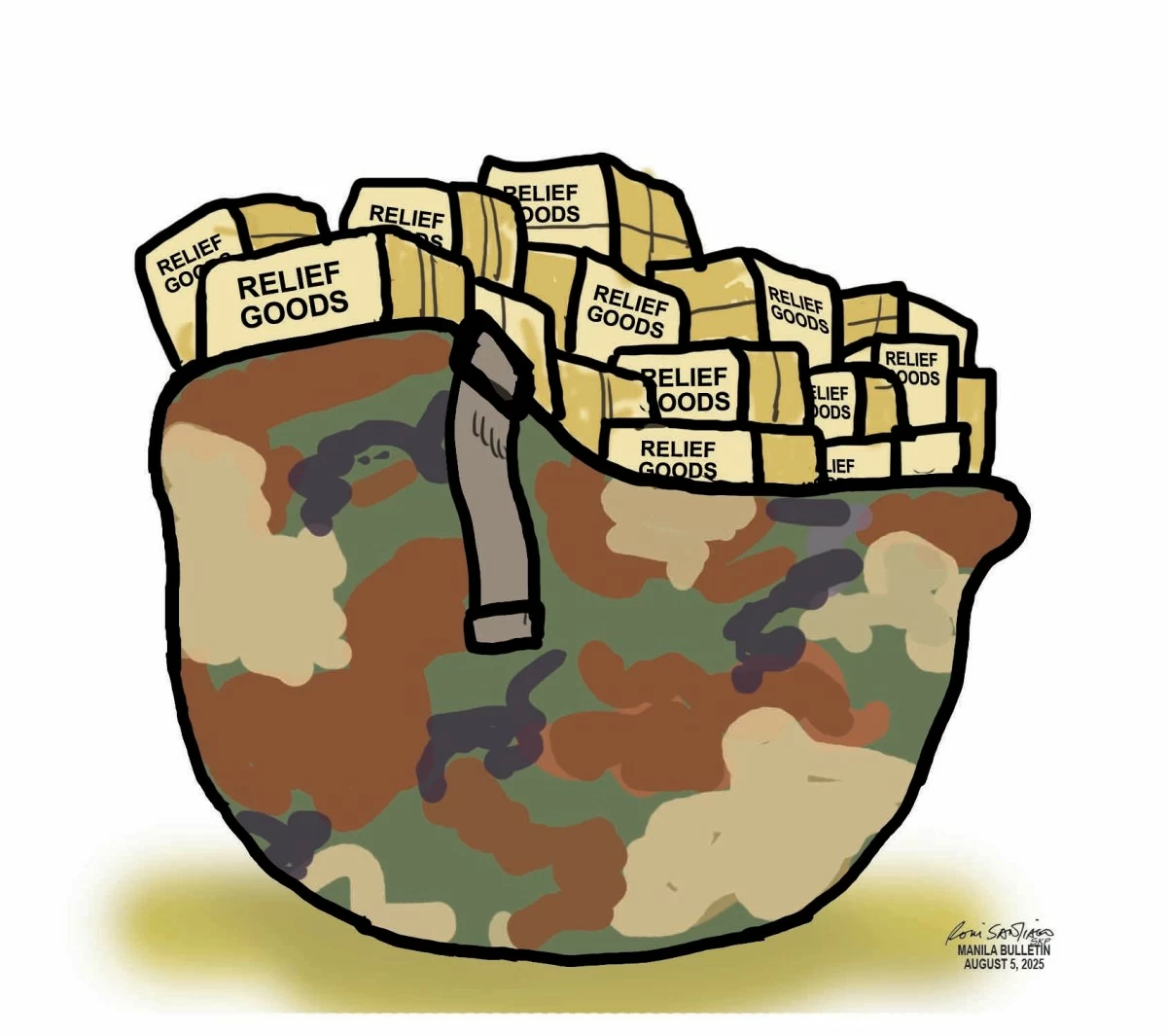
In the wake of the recent typhoons that battered the Philippines, the rapid delivery of relief goods via strategically located Enhanced Defense Cooperation Agreement (EDCA) sites stands out as a vital demonstration of the evolving concept of national security. What was once viewed largely through a military lens has broadened to encompass disaster preparedness and response, or what is now increasingly recognized as Humanitarian Assistance and Disaster Response (HADR).
The activation of EDCA sites in the transport of food packs, medical supplies, and emergency equipment underscores their crucial role beyond defense posturing. The use of Lal-lo Airport in Cagayan for North Luzon, Basa Air Base in Pampanga for Central Luzon, and Benito Ebuen Air Base in Mactan, Cebu for the Visayas exemplifies how geography, infrastructure, and logistics converge to save lives and hasten recovery efforts.
The Philippines, due to its archipelagic nature and location along the typhoon belt and the Pacific Ring of Fire, is one of the most disaster-prone countries in the world. This geographic reality demands that national security planning go beyond traditional threats and address more frequent and devastating natural calamities. The EDCA, signed in 2014 and now being more fully implemented with nine designated sites, offers an evolving utility in this context.
Originally seen through the prism of military interoperability and regional deterrence, the EDCA framework now proves its relevance in addressing the urgent and recurring threat of climate-induced disasters. The prepositioning of relief goods and the facilitation of rapid response teams in times of typhoons, earthquakes, or volcanic eruptions affirms the humanitarian value of such sites.
Lal-lo, with its modern runway and proximity to Cagayan Valley and the Ilocos region, becomes indispensable when northern provinces are cut off due to landslides or flooding. Basa Air Base, located in Pampanga, which is also a disaster-prone area, can serve not just Central Luzon but also Metro Manila and nearby provinces. In the Visayas, the Benito Ebuen Air Base, has a proven track record from past typhoon responses, including Typhoon Yolanda, in terms of ensuring rapid response to island provinces often hardest hit by typhoons.
The concept of national security has been expanded to take into account the convergence of military, economic, environmental, and human security. The integration of HADR into security doctrine is no longer optional; it is imperative. That the Philippines has partnered with a key ally like the United States under the EDCA to achieve this end is a practical, forward-looking strategy to elevate the scope of disaster relief and rehabilitation and thus expand the mantle of social protection for vulnerable communities.
At the same time, the government must ensure that such humanitarian use of EDCA sites is transparent and inclusive. Coordination with local government units, civilian agencies like the National Disaster Risk Reduction and Management Council (NDRRMC), and NGOs is essential to build trust and optimize efficiency.
In a country where typhoons are a grim certainty, and the cost in lives and livelihoods is staggering, the effective use of EDCA sites for HADR must be institutionalized. The relief efforts of recent weeks serve as a real-time case study of how military assets can be harnessed to uphold human dignity and foster resilience.
Indeed, in the Philippines, national security is no longer just about defending territory. It involves securing the lives of its people from the threats of nature and time.