ADVERTISEMENT

SSS benefit enhancement plan boosts social protection

Published Aug 4, 2025 12:05 am  |  Updated Aug 3, 2025 03:29 pm
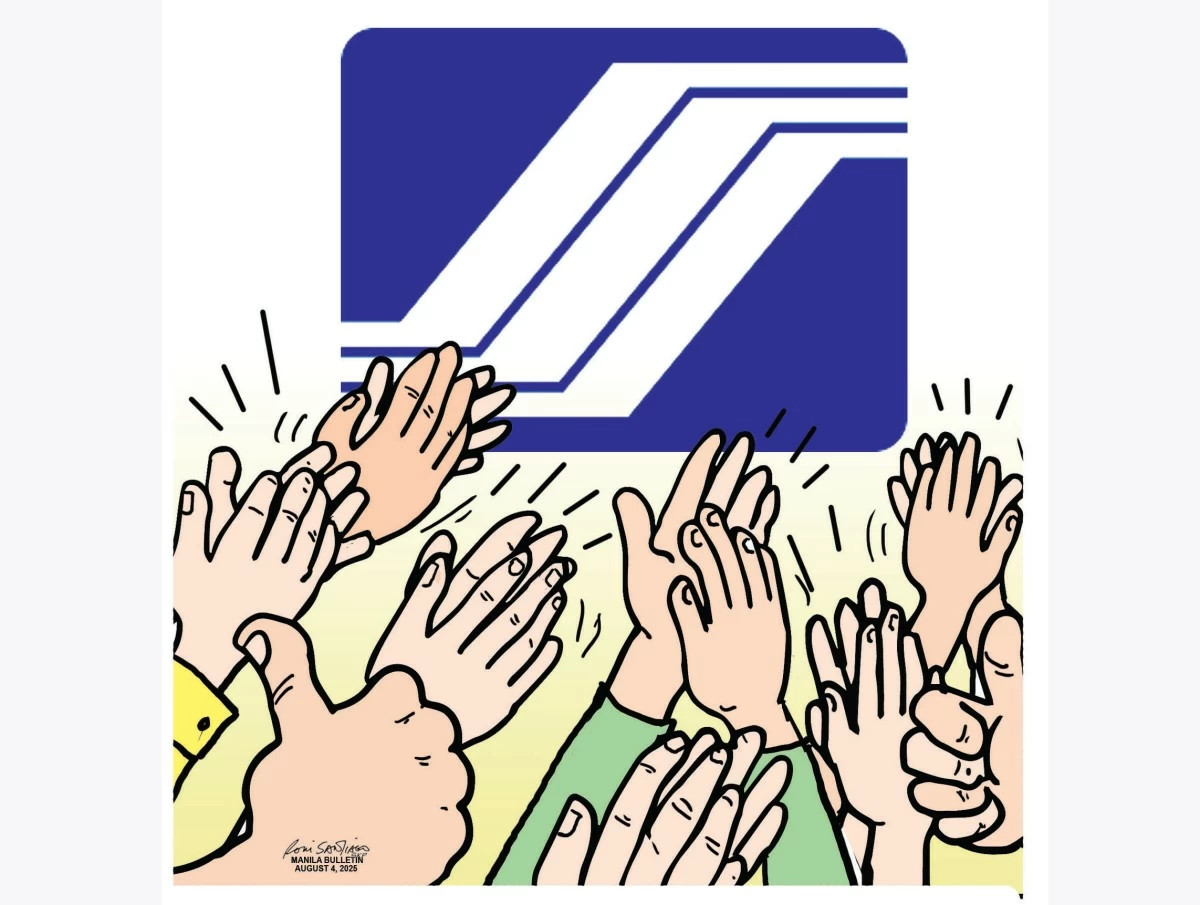
The Social Security System (SSS) has unveiled a strategic three-year plan to enhance core member benefits, signaling renewed commitment to the welfare of millions of Filipino workers and their families. With retirement and disability benefits set to increase by 10 percent, and death and survivorship benefits by 5 percent, the SSS projects a cumulative benefit appreciation of 33 percent and 16 percent, respectively, by 2027. Remarkably, this expanded benefit package will be implemented without any increase in member contributions—a move that underscores both prudent fund management and genuine social responsiveness.
Commendably, the benefit hikes are fully supported by the agency’s actuarial and investment performance, with no need to burden workers or employers with higher premium payments. In an economic environment where Filipino families face persistent inflation and rising daily expenses, this development brings timely and much-needed relief—particularly to retirees, persons with disabilities, and the survivors of deceased members.
For years, concerns have been raised over the adequacy of SSS benefits. Despite contribution increases introduced under the 2019 Social Security Act to ensure long-term sustainability,— the latest of which was a one percent increase in members’ contribution last January —the actual payout levels for many members have not kept pace with the cost of living. Monthly pensions—often below subsistence level—have left many senior citizens struggling to meet basic needs.
The SSS’ new initiative directly addresses this disconnect by adjusting benefit levels upward without triggering higher premiums.
Just as significant as the benefit hike is the agency’s continuing modernization and digital transformation. The SSS has committed to streamlining its systems—offering faster claim processing, expanding online services, and improving mobile access. These improvements reduce red tape, shorten turnaround times, and make SSS services more accessible even in remote and underserved areas.
The plan also aims to widen membership coverage by reaching out to self-employed individuals, freelancers, and informal sector workers who remain outside the formal safety net. A larger, more diverse contributor base enhances the fund’s financial stability and reinforces the principle of social solidarity—where today’s workforce supports today’s beneficiaries while securing their own future claims.
Transparency, stakeholder consultation, and responsible financial stewardship must remain pillars of this reform initiative. Regular publication of actuarial valuations, prudent investment strategies, and continued engagement with labor and employer sectors will help ensure that this ambitious benefit enhancement program does not compromise the fund’s long-term viability.
President Marcos has repeatedly stressed the need for responsive and people-centered governance. The latest benefits enhancement measures that were put in place without raising contributions is a concrete example of this vision in action. It reflects the institution’s ability to innovate within its mandate, meet the evolving needs of members, and uplift lives in a meaningful way.
This three-year program is more than a policy shift—it is a reaffirmation of the SSS’ vital role in promoting social justice, economic inclusion, and lifelong security. If successfully implemented, it can serve as a model of how state-run institutions can evolve to become not just safety nets, but genuine agents of empowerment for the Filipino people.
ADVERTISEMENT
.most-popular .layout-ratio{ padding-bottom: 79.13%; } @media (min-width: 768px) and (max-width: 1024px) { .widget-title { font-size: 15px !important; } }

{{ articles_filter_1561_widget.title }}

.most-popular .layout-ratio{ padding-bottom: 79.13%; } @media (min-width: 768px) and (max-width: 1024px) { .widget-title { font-size: 15px !important; } }

{{ articles_filter_1562_widget.title }}

.most-popular .layout-ratio{ padding-bottom: 79.13%; } @media (min-width: 768px) and (max-width: 1024px) { .widget-title { font-size: 15px !important; } }

{{ articles_filter_1563_widget.title }}

{{ articles_filter_1564_widget.title }}

.mb-article-details { position: relative; } .mb-article-details .article-body-preview, .mb-article-details .article-body-summary{ font-size: 17px; line-height: 30px; font-family: "Libre Caslon Text", serif; color: #000; } .mb-article-details .article-body-preview iframe , .mb-article-details .article-body-summary iframe{ width: 100%; margin: auto; } .read-more-background { background: linear-gradient(180deg, color(display-p3 1.000 1.000 1.000 / 0) 13.75%, color(display-p3 1.000 1.000 1.000 / 0.8) 30.79%, color(display-p3 1.000 1.000 1.000) 72.5%); position: absolute; height: 200px; width: 100%; bottom: 0; display: flex; justify-content: center; align-items: center; padding: 0; } .read-more-background a{ color: #000; } .read-more-btn { padding: 17px 45px; font-family: Inter; font-weight: 700; font-size: 18px; line-height: 16px; text-align: center; vertical-align: middle; border: 1px solid black; background-color: white; } .hidden { display: none; }
function initializeAllSwipers() { // Get all hidden inputs with cms_article_id document.querySelectorAll('[id^="cms_article_id_"]').forEach(function (input) { const cmsArticleId = input.value; const articleSelector = '#article-' + cmsArticleId + ' .body_images'; const swiperElement = document.querySelector(articleSelector); if (swiperElement && !swiperElement.classList.contains('swiper-initialized')) { new Swiper(articleSelector, { loop: true, pagination: false, navigation: { nextEl: '#article-' + cmsArticleId + ' .swiper-button-next', prevEl: '#article-' + cmsArticleId + ' .swiper-button-prev', }, }); } }); } setTimeout(initializeAllSwipers, 3000); const intersectionObserver = new IntersectionObserver( (entries) => { entries.forEach((entry) => { if (entry.isIntersecting) { const newUrl = entry.target.getAttribute("data-url"); if (newUrl) { history.pushState(null, null, newUrl); let article = entry.target; // Extract metadata const author = article.querySelector('.author-section').textContent.replace('By', '').trim(); const section = article.querySelector('.section-info ').textContent.replace(' ', ' '); const title = article.querySelector('.article-title h1').textContent; // Parse URL for Chartbeat path format const parsedUrl = new URL(newUrl, window.location.origin); const cleanUrl = parsedUrl.host + parsedUrl.pathname; // Update Chartbeat configuration if (typeof window._sf_async_config !== 'undefined') { window._sf_async_config.path = cleanUrl; window._sf_async_config.sections = section; window._sf_async_config.authors = author; } // Track virtual page view with Chartbeat if (typeof pSUPERFLY !== 'undefined' && typeof pSUPERFLY.virtualPage === 'function') { try { pSUPERFLY.virtualPage({ path: cleanUrl, title: title, sections: section, authors: author }); } catch (error) { console.error('ping error', error); } } // Optional: Update document title if (title && title !== document.title) { document.title = title; } } } }); }, { threshold: 0.1 } ); function showArticleBody(button) { const article = button.closest("article"); const summary = article.querySelector(".article-body-summary"); const body = article.querySelector(".article-body-preview"); const readMoreSection = article.querySelector(".read-more-background"); // Hide summary and read-more section summary.style.display = "none"; readMoreSection.style.display = "none"; // Show the full article body body.classList.remove("hidden"); } document.addEventListener("DOMContentLoaded", () => { let loadCount = 0; // Track how many times articles are loaded const offset = [1, 2, 3, 4, 5, 6, 7, 8, 9, 10]; // Offset values const currentUrl = window.location.pathname.substring(1); let isLoading = false; // Prevent multiple calls if (!currentUrl) { console.log("Current URL is invalid."); return; } const sentinel = document.getElementById("load-more-sentinel"); if (!sentinel) { console.log("Sentinel element not found."); return; } function isSentinelVisible() { const rect = sentinel.getBoundingClientRect(); return ( rect.top < window.innerHeight && rect.bottom >= 0 ); } function onScroll() { if (isLoading) return; if (isSentinelVisible()) { if (loadCount >= offset.length) { console.log("Maximum load attempts reached."); window.removeEventListener("scroll", onScroll); return; } isLoading = true; const currentOffset = offset[loadCount]; window.loadMoreItems().then(() => { let article = document.querySelector('#widget_1690 > div:nth-last-of-type(2) article'); intersectionObserver.observe(article) loadCount++; }).catch(error => { console.error("Error loading more items:", error); }).finally(() => { isLoading = false; }); } } window.addEventListener("scroll", onScroll); });

Sign up by email to receive news.