







SONA 2025: PBBM's commitment to genuine, long-lasting peace
Published Aug 4, 2025 12:05 am
|
Updated Aug 3, 2025 03:46 pm


PEACE BY PEACE
In his fourth State of the Nation Address (SONA) on July 28, 2025, President Ferdinand Marcos Jr. underscored, “Ang kapayapaan ang pundasyon ng Bagong Pilipinas, kaya’t patuloy natin itong pinapagtibay kasabay ng ating pag-unlad.”
The President made this declaration in the early part of his SONA, which underscores the primordial importance that his administration has given to fostering peace and how this will be the key in sustaining the nation’s march toward progress.
It is in this context in which President Marcos laid out the national government’s approach to peacebuilding wherein peace and development must be pursued simultaneously. They are two sides of the same coin. One cannot be achieved without the other.
In his SONA, the President highlighted how the Armed Forces of the Philippines (AFP), Philippine National Police (PNP) and the Moro Islamic Liberation Front (MILF) are closely working together to maintain peace and security in the Bangsamoro.
He said: “Ang AFP, PNP, at mga dating rebelde ay nagkakaisa na sa pagpapanatili ng kaayusan at kapayapaan sa BARMM. Kaya naman mas mapayapa ang ating lipunan ngayon, mas protektado ang karapatang pantao, anuman ang edad, kasarian, kondisyon, o grupo."
Under Joint Peace and Security Teams or JPSTs, contingents from the AFP, PNP and the MILF’s Bangsamoro Islamic Armed Forces are protecting communities from lawless elements while preventing the outbreak of violence while de-escalating armed conflict.
JPSTs are considered an integral part of the security component of the Normalization Program, which aims to help former MILF combatants reintegrate to mainstream society as peaceful and productive individuals.
What is most remarkable is that just several years ago, government security forces and the MILF were on opposite sides of the battlefield. But now, they consider each other as brothers-in-arms as they patrol the region as a united peacekeeping force.
These JPSTs are expected to play a key role in ensuring the peaceful, orderly and credible conduct of the upcoming first Bangsamoro Autonomous Region in Muslim Mindanao (BARMM) Regional Parliamentary elections scheduled on Oct. 13 of this year.
President Marcos also cited in his SONA the national government’s PAMANA (Payapa at Masaganang Pamayanan) Program, which is transforming once conflict-ridden communities into show windows of peace and development.
The President said, “Sa tulong ng PAMANA at iba pang mga programa, ayusin at kumpunihin natin agad lahat sila,” which was a recognition of how the program can help address concerns affecting the nation’s infrastructure, particularly in remote, conflict-prone areas.
In compliance with the directive of the President, I immediately flew on Friday to visit the town of Midsalip in Zamboanga del Sur to assess and immediately start the construction of the ₱60 million bridge connecting the Midsalip and Bouan road.
Together with Zamboanga del Sur 1st District Representative Joseph Kim C. Yu, former Governor Victor J. Yu, DPWH 1st District Engineer Pablo L. Escuadro, and the Mayor of Midsalip, Elmer M. Soronio, we proceeded to Barangay Pisompongan. The barangay is located 27 kilometers away from Pagadian City, and the trip takes more or less two hours over an up-and-down, winding, mountainous paved road constructed by the DPWH.
During our ocular inspection, we also discovered a need to construct two more bridges. We had to cross two rivers to reach the main project area in Barangay Pisompongan. OPAPRU will allocate another ₱50 million for these two bridges, and we expect construction to begin in the first quarter of 2026. Hopefully, the bridge in Pisompongan will be nearing completion by then.
I also recognize the crucial support of Governor Divina Grace Yu. She is very committed to finishing the project and continues to push for meaningful infrastructure investments in underserved areas.
PAMANA is the national government’s flagship program that aims to address the roots of armed conflict such as poverty and lack of government services by building much-needed infrastructure projects as well as providing livelihood support, health insurance and education assistance.
Under the oversight of the Office of the Presidential Adviser on Peace, Reconciliation and Unity (OPAPRU), PAMANA is constructing community-driven infrastructure such as roads, bridges and water systems that are connecting communities and boosting economic activity.
Launched in 2011 with an initial total budget of ₱1.76 billion, the PAMANA Program has expanded its scope and coverage, as it has poured in more than ₱66.8 billion in peace investments across the country over the past 14 years.
Under the Marcos administration, the PAMANA program has been allocated a ₱5 billion budget from 2024 to this year. For the 2026 National Expenditure Program, PAMANA is again expected to receive another ₱5.25 billion. This is to ensure that progress will be felt in areas that were once battered by armed conflict, and sustainable development can take root.
The President likewise cited the successful implementation of its successful campaign against the communist group, saying "Sa wakas, wala na ring nalalabing grupong gerilya sa bansa, at titiyakin ng pamahalaan na wala nang mabubuo muli.”
This is indeed a major victory for the national government, as it is a testament to the effectiveness of its whole-of-nation, whole-of-society approach that has convinced hundreds of former rebels (FRs) to return to the folds of the law.
Through the National Task Force to Ending Local Communist Armed Conflict's (NTF-ELCAC) 12 lines of effort, the government has carried out interventions leading to the neutralization of the remaining guerilla fronts operating in the country.
Under the Local Peace Engagement (LP) Framework and its Transformation Program, the national government, in partnership with provincial local government units (PLGUs), are addressing the needs of FRs, their families and communities.
Also critical in this effort is the support provided by the AFP and PNP in strengthening the resilience of communities against the recovery efforts of the communist group while encouraging its members to turn away from armed struggle and lay down their arms.
In collaboration with PLGUs, we have crafted 51 Transformation Program Plans and established 14 Peace and Development Centers throughout the country, which are helping FRs rebuild their lives and build a better future for themselves and their families.
Through all of these interventions, the Marcos administration is showing its unwavering commitment to pushing forward, building on, and sustaining the gains of the comprehensive Philippine peace process across the nation.
Most importantly, it is demonstrating that good things happen to those who choose to walk the path of peace.
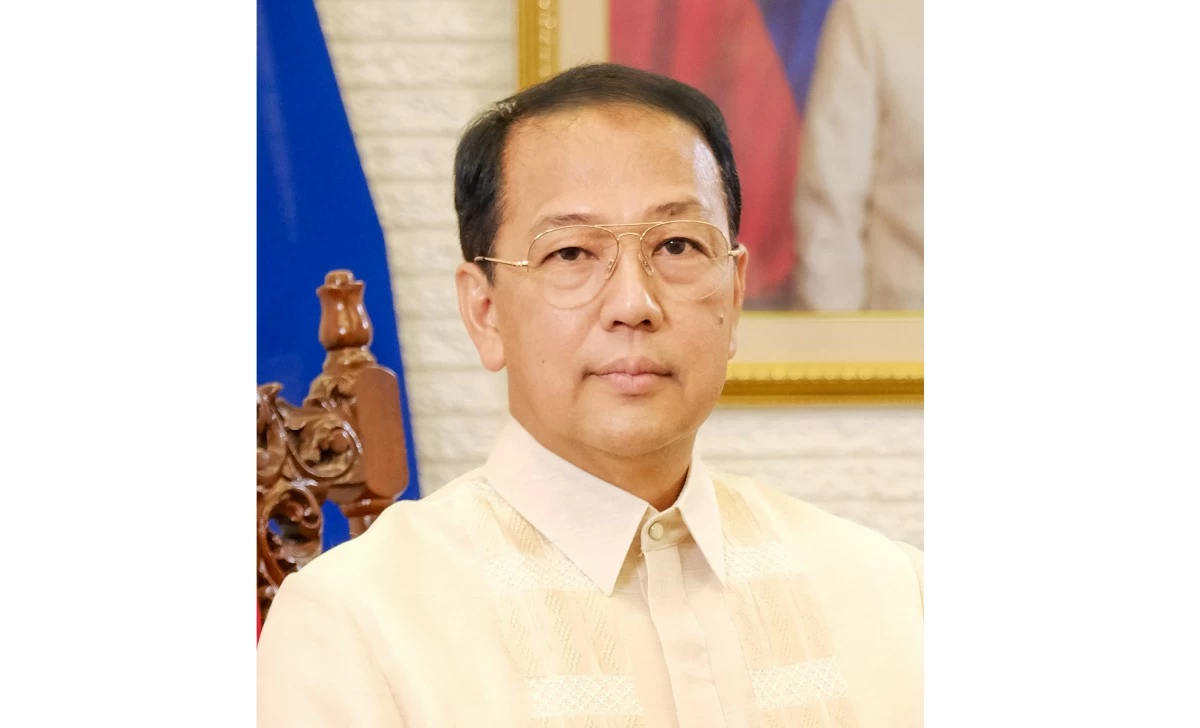
(Secretary Carlito G. Galvez, Jr., is the presidential adviser on peace, reconciliation and unity.)