






Manila Bulletin
 Business
Trade & Industry
Philippine economy, exports to stand firm despite US tariff threat—DLSU economists
Business
Trade & Industry
Philippine economy, exports to stand firm despite US tariff threat—DLSU economists
Business
Trade & Industry
Philippine economy, exports to stand firm despite US tariff threat—DLSU economists
Philippine economy, exports to stand firm despite US tariff threat—DLSU economists
Published Aug 4, 2025 03:10 pm


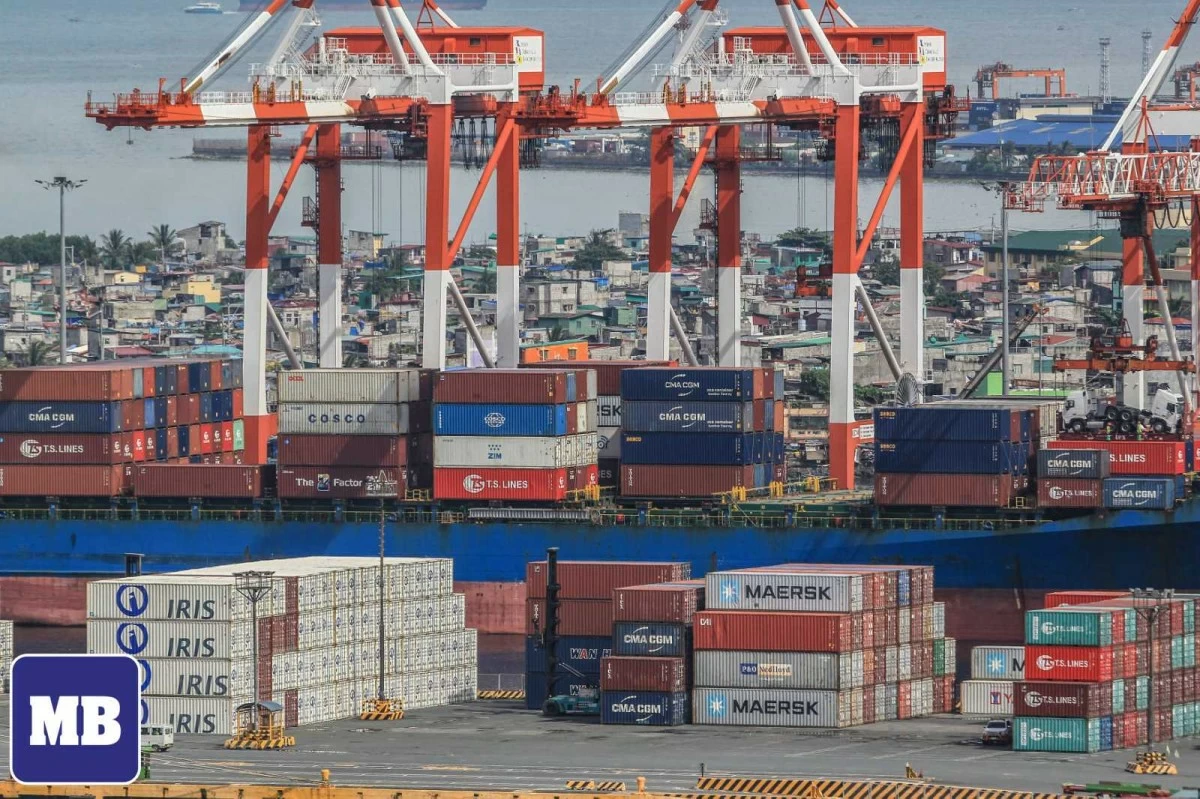
(Manila Bulletin file photo)
The Philippine economy and its export industry will see no decline in output and exports from the direct impact of the 19-percent tariffs threatened by the United States (US), according to a study by De La Salle University (DLSU) economists.
In a recently published policy brief titled “The tariff war and implications for the Philippines,” DLSU distinguished professor Jesus Felipe, associate professor Mariel Monica Sauler, and graduate student Eva Marie Aragones observed that US President Donald Trump’s latest tariff push will unlikely lead to a global crisis triggered by a collapse in world trade, such as during the so-called Great Depression in the 1930s.
To recall, the US’ protectionist policies were primarily cited as the main cause behind the worsened depression during the period, which refers to a sustained downturn in economic activity that is characterized by severe unemployment and poverty.
“Policy makers, including Mr. Trump, know that there will be no winners,” the report read. “The US administration is pushing everybody to the edge but will not push them down the cliff.”
When Trump first slapped tariffs against America’s major trading partners during his self-proclaimed Liberation Day, the Philippines was on a receiving end of a 17-percent tariff rate.
After a postponement of the tariffs’ implementation, Trump issued letters to the tariff-threatened nations, informing them of significantly higher tariffs. In the case of the Philippines, it was revised to 20 percent.
Following lengthy negotiations between longtime allies, the US moved to cut the tariff rate against Philippine goods by a mere one percentage point (ppt), down to 19 percent.
In exchange of the tariff reduction, the Philippine government will offer zero tariffs to American imports, including vehicles, soy, wheat, and pharmaceutical products.
Based on data from the Office of the US Trade Representative (USTR), America’s total goods trade with the Philippines reached $23.5 billion last year.
The US trade deficit, which Trump’s tariff policy aims to address, with the Philippines stood at $4.9 billion.
The DLSU report pointed out that the US’ trade deficit with the Philippines only accounts for 0.4 percent of its overall trade deficit. In the same manner, Philippine imports only account for 0.4 percent of America’s total imports.
“Given this, there was no reason to retaliate against the Philippines and claim that the US suffers from an ‘unfair’ trade relationship and a ‘significant trade deficit,’” it read.
The report stated that the US trade imbalance is not “necessarily due to unfair trade practices” but rather because of structural economic forces, including consumption patterns, global value chains, and capital movements.
It argued that the tariff policy could just be a veil for the US to shift away from the multilateral cooperation it once championed to “bilateral coercion.” In simpler terms, the report said this refers to a system where the cost of resistance is isolation and the price of compliance is the loss of sovereignty.
“Despite this, we do not anticipate a significant impact on the Philippine economy—direct impact from the bilateral negotiations,” it said.
With the cost of tariffs primarily passed on to consumers, the report said the 19-percent tariff rate on Philippine goods will be most felt by American consumers since they will face higher prices.
The report identified two potential consequences of these higher prices: decline in consumption of Filipino goods, which would hurt Philippine exporters; and that consumption does not decline or may decline by much less than the increase in price.
“On the other side of the Pacific Ocean, Philippine consumers, especially the upper-middle classes, will be better off because American products, including automobiles, will face zero tariff in the Philippines,” it said.
“The Bureau of Internal Revenue (BIR) will feel the pinch as it will collect fewer taxes on incoming American products,” it added.
With the US’ often-changing tariff policy, the DLSU report said the country’s export industry should be more proactive to mitigate the potential impact of future tariff changes.
“One is to increase productivity so as to limit the impact of the price increase,” it said.
The report explained that exporters would be able to lower their prices when a much-higher tariff rate is applied through increase in productivity, in order to keep prices in America low and maintain consumer demand.
“The second axis is to move up to different products, more complex, and less price sensitive,” the report stated.
With strong support from the government, DLSU economists stated that Philippine goods would remain favorable if it can compete on quality characteristics.