






Manila Bulletin
 Philippines
Visayas
Int'l group calls for pesticide-free schools after Antique poisoning incident
Philippines
Visayas
Int'l group calls for pesticide-free schools after Antique poisoning incident
Philippines
Visayas
Int'l group calls for pesticide-free schools after Antique poisoning incident
Int'l group calls for pesticide-free schools after Antique poisoning incident
By Tara Yap
Published Aug 4, 2025 01:10 pm


ILOILO CITY – An international group is calling on the government to create buffer zones to make sure schools are free from the harmful impact of pesticides, following an alleged poisoning incident involving elementary and high school students in Antique province recently.
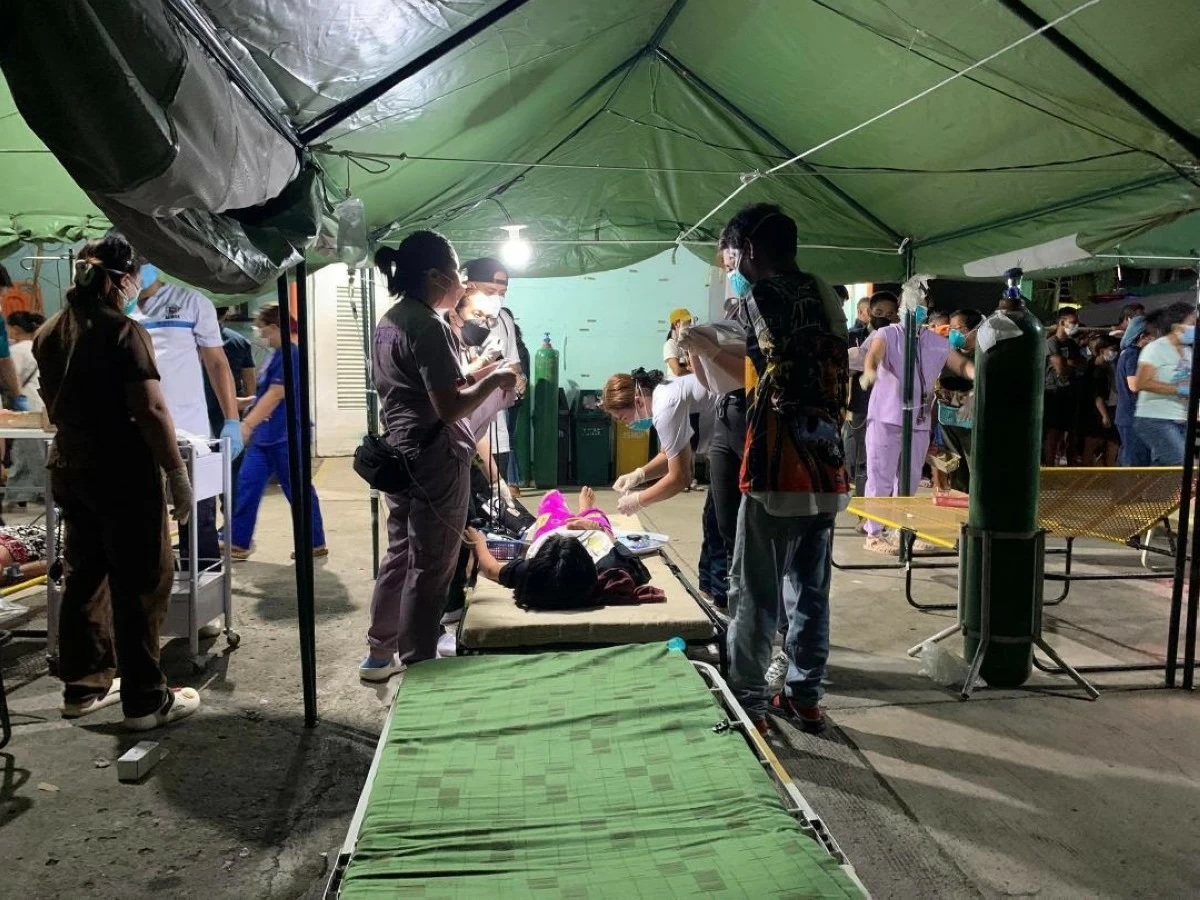
ONE of the almost 300 students taken to the hospital after inhaling alleged toxins in two schools in Sibalom town, Antique province last July 2. (Antique PIO)
“As an immediate safeguard, we reiterate our call for the establishment of pesticide-free buffer zones of at least one kilometer around schools and other child-sensitive areas,” the Pesticide Action Network Asia Pacific (PANAP) said.
The Department of Health (DOH) has released a toxicology report saying that the pesticide known as cypermethrin caused almost 300 students from two separate schools in Sibalom town to be taken to the hospital last July 2.
Many of them fainted while others had difficulty breathing and extreme chests pains.
“This chemical (cypermethrin) is known to be acutely toxic, especially to children, and is associated with a range of adverse health effects, including respiratory distress, neurotoxicity, endocrine disruption, immunotoxicity,” PANAP said.
“The fact that a pesticide known for its hazardous properties could find its way into a space meant to be safe for learning is a gross violation of children’s rights and public safety,” added PANAP.
PANAP urged the Philippine government and governments across Asia-Pacific to phase out the use of cypermethrin and other toxic chemicals for agricultural use.
“Schools, homes, and farms must be protected from the toxic impacts of industrial agriculture. Children, especially those in rural and farming communities, must no longer be put in harm’s way due to the irresponsible use of pesticides in the name of food production,” PANAP said.
PANAP asked the Philippine government to identify the manufacturer and seller of the cypermethrin involved in the Sibalom poisoning.