






Manila Bulletin
 Business
Trade & Industry
DA chief pushes amended coco trust fund law to boost industry
Business
Trade & Industry
DA chief pushes amended coco trust fund law to boost industry
Business
Trade & Industry
DA chief pushes amended coco trust fund law to boost industry
DA chief pushes amended coco trust fund law to boost industry
Published Aug 4, 2025 04:16 pm


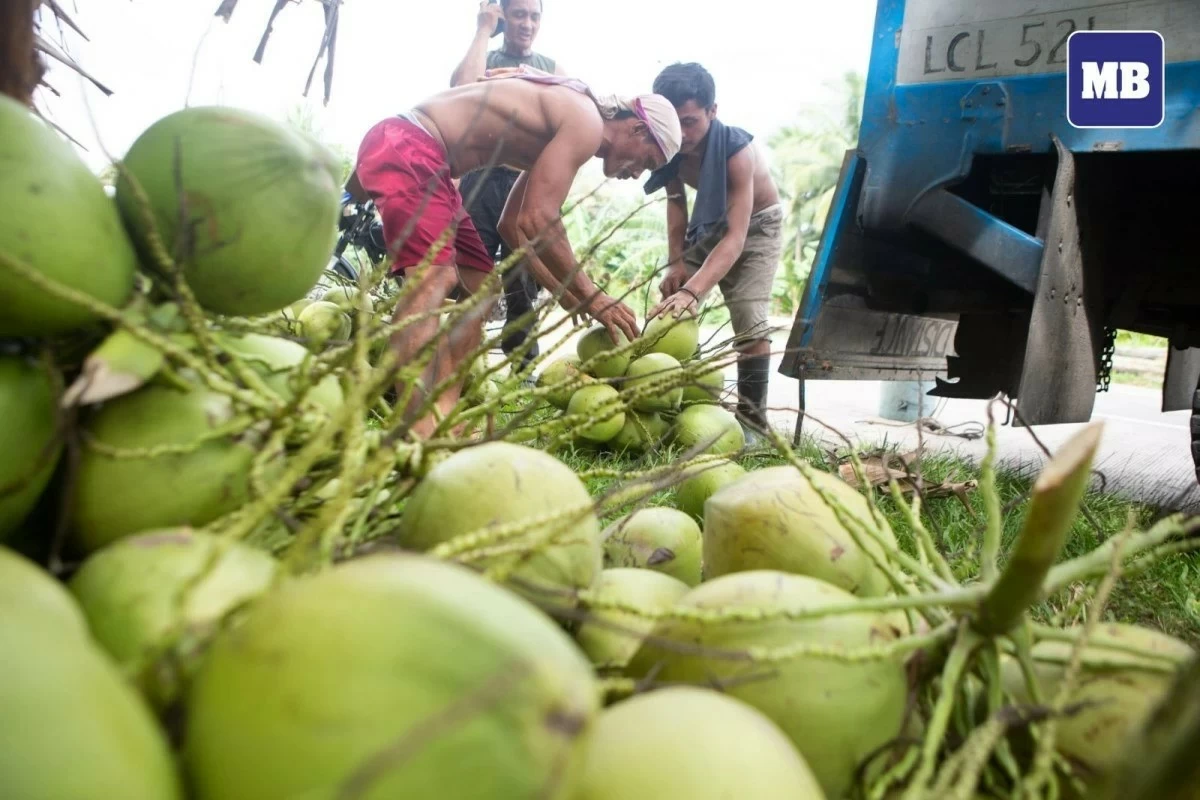
(Manila Bulletin file photo)
Agriculture Secretary Francisco Tiu Laurel is pushing for the amendment of the Coconut Farmers and Industry Trust Fund Act as a measure to revitalize the country’s “underperforming” coconut industry.
Enacted into law in 2021, as embodied under Republic Act (RA) No. 11524, the coco trust fund law ensures the efficient utilization of the trust fund under the Coconut Farmers and Industry Development Plan.
The development plan revolves around key reforms in the coconut industry, while also benefiting coconut farmers and their families.
Tiu Laurel said his proposed amendment to the law will shift the focus of the trust fund to the industry’s most critical needs, particularly planting and replanting.
“Many of our coconut trees are senile. If we don’t replace them immediately, we risk losing the industry’s future,” he said in a statement.
According to the Department of Agriculture (DA), coconut trees over 50 years old produce less than half the potential yield of younger trees, which stands at around 80 to 100 nuts a year.
While the fruit-beating capacity of older trees may be temporarily boosted by salt fertilization, Tiu Laurel said replanting is the only long-term solution to sustain the viability of the industry.
Data from the DA show that approximately three million farmers are working across 3.6 million hectares (ha) of land.
Farmers’ strong productivity has made the Philippines the world’s second-largest coconut producer and exporter, after Indonesia.
While these figures appear impressive, Tiu Laurel argued that they fall short of the capacity the local coconut industry can achieve through strong reforms.
He said that only 134 processing plants are operating nationwide—many at just half the capacity—and 60 oil mills remain well below their combined capacity of 3.7 million metric tons (MT) due to lower farm yields.
“These reforms are about more than productivity—they’re about securing the livelihoods of millions of Filipino coconut farmers,” the official said.
Coconut products are the country’s top agricultural export earner, which include coconut oil, desiccated coconut, copra meal, and other by-products.
Coconut oil, in particular, was the most valuable agricultural export commodity last year, reaching $2.22 billion from $1.18 billion in 2023.
Last year, Philippine Coconut Authority (PCA) planted 8.6 million coconut seedlings, exceeding the 8.5-million target of the government.
For 2025, the government has allocated ₱1 billion for planting and replanting efforts, as well as ₱1.8 billion for fertilization, as PCA aims to plant 100 million coconut trees by 2028.
To ramp up this effort, Tiu Laurel said the ₱80-billion coco trust fund must be redirected toward high-impact programs aimed at lifting productivity and farmer incomes.
“The proposed amendment will allow greater flexibility to ensure a more responsive and adaptive approach to the evolving needs of coconut farmers and the industry,” the DA chief said.
Apart from planting and replanting, he said the law’s amendment should also enable PCA to focus on drip irrigation, water impounding, fertilization, and farmers’ welfare.
During his fourth State of the Nation Address (SONA) delivered last week, President Ferdinand Marcos Jr. also urged amending the Coconut Farmers and Industry Trust Fund Act to make it more responsive to farmers’ needs.