ADVERTISEMENT

Mexico: An old friend across the Pacific (Part One)

Published Aug 2, 2025 10:30 am
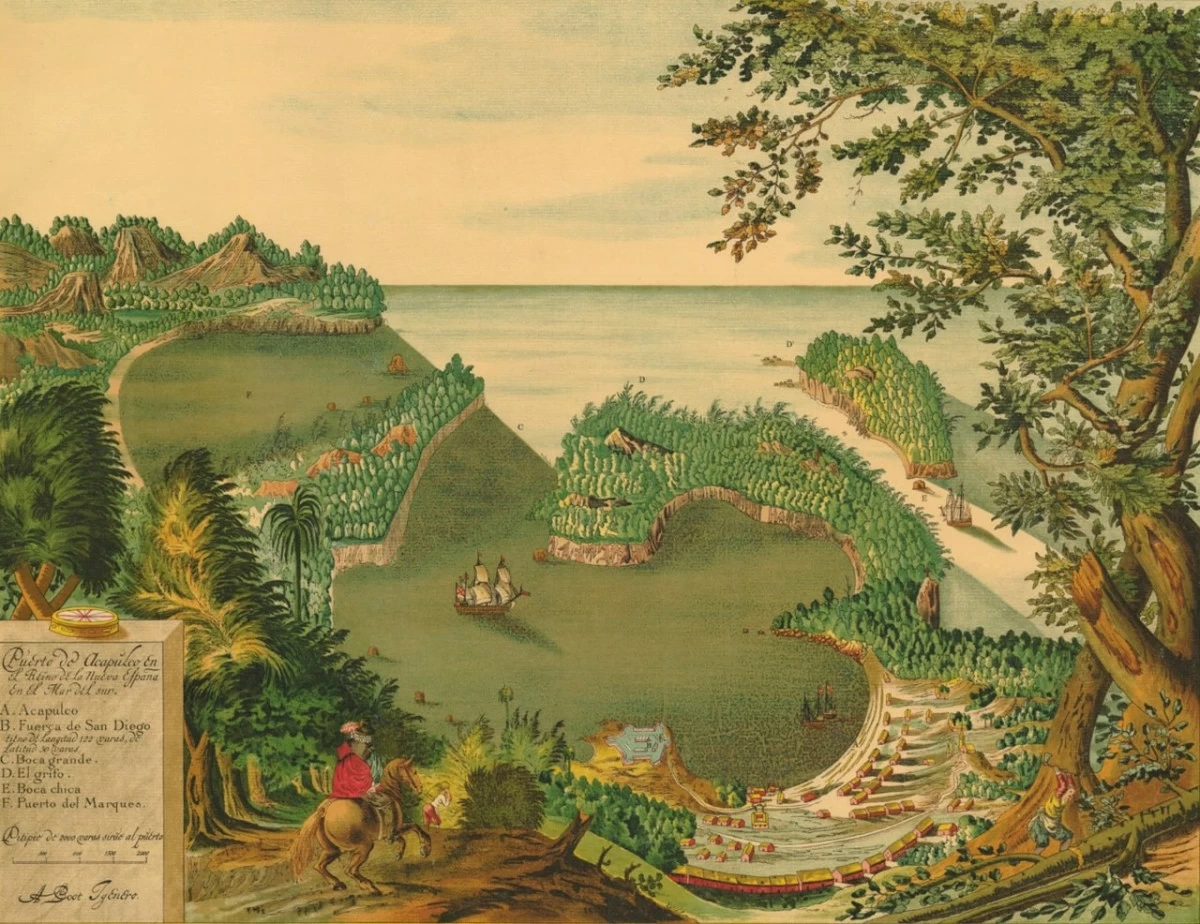
EARLY TIES A lithography of a port in Acapulco used for trade as part of the Manila galleon route
The Philippines was a Spanish Colony for 333 years, from 1565 when Miguel López de Legaspi settled in Cebu until 1898 when Spain yielded us to the US under the Treaty of Paris. We then became an American colony, governed by American Governors General. In 1935, we graduated and became a Commonwealth headed by a Filipino President. We finally won our independence in 1946, 79 years ago.
We were under the US for just 48 years, but we now speak American English; many government and business leaders are American-educated; our young people dream of traveling and studying, if not migrating, to the US; about half of overseas Filipino remittances come from the US.
Not many would think of Mexico when asked about our links across the wide Pacific.
In fact, out of the 333 years that we were under Spain, colonial officials reported to Madrid for only the final 77 years. For 256 years, the Philippines reported to Mexico. With Spain and the Philippines being two oceans apart, Madrid had, from the outset, delegated Philippine governance to the Mexican Viceroy. Ties with Mexico were severed after Mexico revolted against Spanish rule and became independent in 1821. Only then did Madrid take a direct hand in Philippine colonial affairs.
The primary motives of Spanish colonization were religion and trade. Spain was determined to Christianize the Philippines and compete with Portugal in the profitable Asian trade. From 1565 to 1815, when the Mexican Revolution started, galleons sailed across the Pacific bringing porcelain, silk, ivory, precious stones, spices, and other luxury goods from Asia that were paid with silver mined in the Americas.
Aboard the ships were friars and nuns, officials, soldiers, traders, adventurers, and sailors who brought not only religion and objects but also intangibles—ideas, language, and traditions.
From the Americas came plants important to this day—tobacco, coffee, pineapple, and possibly even sugar. We enjoy avocado, chico, guava, and camachile. In May, our plazas and countryside are ablaze with fire trees, shaded by acacias. These all came from across the Pacific.
Filipinos and Mexicans influenced each other’s daily lives. We speak words that are in fact Nahuatl, the language of the Aztecs. We enjoy tamales and menudo that have Mexican roots. Mexicans learned to make ceviche (kinilaw) from Filipinos. In pre-Hispanic times, Mexicans had been consuming pulque and mezcal, alcoholic beverages from the sap of the agave plant. They learned to distill these into the high-proof tequila from Filipino sailors (evidently from Southern Tagalog) who were experts in tubâ and lambanóg. Beautiful ladies are called mangas de Manila. The men’s shirt with tiny pleats, four pockets, and lots of buttons, the guayabera, is thought to have originated in Cuba, but they are called “filipina” in certain places in Mexico.
It is in religious practices where there is great commonality between Mexicans and Christian Filipinos,
Mexico City’s patron saint, San Felipe de Jesus (1572-1597), was a Mexican who travelled to Manila, where he entered the religious life. He completed his studies and was returning to Mexico to be ordained. Unfortunately, a storm drove his ship to Japan, where he was arrested, tortured, and killed, becoming one of the 26 Franciscan martyrs of Nagasaki. A small cave beneath Quezon City’s San Francisco del Monte church is said to be the Saint’s. He was apparently also into jewelry, and a certain type of traditional tambourine necklace is called “sampelipe.”
Some of our most revered religious images are Mexican, notably Antipolo’s Nuestra Señora de la Paz y Buenviaje, Quiapo’s Black Nazarene, and Sariaya’s Sto. Cristo de Burgos. Cavite’s Nstra. Sra. de la Soledad de Porta Vaga has a counterpart in Acapulco, where there is also a chapel dedicated to Our Lady of Solitude.
Not all the Friars who evangelized Filipinos were Peninsulares. Some were Insulares, Spaniards born and raised in Mexico, or Spanish-Mexican creoles. Some, maybe many, Spanish friars also had tours of duty in both Mexico and the Philippines.
Fr. Vicente Ingles, OFM (1670-1739) was from Valencia and was initially assigned to Manila’s Hospital de San Lazaro. After 13 years, he was dispatched to head a hospital in Tlalpan, where he served before being called back as parish priest of Santa Ana, Manila. He built the still-existing Santa Ana church. A recent restoration project revealed 16 layers of overpainting in the Baptistry walls, showing that the original colors were in bright reds, greens, yellows, gold, and black, the precise colors of Mexican church interiors of the time.
The same is true in Intramuros’ San Agustin church. Surviving paint colors behind the pipe organ and choir stalls reveal that its ceiling was not the presently visible gray trompe l’oeil but also in bright Mexican colors.
(To be continued)
Note: Nao de China is the official Spanish name of the Galleon Trade, also known as the Manila Galleon.
Comments are cordially invited, addressed to [email protected]

Related Tags

Arts and Culture
ADVERTISEMENT
.most-popular .layout-ratio{ padding-bottom: 79.13%; } @media (min-width: 768px) and (max-width: 1024px) { .widget-title { font-size: 15px !important; } }

{{ articles_filter_1561_widget.title }}

.most-popular .layout-ratio{ padding-bottom: 79.13%; } @media (min-width: 768px) and (max-width: 1024px) { .widget-title { font-size: 15px !important; } }

{{ articles_filter_1562_widget.title }}

.most-popular .layout-ratio{ padding-bottom: 79.13%; } @media (min-width: 768px) and (max-width: 1024px) { .widget-title { font-size: 15px !important; } }

{{ articles_filter_1563_widget.title }}

{{ articles_filter_1564_widget.title }}

.mb-article-details { position: relative; } .mb-article-details .article-body-preview, .mb-article-details .article-body-summary{ font-size: 17px; line-height: 30px; font-family: "Libre Caslon Text", serif; color: #000; } .mb-article-details .article-body-preview iframe , .mb-article-details .article-body-summary iframe{ width: 100%; margin: auto; } .read-more-background { background: linear-gradient(180deg, color(display-p3 1.000 1.000 1.000 / 0) 13.75%, color(display-p3 1.000 1.000 1.000 / 0.8) 30.79%, color(display-p3 1.000 1.000 1.000) 72.5%); position: absolute; height: 200px; width: 100%; bottom: 0; display: flex; justify-content: center; align-items: center; padding: 0; } .read-more-background a{ color: #000; } .read-more-btn { padding: 17px 45px; font-family: Inter; font-weight: 700; font-size: 18px; line-height: 16px; text-align: center; vertical-align: middle; border: 1px solid black; background-color: white; } .hidden { display: none; }
function initializeAllSwipers() { // Get all hidden inputs with cms_article_id document.querySelectorAll('[id^="cms_article_id_"]').forEach(function (input) { const cmsArticleId = input.value; const articleSelector = '#article-' + cmsArticleId + ' .body_images'; const swiperElement = document.querySelector(articleSelector); if (swiperElement && !swiperElement.classList.contains('swiper-initialized')) { new Swiper(articleSelector, { loop: true, pagination: false, navigation: { nextEl: '#article-' + cmsArticleId + ' .swiper-button-next', prevEl: '#article-' + cmsArticleId + ' .swiper-button-prev', }, }); } }); } setTimeout(initializeAllSwipers, 3000); const intersectionObserver = new IntersectionObserver( (entries) => { entries.forEach((entry) => { if (entry.isIntersecting) { const newUrl = entry.target.getAttribute("data-url"); if (newUrl) { history.pushState(null, null, newUrl); let article = entry.target; // Extract metadata const author = article.querySelector('.author-section').textContent.replace('By', '').trim(); const section = article.querySelector('.section-info ').textContent.replace(' ', ' '); const title = article.querySelector('.article-title h1').textContent; // Parse URL for Chartbeat path format const parsedUrl = new URL(newUrl, window.location.origin); const cleanUrl = parsedUrl.host + parsedUrl.pathname; // Update Chartbeat configuration if (typeof window._sf_async_config !== 'undefined') { window._sf_async_config.path = cleanUrl; window._sf_async_config.sections = section; window._sf_async_config.authors = author; } // Track virtual page view with Chartbeat if (typeof pSUPERFLY !== 'undefined' && typeof pSUPERFLY.virtualPage === 'function') { try { pSUPERFLY.virtualPage({ path: cleanUrl, title: title, sections: section, authors: author }); } catch (error) { console.error('ping error', error); } } // Optional: Update document title if (title && title !== document.title) { document.title = title; } } } }); }, { threshold: 0.1 } ); function showArticleBody(button) { const article = button.closest("article"); const summary = article.querySelector(".article-body-summary"); const body = article.querySelector(".article-body-preview"); const readMoreSection = article.querySelector(".read-more-background"); // Hide summary and read-more section summary.style.display = "none"; readMoreSection.style.display = "none"; // Show the full article body body.classList.remove("hidden"); } document.addEventListener("DOMContentLoaded", () => { let loadCount = 0; // Track how many times articles are loaded const offset = [1, 2, 3, 4, 5, 6, 7, 8, 9, 10]; // Offset values const currentUrl = window.location.pathname.substring(1); let isLoading = false; // Prevent multiple calls if (!currentUrl) { console.log("Current URL is invalid."); return; } const sentinel = document.getElementById("load-more-sentinel"); if (!sentinel) { console.log("Sentinel element not found."); return; } function isSentinelVisible() { const rect = sentinel.getBoundingClientRect(); return ( rect.top < window.innerHeight && rect.bottom >= 0 ); } function onScroll() { if (isLoading) return; if (isSentinelVisible()) { if (loadCount >= offset.length) { console.log("Maximum load attempts reached."); window.removeEventListener("scroll", onScroll); return; } isLoading = true; const currentOffset = offset[loadCount]; window.loadMoreItems().then(() => { let article = document.querySelector('#widget_1690 > div:nth-last-of-type(2) article'); intersectionObserver.observe(article) loadCount++; }).catch(error => { console.error("Error loading more items:", error); }).finally(() => { isLoading = false; }); } } window.addEventListener("scroll", onScroll); });

Sign up by email to receive news.